


Achievers
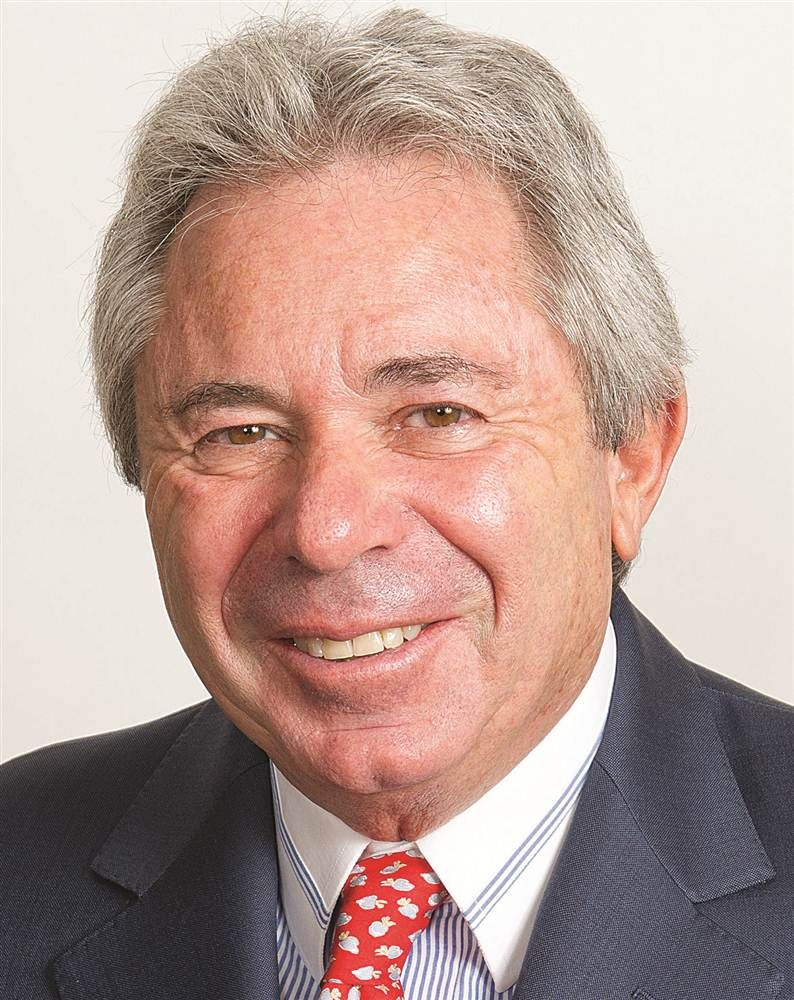
Joffe built an empire of opportunities

Hundreds of deals. Acquisitions spanning continents. Tens of thousands of jobs. And not one, but two corporate giants.
Few South African entrepreneurs have built at the scale of Brian Joffe, the unconventional dealmaker who spotted opportunity where others overlooked it and had the boldness, judgement, and business nous to turn it into something formidable.
Yet ask the legendary business builder what he considers his greatest achievement and he doesn’t point to the billions or the strategic acquisitions.
“If I look back, the single greatest achievement in my mind is that I left a lot of people much better off than they were before I met them,” Joffe says.
It is perhaps this sentiment, as much as his extraordinary business record, that captures why Joffe, 79, founder of Bidvest and Bidcorp, is the recipient of the 2026 Investec Jewish Achiever Lifetime Achievement Award in honour of Helen Suzman.
Those who’ve occupied a front-row seat to his career describe a businessman difficult to replicate.
Andy Leith, former managing director of Investec South Africa and a longtime friend, confidant, and corporate finance adviser to Joffe, describes him as “probably the best all-round businessman that I’ve ever met”.
“You don’t often get what he had in one person,” says Leith. “Sometimes you get a guy who’s very good with the numbers but has no vision. Then you’ll get another guy who has all the vision but doesn’t understand the numbers.
“He’s the real deal. He saw things other people never saw,” said Leith. “He would always work out not what the business was like in its current form, but what it could be like.”
Joffe founded Bid Corporation in 1988 with the acquisition of Chipkins and Sea World. The business evolved into Bidvest, with acquisitions including Steiner, Safcor, Waltons, Rennies, and McCarthy, while its food-service interests expanded internationally.
In 2016, the food-service operations were unbundled into separately listed Bidcorp, while Bidvest continued as a diversified services, trading, and distribution group.
Today, the companies together comprise more than 250 businesses and employ more than 130 000 people across several countries. For the financial year ended June 2026, Bidcorp reported revenue of R242.2 billion and Bidvest R130.3 billion.
Veteran banker and former Investec chief executive Stephen Koseff says Joffe’s business instincts were apparent from their first serious meeting in 1988, when Joffe was looking to raise money for the Chipkins acquisition.
“It took us 30 seconds to back the guy,” Koseff recalls. “He was a stand-out entrepreneur. There’s only a few of them. He had a powerful personal brand. Brian could’ve taken any business and made a success of it.”
Joffe, he says, built a highly decentralised, entrepreneurial model.
“He wasn’t hierarchical or autocratic,” Koseff says. “Instead, he empowered people to run their businesses, creating an environment in which talented individuals could flourish. People who worked with him loved him and stayed with him for decades.”
Through Bidvest and Bidcorp, Joffe helped build two major listed companies whose combined market capitalisation, Koseff estimates, approaches R250 billion.
“He became one of the biggest employers in South Africa. Just imagine adding value to so many different people’s lives. He has made a proper contribution. We all learned a lot from Brian.”
At the legendary Bidvest gatherings, Leith remembers hundreds of executives from different businesses and countries united by an almost palpable sense of belonging.
Trust was fundamental. For decades, Leith worked with Joffe on transactions without a formal mandate. The fees might be argued about afterwards – and, Leith laughs, Joffe was no enthusiastic payer – but the relationship rested on something more basic.
Koseff says Joffe’s serious exterior could be misleading. “Once people got to know him, they knew that grumpy look was just a façade. Underneath was someone fiercely loyal and generous to colleagues and friends.”
Born in Johannesburg and raised in Greenside, Joffe remembers sport dominating his childhood, and initially wanting to become a schoolteacher. His mother had other ideas: she wanted a doctor.
He began studying BSc subjects, but lasted about six weeks before his first encounter with dissecting a rat or frog brought his mother’s medical ambitions to an abrupt end.
Joffe instead qualified as a chartered accountant after graduating from the University of the Witwatersrand (Wits) in 1971 and would eventually receive honorary doctorates from Unisa and Wits. When his mother was in her 80s, he delightedly informed her that her son had finally become a doctor.
“I had fantastic parents. Very demanding, in a nice way,” he says. “At home, entrepreneurialism was a feature because business was discussed at every single meal.
“Being a mensch, I guess, was something that was more important to them than me being successful as a businessman.”
In 1978, Joffe borrowed R49 000 to acquire an interest in a pet-food manufacturer, eventually taking full ownership and building the business with limited resources and makeshift production equipment.
After selling it, he spent time in the United States playing golf – “I wanted to turn pro,” he says – before returning to South Africa and joining industrial group Weil & Ascheim. There he developed the reputation for business acumen and integrity that Koseff would recognise when Joffe approached him in 1988.
What followed was an extraordinary succession of acquisitions.
His wife, Lee, to whom he has been married for about 50 years, was part of the journey from the beginning. “Lee bought into it. Even in the early days, she used to come in and drive the forklifts.”
Today, Joffe’s life is quieter. Though retired in Israel, Joffe keeps one foot firmly in South Africa, where his family, friends, and business interests remain. One commitment has remained constant: giving back.
His uncle Benny Weinstein impressed upon him the Jewish principle of giving at least 10% to tzedakah. It stayed with him, as did the significance of chai, the Hebrew numerical value of 18, associated with life. “Every deal was linked to chai,” he says.
Joffe has supported numerous philanthropic and communal causes, generally preferring to avoid publicity.
“I like seeing people being elevated and causes being elevated. It’s not only giving back in money terms. It’s giving back in opportunity. And I’ve tried to do that,” he says.
Koseff believes this desire to build rather than merely accumulate wealth was central to Joffe’s motivation. “Obviously, money is always a factor, but I think it was building. Building things.”
For Leith, Joffe’s contribution is difficult to overstate.
“He built an international legacy that I don’t think, definitely in our lifetime, we’ll see again. He is a special man.”