


Achievers
Scalpels meet sculpture for Professor Chait

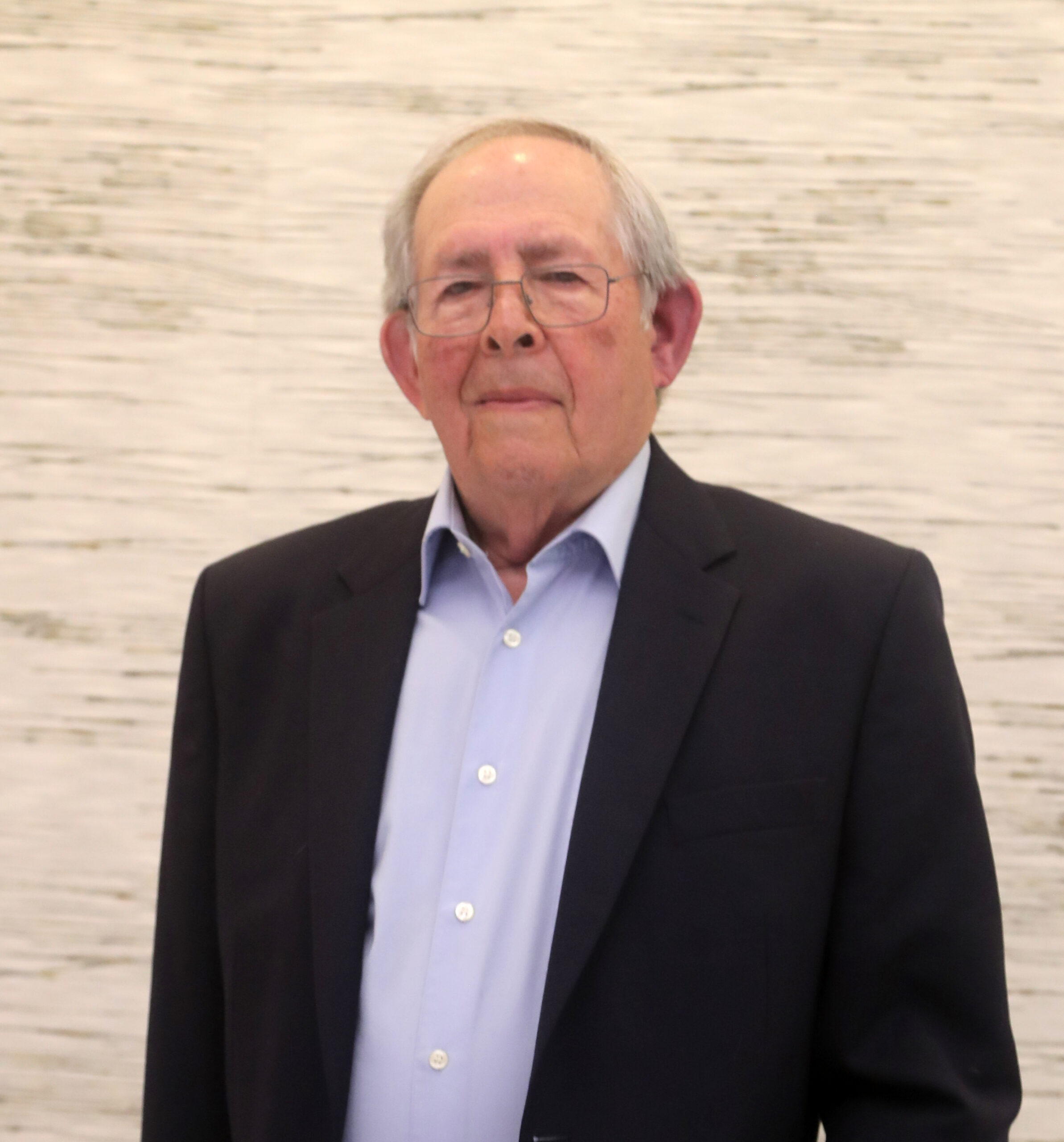
From crafting famous sculptures, including Max the Gorilla at the Johannesburg Zoo, to successfully treating countless children with lip and palate deformities, Professor Laurence Chait has built two celebrated careers. A revolutionary plastic and reconstructive surgeon and a sculptor, Chait is this year’s Investec Professional Excellence winner, proving that it’s possible to pursue multiple passions.
The son of a general practitioner who enjoyed painting, combining his two talents wasn’t a foreign concept to Chait. While his painting skills were questionable, it was through sculpting cement, stone, wood, and bronze pieces that he found his creative outlet. In a 2018 interview with the SA Jewish Report, he said, “Art was a release for me, and I was never concerned that it would detract from my professional life as a surgeon.”
Having achieved considerable acclaim in both fields, it’s clear he was right. “From early in my plastic-surgical career, I became very interested in the management of babies born with cleft lip and palate deformities and children with cerebral palsy,” Chait says. He was involved in two groundbreaking research projects in the management of cleft lips and palates. One of these, titled the “Ultimate Straight Line Repair for Unilateral Cleft Lips”, revolutionised such treatment and was adopted in many centres around the world.
Through multiple prize-winning papers and chapters in peer-reviewed local and international journals and books, as well as presentations at medical conferences around the world, Chait has made an indelible mark on the medical field. He also has a special interest in hand surgery and cosmetic and non-cosmetic nasal reconstruction, and has pioneered treatments in microvascular surgery.
Chait is also known for his considerable charity work in line with his medical speciality. Through the Netcare Cleft Programme, he has personally treated 315 patients pro bono over 20 years. Many patients needed two to three operations. In addition, he has been involved in managing children with cerebral palsy at Forest Town for almost three decades.
Asked about his greatest professional achievements, Chait cites the large number of people he’s healed both functionally and cosmetically. He has also bettered his profession through his significant original research and improvements in surgical techniques.
In terms of his artwork, he’s particularly proud of his sculpture of Max the Gorilla at the Johannesburg Zoo. The real Max famously survived being shot and wounded as he fought an armed robber who had jumped into his zoo enclosure.
Max the Gorilla is one of Chait’s nine public sculptures in Johannesburg and surrounds. His pieces are also in corporate and private collections around the world.
Having sculpted for almost 60 years, he places equal importance on his artistic and medical careers. The two often intersect, with his work exhibited at the Wits Medical School, the Children’s Burn Units at Chris Hani Baragwanath Academic Hospital, and the Red Cross Children’s Hospital in Cape Town. He famously did a bust of his treasured former lecturer Professor Philip Tobias. This is displayed in the Amphitheatre of the Sterkfontein Caves in the Cradle of Humankind, where Tobias led palaeontological digs.
Another commission that stands out for Chait is intrinsically linked to his Jewish identity. “What was especially pleasing to me was being asked to make a sculpture of the Lions Shul for its centenary celebration in 2006,” he says. “This was cast in bronze and 40 of the replicas were auctioned to raise funds for the Lions Shul.”
Chait believes being a good Jewish citizen ties into being a good person. “Not holding grudges, not sweating the small stuff, and always helping where I can would help society in general,” he says. “I’m really proud of who I am in my beliefs and convictions.”
Chait has contributed significantly to the academic world as a plastic surgery professor at the University of the Witwatersrand (Wits) Department of Plastic Surgery and at the Johannesburg group of teaching hospitals. He became an honorary professor at Wits in 1999.
“Apart from managing to restore people’s abilities and health, I have spent many years teaching medical students and plastic-surgical registrars to gain the know-how to practise their skills,” he says. His original work in this field also helped improve the equipment, medicine, and resources at their disposal.
Going beyond medicine, Chait even offered his students artistic training. “For a number of years, I gave the plastic-surgical registrars at Wits Medical School sculpture lessons,” he recalls. “These were wonderful times in an off-duty environment.”
Despite Chait’s many accomplishments, his path has not been without hiccups. But it’s the way he chooses to see such hurdles that sets him apart. “My whole life has been full of challenges, but I have never considered them as such,” he says. “I followed what I wanted to do to achieve the goal set.” This ties into his personal philosophy, “to keep going regardless”.
Asked what he believes he’s done professionally in the past few years to inspire others, Chait says, “Managing to carry on doing the same work that I have loved and devoted my life to.” In the years to come he aims to continue doing just that through his plastic-surgical practice for as long as he can, and through creating new pieces of art. Alongside his continued work, he ensures he has more than enough time for family and community commitments.
Chait believes South Africa has a bright future but feels progress has not been made quickly enough. “I would be happier to hear ‘We have done it’ rather than ‘We need to do it’ from the powers that be,” he says.