


Achievers
From Sorbet to Cultureneering

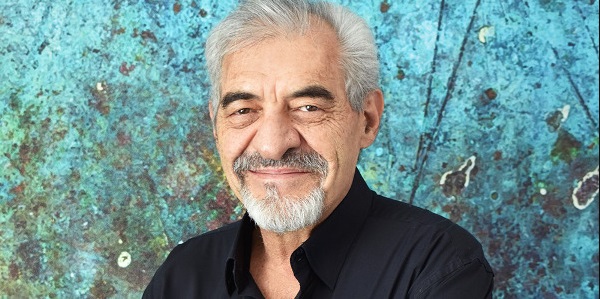
Best known as the founder of Sorbet, the largest beauty salon chain in Africa, this year’s Eric Ellerine Entrepreneur Award winner, Ian Fuhr, is also the pioneer of ‘Cultureneering’. This concept is the impetus behind his coaching and consulting business, the Hatch Institute, which specialises in people, placing organisational culture at the heart of business strategy.
“The customer experience can never be better than the employee experience.” This thinking underpins the business philosophy with which Fuhr has built multiple successful businesses over 50 years.
“The most important thing I have learned in my entire career is that the purpose of work is to serve,” he says. “Money is the reward, never the purpose. Service always comes before reward. Every person in the business must buy into this belief. This led me to understand that there is an inextricable link between culture and service.”
This understanding is why, when Fuhr built Sorbet, he did all the induction training himself – of 3 500 employees. “In hindsight, the success of Sorbet was largely built on its culture and the attitude of the staff towards customer service. You cannot motivate people. They have to motivate themselves. All I tried to do was to inspire them to do that. This included building a culture in which every individual had a sense of belonging in the company despite their differences.”
This proved to be a winning formula, which saw the business grow to 225 franchised outlets and a combined turnover of more than R1 billion by the time he left in 2019.
While Fuhr is now 73 and considers this his greatest business achievement, he shows no signs of slowing down.
In a recent side venture, he became a shareholder in Popsicle, a new nail bar business that already has seven outlets. “I do the culture and customer-service training and support my fellow partners in launching the Popsicle franchise model,” he explains.
Yet his focus now is mainly the Hatch Institute, which counts large corporates such as Santam and Investec, and medium-sized businesses including Food Lover’s Market, among its clients. Fuhr also uses it as a vehicle to coach start-ups and individual entrepreneurs. Zeroing in on the people who make up a business, it has a specific focus on leadership, culture, diversity, and customer service.
“South Africa is in urgent need of a new approach to business leadership that will solve its many unique and complex socio-political challenges,” he says. “Running a business in a polarised country with a melting pot of diversity requires leaders to understand the complexity of building an inclusive culture out of a fragmented workforce. This is called culture-driven leadership and is based on the ‘Cultureneering’ concept, which I created. It can be described as how to build a strong culture in a diverse workforce that lays the platform for obsessive customer service.”
Fuhr says he started his career as “a naïve, uneducated, highly protected 22-year-old white boy who had grown up during apartheid in the leafy suburbs of Johannesburg”. As the only white person in his first business, both among staff and customers, his perspective quickly changed, laying the foundation of his socio-political slant on business leadership.
“I soon came to realise that I had been hidden from the realities and atrocities of apartheid,” he says. “I realised that racism had a significant impact on the lives of my people and on their level of commitment and productivity. That started my journey of challenging the hierarchy of human value that underpinned the apartheid philosophy. I developed a leadership style that took account of the socio-political and economic challenges the staff were having to deal with daily. That journey continued throughout my working life, and I have tried to spread my ideas through my businesses, my books, my coaching, and my public-speaking activities.”
This ties into his lifelong vision of contributing to building an integrated and inclusive South Africa, through racial healing and eliminating racial hierarchy, offering everyone an opportunity to build a sustainable livelihood. “I have practised this belief in all my businesses and have coached and provided consulting services to other businesses on this critical aspect of our future.”
Fuhr’s story also proves the value of marrying one’s personal and work purposes – in his case, to make a meaningful difference in the lives of others. While he admits that finding a balance between personal and professional commitments has been an enduring challenge, blending the two in his time at Sorbet was especially rewarding, he says. “Sorbet was largely a family business, with all three of my children and a few other relatives involved in senior positions. Working with my family was perhaps the most rewarding period of my life.”
That he’s become a prolific public speaker, even giving a TED Talk in 2015 that generated 100 000 views, would shock his 16-year-old self, says Fuhr. Having developed a speech defect as a teenager and stuttering quite badly, he virtually stopped speaking. “I was too embarrassed by my inability to get my words out. I lost my self-confidence and my school marks deteriorated badly. I also dropped out of university in my second year of BCom. As the youngest child in a family of entrepreneurs, I so badly wanted to be an entrepreneur and so I realised that I had to improve my speech to do so.”
While completing the Dale Carnegie course on public speaking was significantly traumatic, he says, its impact was undeniable. “Somehow, I managed to get through it, and it was the catalyst for the recovery of my speech issues and my self-belief. The underlying message was that courage is not the absence of fear. It is the ability to overcome the fear. Do the thing that frightens you most.”
Fuhr may not have completed his degree, but the fact that his expertise comes from personal experience has helped to secure his business success, helping him overcome challenges along the way. “I am not seen as an academic who learned all these things from books, but rather as someone who has actually walked this journey and practised these concepts in my own businesses,” he says.