





Featured Item
African relations with Israel resilient despite Iran war

For the past decade, Israeli Prime Minister Benjamin Netanyahu has ratcheted up relations with Africa. These ties have withstood the setbacks of the COVID-19 pandemic, the war in Gaza, and, so far, the current hostilities with Iran.
The Israel-US attacks on Iran from 28 February, and Tehran’s retaliations, have elicited a mixed or mooted reaction from African capitals. African governments worry about surging oil prices, the soaring cost of living, and trade disruptions. Apart from pro-Palestinian diehards like South Africa and Algeria, comments on the conflict have been measured, critical of Tehran’s counterattacks, or not made at all. Responses have largely focused on the threat to global stability, trade, and the legality of the strikes.
Predictably, the Department of International Relations and Cooperation condemned the attacks on Iran as “unlawful”, saying they violate the United Nations (UN) Charter, but also that Iran’s counter-strikes on Gulf states went beyond the bounds of self-defence. The African National Congress sent its first deputy secretary-general, Nomvula Mokonyane, to mourn the Iranian dictator former Supreme Leader Ali Khamenei.
The Algerian Foreign Ministry described the initial strikes as a “flagrant violation of sovereignty” and “American-Zionist aggression”.
Others have been more even-handed. The African Union expressed “deep concern” about the strikes, appealing for “maximum restraint”. It “strongly condemned” Iran’s attacks on Gulf states, calling them “a clear violation of sovereignty”. It also warned the war would adversely affect Africa’s energy markets, food security, and economic resilience.
The three African countries (A3) on the UN Security Council (the Democratic Republic of the Congo (DRC), Liberia, and Somalia) said “all parties should exercise restraint and responsibility, uphold international law, and avoid any action that could escalate tensions or threaten regional stability”. The A3 supported efforts for “a peaceful, inclusive, and lasting resolution in Iran”.
Benji Shulman, director of the Middle East Africa Research Institute, said most African countries’ reactions were driven more by Tehran’s attacks on other states than opposition to Israel. States close to Washington, like Kenya and Morocco, have expressed qualified support for the war. States in the Horn of Africa, like Djibouti, Ethiopia, and Somaliland, are wary of Iran and of being dragged into this conflict, Shulman said. Their statements focused on Iran, not Israel.
Shiri Fein-Grossman, chief executive of the Israel-Africa Relations Institute in Herzliya, noted the range of reactions. “The overall picture is more nuanced than a simple pro- or anti-Israel divide. Most African governments have taken a cautious approach, emphasising restraint and de-escalation. South Africa stands out for its strong criticism of the strikes and its broader political opposition to Israel’s actions. Overall, the dominant African response has been pragmatic: urging de-escalation while avoiding alignment with Iran, and in many cases quietly maintaining or strengthening ties with Israel.”
Rolene Marks, Israeli journalist, said, “We haven’t heard very much from African countries, with the exception of South Africa. A lot of African countries understand the threat that Iran poses to them and their security by funding the Islamist terror entities operational in their countries, threatening their citizens.”
Shulman said Africa matters to Israel. The Horn “is a breeding ground for terrorism” and poses threats to Israel’s security and global shipping. He cited the reopening of the Israeli embassy in Lusaka, Zambia 52 years after it closed as evidence that Netanyahu’s courting of Africa is paying off. Ties with the DRC have strengthened. “Israel is operating effectively in southern Africa, which South Africa sees as its domain”, adding to bilateral friction.
Marks said, “The African continent is a strategic frontier for Israel. We’re focused on growing those ties. We also understand that there’s a race for Africa between China, Iran, and the West, and Israel is perfectly positioned to help African countries.”
Fein-Grossman said the last 10 years of Israel’s Africa outreach has produced “uneven” results at the multilateral level, while strengthening many bilateral relations. She noted growing support at the UN for Israel from Cameroon, Rwanda, Togo and, at times, Malawi. Yet the broader picture reveals African country positions that “often remain aligned with broader Global South and pro-Palestinian consensus”.
Nevertheless, “a lot of African countries don’t see the need to take a partisan position on the Israeli-Palestinian conflict even through the Gaza war. The only question is why South Africa doesn’t seem to get the memo for this,” Marks said.
“Africa is increasingly seen in Jerusalem as a strategic diplomatic and geopolitical arena rather than a peripheral one” said Fein-Grossman. This was reflected in the foreign minister’s 2025 announcement that strengthening relations with African nations would be “a top priority” for Israel.
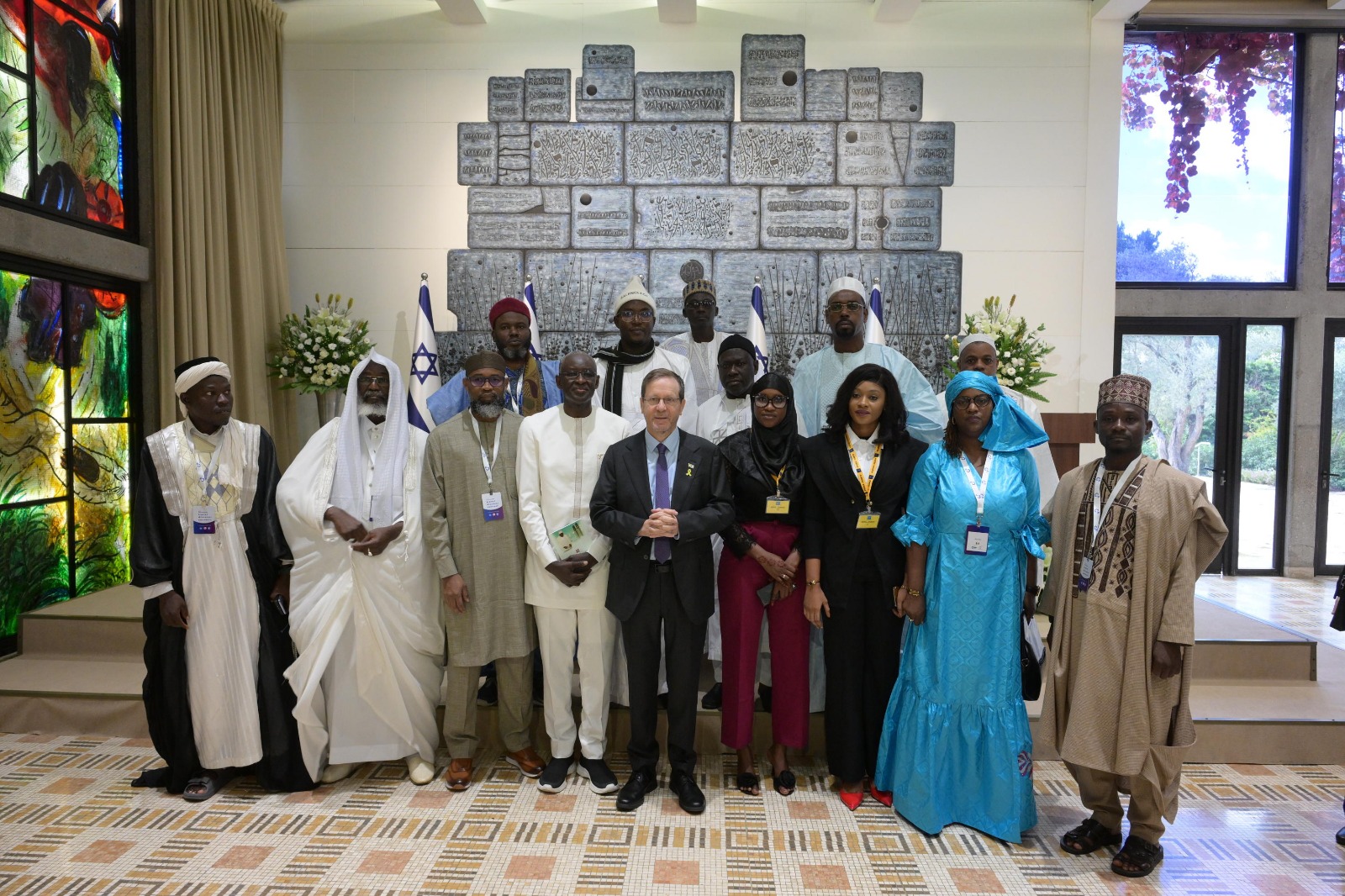
Fein-Grossman mentioned trips by the foreign minister to Ethiopia and Somaliland, and President Isaac Herzog’s visits to the DRC, Ethiopia, Rwanda, and Zambia. African leaders continued to visit Israel after 7 October 2023, indicating resilient relationships. She also emphasised the increasing strategic importance of the Horn, leading to Israel’s recognition of Somaliland. She urged keeping perspective, though; Jerusalem’s ties with Washington remain paramount.
“Overall,” Fein-Grossman said, “African voices may not be the decisive factor in Israeli decision making, but their importance in Israel’s diplomatic and strategic calculations is clearly growing. The trajectory of relations points toward deeper engagement in the years ahead.”
She said that if the war with Iran remains limited and relatively short, Israel-Africa relations are unlikely to change dramatically. If the government in Tehran changes significantly, relations could even improve, including with South Africa. The United States and Israel are working on trilateral cooperation with African states, and perhaps adding more African countries to the Abraham Accords.
“Israel is increasingly perceived by many African governments as a capable regional power with concrete benefits to offer in areas such as technology, agriculture, security, water management, and innovation. That practical cooperation continues to shape relations more than ideological positioning in many capitals,” said Fein-Grossman.
“Like any international relationship, momentum can slow during periods of conflict or crisis, and we have seen that happen at different moments. But the underlying trajectory remains positive,” Fein-Grossman said.
She said, “Africa’s strategic importance is growing rapidly due to its expanding population, vast arable land, and its significant share of critical minerals and natural resources.
“At the same time, regions such as the Horn of Africa have become strategically important for Israel, particularly in the context of Red Sea security and broader regional dynamics. There is also a foundation of shared experience and values between Israel and many African nations, including histories of state-building, development challenges, and the pursuit of technological and agricultural innovation. Strengthening these relationships requires consistent engagement, long-term investment, and respect for each country’s sovereignty. When that approach is sustained, the partnership has clear win-win potential. Looking ahead, if the regional landscape changes significantly, including potential shifts within Iran, Israel’s role as a partner for African nations could expand even further.”





Naomi
March 13, 2026 at 9:35 am
https://youtu.be/-ZzjenlORd0?si=blkoOhV1o8Ejy0Ms even the Quran says Israel belongs to the Jewish people. Not sure why pro Palestinians are fighting to get the jews out of their own land