


World

Knesset advances bill to create 7 October inquiry commission

JTA – The Knesset on Wednesday advanced a bill that would establish a commission of inquiry into the 7 October Hamas-led attack on Israel, passing the legislation in a preliminary reading in the full chamber.
The bill was a key promise of the opposition parties in last month’s election. While opposition leader Gadi Eisenkot has yet to put together a coalition, the majority enjoyed by rivals of Israeli Prime Minister Benjamin Netanyahu means they can advance some of their promised actions.
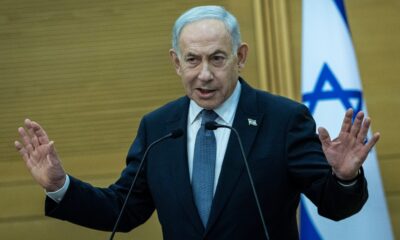
Netanyahu, who was in office on the day of the attacks, has resisted setting up a commission. Other top officials in office at that time, including military chief of staff Herzi Halevi and other top intelligence officials, have acknowledged blame and left their posts.
The bill, sponsored by Knesset member Orit Farkash-Hacohen of Gadi Eisenkot’s Yashar party, received 65 votes in favour and 50 in opposition. The legislation will next head to the Parliament’s Arrangements Committee, which will determine the committee that will conduct further deliberations, the Knesset said on Wednesday.
“Once the bill passes, we will begin to heal the open and bleeding wound,” Farkash-Hacohen said during a debate that preceded the vote. “It will be an emotional, sad, and joyful moment all at once, because we all deserve answers; we all deserve to investigate what happened to us.”
Hamas and its allies killed some 1 200 people in the attacks and abducted more than 250. Bereaved families were in the Knesset gallery when the preliminary reading passed.
While the bill will require three further stages of voting in order to become law, its initial passage marks a major turning point following years of government resistance to such legislation.
The bill’s advancement is an early victory for Eisenkot’s bloc. Eisenkot earned endorsements from 67 Knesset members after the elections, as opposed to 46 who endorsed Netanyahu, who serves as caretaker prime minister while Eisenkot attempts to form a government.
Since Yashar’s Matan Kahana secured the role of Knesset speaker earlier this month, the bloc has been working to fast-track numerous pieces of legislation to undo various controversial laws that were passed when Netanyahu’s coalition held a majority.
Farkash-Hacohen’s bill would establish a state commission of inquiry into both the 7 October attacks and the war that broke out in its aftermath, according to the Knesset. The commission would include five members and investigate the factors that led to the attack and the subsequent war, from the end of Operation Protective Edge in August 2014 until the return of the last hostage’s body in January 2026.
The commission would publish an interim report within a year of publication of the notice announcing its establishment and receive an initial state treasury allocation of NIS 7 million (R36.7 million) to fund the work and related personnel positions, according to the bill.
An explanatory note included with the bill also describes the raiding of communities and Israel Defense Forces (IDF) bases near Gaza, the abduction and murder of civilians and soldiers, the destruction of homes and neighbourhoods, systematic acts of sexual violence, and the mass killings at the Nova festival.
“More than three years after the massacre, and despite the magnitude of the event, public pressure and the critical need to draw security-related lessons, the government of Israel has, to date, refused to establish a state commission of inquiry,” the note adds.
During the debate prior to the vote, Transportation Minister Miri Regev, of Netanyahu’s Likud Party, objected to the bill on the grounds that it would “not lead to an examination of what happened in the failure”. Regev accused the opposition bloc of aiming “to investigate our brave and heroic soldiers”, rather than trying “to get to the truth”.
“They want the Supreme Court, which made decisions that undermined the operational capabilities of IDF soldiers and commanders, to conduct the investigation,” she added.
The text of the bill includes no language that specifically targets rank and file IDF soldiers, aside from mentioning the number of service members who either died in captivity or while fighting.
As for the makeup of the commission, the bill proposes that it would allow for a diverse mix of people “capable of addressing the scope and complexity of the subject under investigation”.
However, the president of the Supreme Court by statute appoints members of state commissions, which must be led by a serving or retired judge, according to the Israel Democracy Institute. These provisions exist in order to ensure “the independence of the commission is preserved”, according to the institute.
Netanyahu has tussled with the Supreme Court for years over the breadth of its authority. Some of the laws that the Eisenkot-led majority is trying to repeal would restrict the court’s powers, instead allotting them to the political leadership.
Having received the approval of the Knesset plenum in a preliminary reading, the bill will still require first, second, and third readings in the same plenum before being passed into law. Between these readings, the legislation also undergoes deliberations and revisions in assigned committees.