





World
British government backs NHS antisemitism reforms that would restrict political symbols

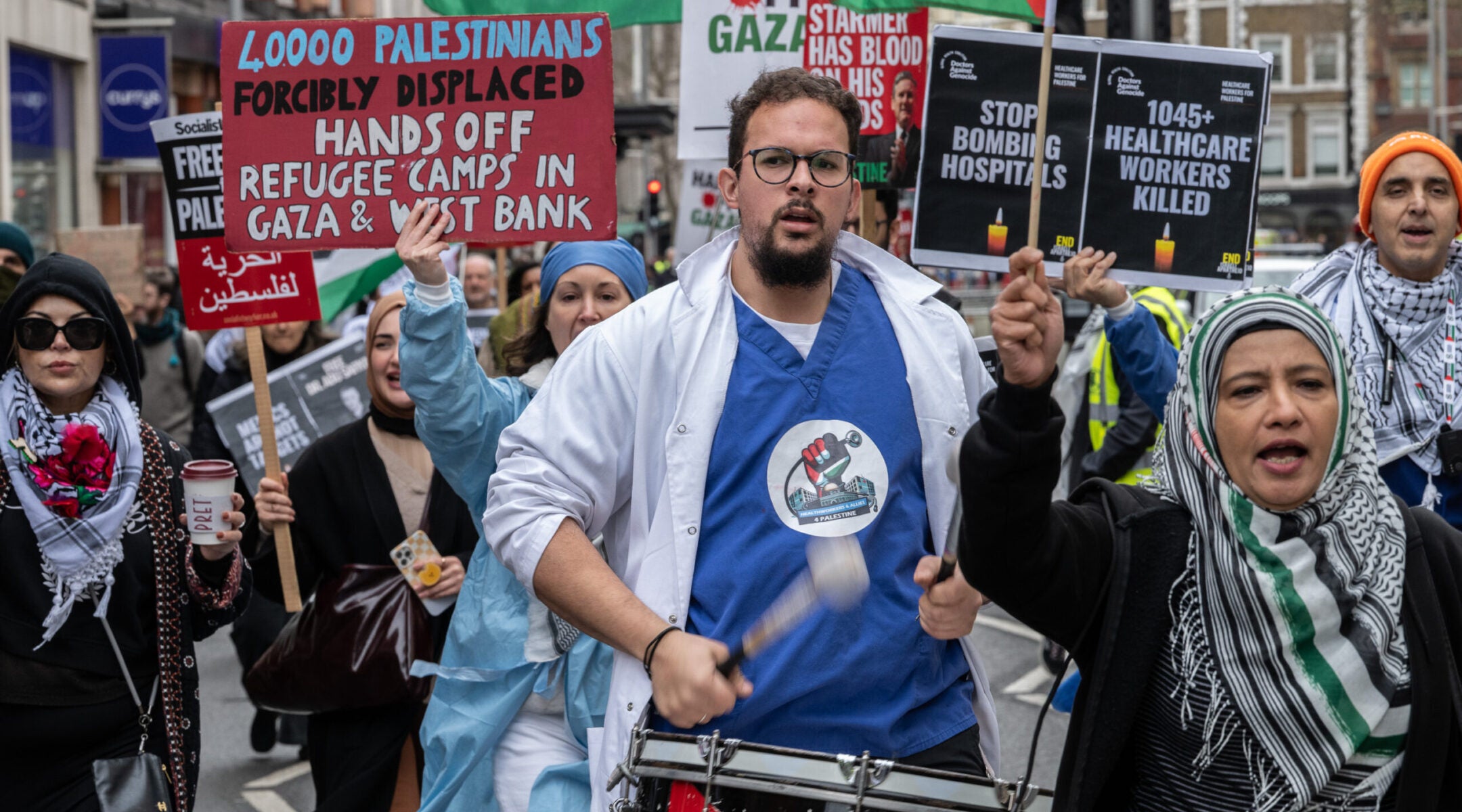
JTA – Doctors and nurses in the United Kingdom could soon be banned from wearing pro-Palestinian and pro-Israel symbols at work following recommendations from the British government’s independent adviser on antisemitism.
The adviser, Lord John Mann, delivered 36 recommendations to tackle antisemitism across the National Health Service (NHS) in a report that the government formally accepted on Thursday.
“Jewish people and everyone experiencing discrimination need action, not words,” Health Secretary James Murray said in accepting the recommendations for the country’s publicly funded healthcare system.
Prime Minister Keir Starmer charged Mann with tackling antisemitism in the NHS in October, soon after an attack on a Manchester synagogue in which two Jewish men were killed.
The review followed multiple high-profile incidents of alleged antisemitism within the healthcare system, including where Jewish patients said they were uncomfortable or unable to receive care from workers whose pro-Palestinian signifiers were at odds with the patients’ support for Israel.
Mann’s investigation documented “routine ostracism” of Jews within parts of the health service, Jewish doctors who considered leaving their jobs because of antisemitism, and Jewish patients who said they were afraid to seek NHS treatment because they feared antisemitism in doing so.
Calling such a climate “never acceptable”, Mann said changes are needed, including to the NHS dress code, which has not been updated recently to address political symbols. He said he believed political symbols should be banned inside NHS facilities and NHS workers should be barred from wearing their uniforms to political rallies.
“The firm position of this review is that political identifiers do not have a place in the NHS,” Mann wrote, adding, “To be more specific, saying ‘Free Palestine’ or ‘I love Israel’ are reasonable beliefs and expressions but the identification of such views or beliefs on public-facing NHS-owned profiles might, in themselves, be a barrier to patients.”
The report also calls for tracking data about Jewish patients to monitor their satisfaction and medical outcomes, training healthcare workers about antisemitism, and improving systems to handle patients’ discrimination complaints.
No timeline for implementation is laid out, but Murray said changes would be rolled out “without delay” and a first progress report would be published by the end of the year.
Unison, a public service employees union that includes NHS workers, said it opposes antisemitism and praised some of Mann’s recommendations, but raised questions about the dress code regulations. “There’s a real risk precious time and resources will be spent trying to define a political badge and what staff can wear in their own time,” it said in a statement.
British Jewish groups applauded the report. The Board of Deputies of British Jews’ Vice-President Karen Newman thanked Mann and said the board “has long made the case for many of the measures included in this report”. Among them, she said, were “training, staff accountability, uniform guidance, recording of Jewish ethnicity, and empowerment of Jewish staff networks”.
Newman also noted that several of the recommendations were included in the board’s July 2025 Commission on Antisemitism report, which Mann jointly chaired.
The Jewish Medical Association said the reforms would ensure “accountability for protection from discrimination” for both Jewish staff and patients and other minorities, and the Community Security Trust said it welcomed Mann’s recommendations and “the clear recognition that antisemitism must be addressed urgently across the NHS”.
Concerns about whether people perceived to be Jewish or pro-Israel can safely receive medical care from pro-Palestinian workers has ratcheted up anxiety in Jewish communities around the world, fuelled by viral incidents such as an Australian nurse who filmed herself threatening Jewish patients last year.
Ahead of Mann’s report, the British network ITV News aired an interview with an Orthodox Jewish doctor who quit his NHS job and moved to Israel this week with his family, citing rising antisemitism in England.
Dr Boruch Michaels lived in the heavily Orthodox Jewish London neighbourhood of Golders Green, where a spate of recent attacks on Jewish targets has taken place. Among the issues he told ITV that he had seen at work were other doctors refusing to treat Israeli patients, and staff refusing to give Jewish patients kosher meals.
He said, “If they are dying and in A&E [the emergency room] I’ve been told by doctors that if they’re from Israel then they will not treat that person.”
Mann did not comment publicly on the doctor’s account but said in making his recommendations, “Jewish people have to be confident that they will receive the same treatment as everyone else, at all times in all situations.”
Speaking to the BBC on Wednesday night, Mann elaborated on his views about the political signifiers in the workplace. Neither he nor the report specifically mentioned keffiyehs, signifiers of Palestinian solidarity that some Jews and allies of Israel interpret as support for violence.
“An ‘I support Palestine’ badge, or anything like that, is a problem for some people, just in the same way as an ‘I support Israel’ badge is a problem for some people. Don’t wear either,” he said.
More broadly, Mann said, workers should not be bringing their views into the NHS. “The stronger the views the bigger the problem,” he said.






Lulu Kahn
June 6, 2026 at 8:40 am
But I have to ponder whether the “good” dr Boruch’s children will enlist in the IDF 😎🇮🇱