


SA
Duvenage says active citizens can force change

For Wayne Duvenage, the fight against corruption isn’t separate from business. Rather, it is a condition for business to function.
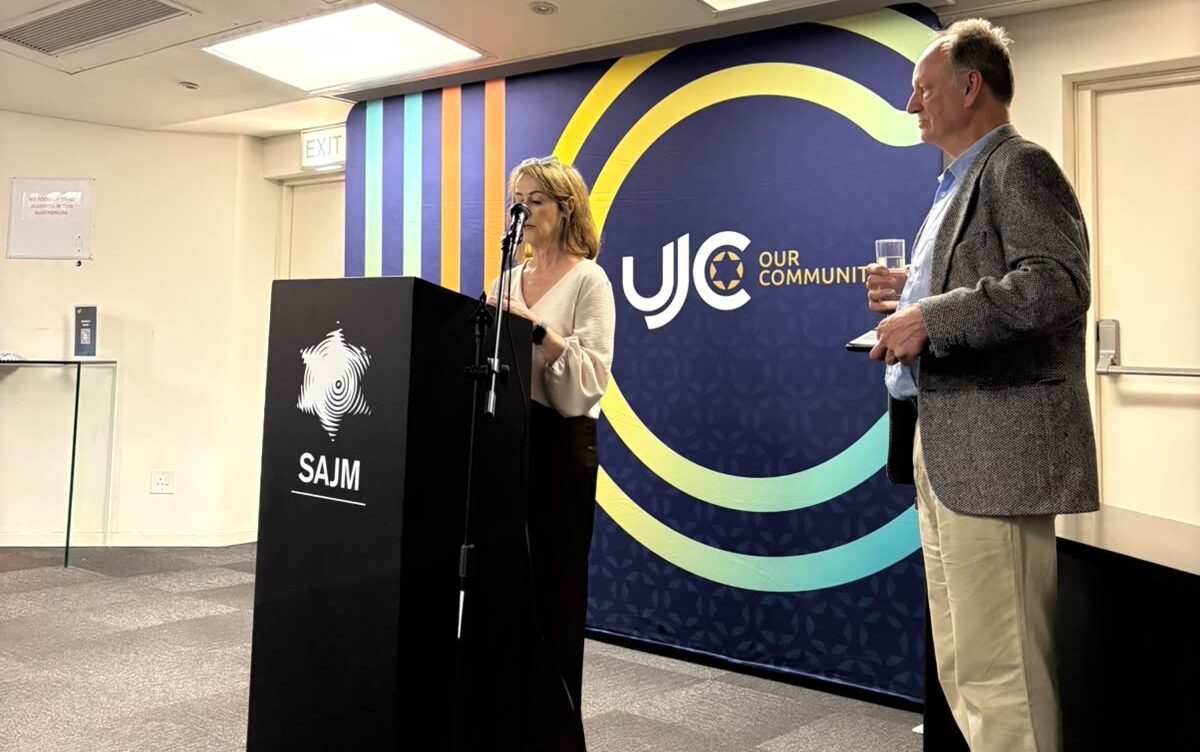
The chief executive of the Organisation Undoing Tax Abuse (OUTA) spoke at a United Jewish Campaign business breakfast in Cape Town on Wednesday, 9 September, tracing his journey from corporate executive to civil activist.
He used the e-toll campaign to demonstrate how organised citizens can use the law to force change.
OUTA began in 2012 as the Opposition to Urban Tolling Alliance, challenging Gauteng’s electronic tolling system. The e-tolls were eventually switched off in 2024.
Before entering civil activism, Duvenage spent decades in the travel and tourism industry. He was chief executive of Avis South Africa for five years. His move into civil activism wasn’t planned. “I certainly didn’t have civil activism on my CV when I left Avis,” he said. “It happened, and it happened for a reason.”
He said the e-toll campaign changed his understanding of how citizens could influence public policy. The campaign began with research and engagement with government, rather than an immediate decision to go to court. Duvenage said the group spent more than a year trying to persuade government that the tolling model would fail.
He said the campaign wasn’t opposed to user-pays principles; its objection was to what he regarded as a flawed model. “It was about the principle in the scheme. It was about doing what is in the best interest of society.”
The campaign had to overcome public fears about the consequences of refusing to pay. Duvenage said motorists were warned that they could lose licences or face criminal consequences. OUTA responded by researching the law and explaining citizens’ rights. Social media became an important part of that effort.
Duvenage said challenging government required both legal action and public communication. “Business doesn’t want to challenge government,” he said. “They don’t, still to this day.”
He argued that this reluctance can weaken democratic accountability. But the courts, media, and constitutional protections give citizens important tools for challenging government decisions.
The e-toll campaign eventually forced OUTA to develop a broader model for civil action. Duvenage said the organisation didn’t want to simply expose problems and move on. It wanted to maintain pressure until institutions responded.
“We wanted to stay the course, be resilient. Once the issue has been exposed, you need to keep the spotlight on.” He described this approach as “narrative economics”, which he defined as the power of owning the story. Public understanding could create pressure that continues after a news cycle has ended and headlines have been forgotten.
OUTA also changed how it funded its work. Instead of relying mainly on once-off donations, it sought regular monthly contributions. Duvenage said this allowed the organisation to build a litigation fund and employ specialist staff. He said OUTA now works across corruption, maladministration, public procurement, energy, transport, higher education, and government oversight.
One of the examples discussed at the breakfast was the proposed Karpowership deal. OUTA challenged plans to procure electricity from floating gas-powered ships. Duvenage said the proposed contracts would have committed South Africa to long-term costs.
OUTA used the courts and environmental requirements to delay the project. The organisation ultimately succeeded in challenging the electricity generation licences for the three Karpowership projects.
The energy debate remains relevant to OUTA’s work. Eskom reported a R30.35 billion profit for the 2026 financial year, despite a decline in electricity sales. Duvenage has argued that Eskom cannot rely indefinitely on higher prices while demand falls. The power utility needs to find new ways to increase sales and reduce electricity prices.
He has also continued to challenge governance failures in public institutions. In June, OUTA called for a forensic investigation into the Insurance Sector Education and Training Authority after its chief executive was suspended.
At the breakfast, Duvenage linked these cases to a broader argument about accountability. He said institutions need effective oversight, consequences for wrongdoing, and protection for people who expose misconduct.
Whistleblowers, he said, are an important source of information for OUTA, which receives information anonymously and helps people understand how to provide evidence without unnecessarily exposing themselves.
The discussion turned to South Africa’s political future. With local government elections approaching, Duvenage urged citizens to vote and remain engaged between elections. “Active citizenry works every single day,” he said.
He argued that businesses cannot isolate themselves from the country’s political and institutional health. Companies might be focused on survival, but corruption ultimately affects the environment in which they operate. “If we don’t defend the democracy against this corruption, then there is no country to do business in.”
Duvenage was critical of the African National Congress’s record in government and predicted major political change by 2029. He also questioned whether the Democratic Alliance could secure a national majority without broadening its appeal.
His comments on party politics formed part of a wider point about participation. He said citizens should focus on identifying people and organisations capable of improving governance, rather than simply expressing frustration.
He also rejected the idea that South Africa’s problems are beyond repair. He pointed to the country’s natural resources, tourism potential, and existing institutions as reasons for optimism. “I’m excited about South Africa,” he said. “We have ama zing potential.”
For Duvenage, the lesson from more than a decade of civil activism is that change requires persistence. He said citizens don’t need to join a political party or become full-time activists to play a role. They can ask questions, support credible organisations, vote, provide information, or challenge decisions through lawful channels.
The United Jewish Campaign’s message at the breakfast was similar. Its executive director, Helen Schneider, said the Jewish community also depends on people who participate, give, volunteer, and choose to be involved.