Lifestyle/Community
Holocaust play is close to home for European director

When second-generation Holocaust survivor Luc Albinski approached Bulgarian director Ilina Perianova to direct the play he wrote about his family’s experience, she jumped at the chance because she felt personally connected to the history the play deals with.
Albinski, who wrote the play, approached Perianova, a Bulgarian film and theatre director, screenwriter, and actress, a year ago in Bulgaria to help him adapt his script of Nobody Told Me, which is about his mother and grandmother, into a theatrical production.
With deep roots in a family shaped by Holocaust survival, Perianova’s involvement adds a powerful personal dimension to the production, underscoring the play’s exploration of memory, silence, and inherited trauma across generations.
She said she was initially drawn to the material because of her own family history. Her grandmother, Jevgenia Nogina, was a Jewish doctor during the Holocaust.
“When I first read the play last year, I was deeply moved because I thought about my grandmother Jevgenia Nogina, my grandfather, Vasiliy, and all those unsung heroes of World War II like her. I grew up with my grandmother’s stories from the frontline, and they were absolutely terrifying,” she told the SA Jewish Report.
Nogina came from Ukraine, and her whole family was killed in the Holocaust while she was studying medicine in Kazakhstan.
“She was a doctor during World War II, and actively involved in fighting the Nazis,” said Perianova, “It was during the war, on the front, that she met my grandfather, who was Russian. He was one of the highest-ranking officers in the army, holding a rank such as lieutenant or captain, and was highly decorated for his service. He received the Suvorov Medal, one of Russia’s most prestigious military honours and among the highest awards to come out of the war.”
So, when she saw that the play revolved around a group of mostly Jewish doctors in and around the Warsaw Ghetto, she saw her grandmother in these characters.
“When Luc gave me the script, and I read that it was about a group of doctors, I believed it didn’t just come to me by chance or coincidence, it was divine providence. It felt really close to home,” she said.
“I will always remember my grandmother as a strong and compassionate woman, a doctor who had lost all her closest relatives, who had stomach ulcers because of hunger during war, who had seen far too much death and escaped its clutches. At family gatherings, she would toast again and again with only one sentence, ‘May there never be war! May there never be war again!’”
Perianova connected with the material on another level. While her mother was growing up in Soviet Russia, she had little to no knowledge of Jewish traditions.
“My mom grew up in Russia, where there was so much denial of religion. We grew up with zero knowledge of what being Jewish means. I was lucky because later, I met a lot of Jewish communities in Bulgaria, and started to learn about Jewish traditions and things, but it didn’t come from my mom.”
She said when her mother was growing up, she and her family still had to keep their religion secret, as hatred for Jews never went away. “My grandmother knew she had to hide being Jewish even after the Holocaust. Stalin hated Jews as well. This was made more complicated by the fact that she was head doctor in the hospital in the Soviet Union. Because she was Jewish, she had so many problems.”
Bringing this play to life has been cathartic for Perianova, and other members of the creative team, as she has been able to connect to her ancestors.
“I took it as a healing journey, that was my main intention,” she said. “I told [members of] the team that what I want for them is a path to their own healing because as you know, especially in South Africa, there is a lot of ancestral trauma in aspects like apartheid and healing the trauma of our ancestors.”
She said that through collaboration with choreographer Vicky Friedman, she was able to build the play into the piece of theatre it is. “Because of our shared historical trauma, we bonded deeply and found ourselves driven by the same urgency to tell the stories of our ancestors. That connection shaped the way we worked together, and ultimately gave rise to the strong physical language of the play. Much of its movement, rhythm, and storytelling grew directly out of our own experiences, allowing the story to be told from a deeply personal place while still resonating on a universal level.”
Even though it has been a cathartic experience bringing this story to life, Perianova said she felt a sense of pressure because of the heavy subject matter.
“It’s a heavy project with so much trauma, pain, and mass murder. It hits close to home,” she said. “I’ve had two weeks when I couldn’t sleep. I broke down in the last two weeks before we premiered. It wasn’t just the anxiety of coming out with the show. It was more than that. When we started putting the show together, I saw what we had created, and there was this deep pain that I can’t even describe. It’s a universal pain. It’s so enveloping, and so beyond you. It’s been a hard process. It’s been emotionally and physically draining.”
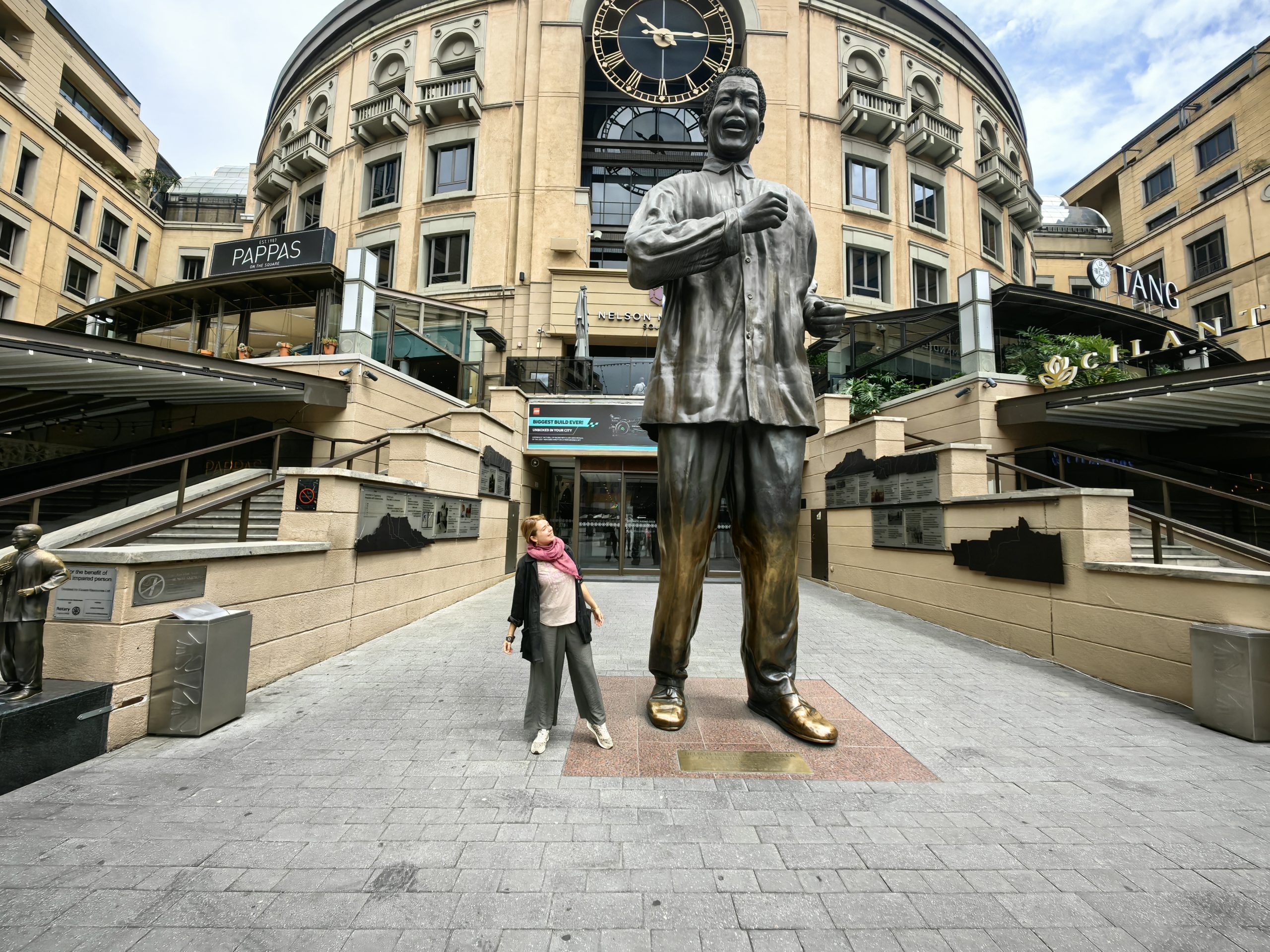
However, the anxiety diminished as soon as the curtain went up at Theatre on the Square on 28 January. Said Perianova, “It was an honour to work on this play because it was also so close to home. It was as if I was telling my family story. That’s why I joined the project.”