





SA

How Jewish organisations are tackling South Africa’s job crisis

Unemployment isn’t just a statistic. It’s a daily reality for millions of people searching for work and finding none. In the final quarter of 2025, the official unemployment rate stood at 31.4%, with about 7.8 million people out of work.
More than 17 million people are unemployed, but millions more have given up looking for jobs and aren’t training or studying.
Behind these numbers are young people locked out of opportunity, often without the skills needed for a changing economy. South African Jewish organisations are among those working to help.
At ORT SA, the focus is clear. “It’s really about educating for life,” says Chief Executive Ariellah Rosenberg. She said the organisation’s mission has remained constant over decades, centred on employability and job creation.
Rosenberg says the challenge isn’t only limited jobs, but a mismatch between education and the needs of the labour market. She said ORT SA works to identify in-demand skills and align training accordingly. This includes programmes in coding and robotics, as well as STEM (Science, Technology, Engineering, and Mathematics) education initiatives. The aim is to give students skills that employers need.
ORT SA Cape, while affiliated, operates with a distinct focus on teacher training and support.
The organisation trains between 2 500 and 3 000 teachers each year, particularly in early childhood development. Alongside this, ORT SA Cape runs programmes for unemployed youth. These include learnerships that lead to formal qualifications and internships that provide work experience.
Chief Executive Beverly Da Costa said participants are placed in schools as teaching assistants, or in small businesses. They receive training in soft skills such as communication and time management, as well as mentoring and psychosocial support. She said the goal is to improve employability and give young people a foothold in the job market.
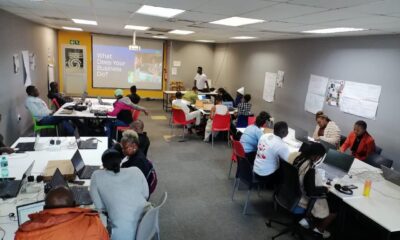
Education is also central to the work of the Maharishi Institute. It focuses on what founder Dr Taddy Blecher calls a demand-driven model, working with employers to identify scarce skills and training students accordingly.
“We’ve had a 95% job placement rate over two decades,” Blecher said.
He said more than 25 000 students have been educated through the institute, with more than 22 000 placed in jobs. Training areas include artificial intelligence, data science, and cybersecurity. These reflect the changing nature of the economy and the need for future-focused skills.
Blecher said education was key to breaking cycles of poverty. He pointed to the long-term earning potential of graduates as evidence of impact.
Within the Jewish community, Staffwise plays a more targeted role in addressing unemployment. The organisation focuses specifically on reducing Jewish unemployment through placement, networking, and career support. It connects job seekers with opportunities, offers career guidance, and works with businesses on recruitment and workforce planning. Its approach centres on building a strong employment network within the community while supporting long-term economic stability.
Beyond the Jewish community, large-scale national initiatives are also tackling unemployment. The Youth Employment Service is one of the most significant of these. It is a private sector-led initiative that partners with businesses to create 12-month paid work experiences for unemployed young people. They gain practical experience ‒ in often their first entry into the workforce ‒ while helping companies build future talent pipelines.
The programme has created hundreds of thousands of job opportunities in multiple sectors. It aims to bridge the gap between education and employment by ensuring that young people gain real workplace exposure, which significantly improves their chances of securing long-term jobs.
Organisations like Afrika Tikkun, under the leadership of Marc Lubner, are also addressing unemployment through long-term interventions. In a recent statement, the organisation said many young South Africans feel that opportunity is out of reach. It pointed to a growing gap between education and the job market, particularly in areas such as digital skills.
Afrika Tikkun’s cradle-to-career model aims to support individuals from early childhood through to employment. The focus is on building both skills and confidence, while connecting young people to real opportunities. The organisation stressed that no single entity can solve the unemployment crisis alone. Partnerships between government, business, and civil society are essential.
This view is reflected across the sector. Initiatives such as Business for South Africa also play a role in coordinating efforts between companies to support economic recovery and job creation. Together, these efforts highlight a broader ecosystem aimed at tackling unemployment from multiple angles.
For Jewish organisations, the work is rooted in both community responsibility and practical impact. Rosenberg said ORT SA’s approach is shaped by an understanding of economic realities and a commitment to equipping people with relevant skills.
Da Costa emphasised the importance of support beyond technical training, particularly for vulnerable youth. Blecher pointed to measurable outcomes, including high placement rates and long-term employment.
Despite different approaches, a common theme emerges. Education alone is not enough. Skills must align with demand, and support must extend beyond the classroom. In a country where millions remain unemployed, these organisations are working to turn potential into opportunity.






thoko malebye
May 1, 2026 at 7:19 am
Do you have this organisation inJohannesburg
John
May 6, 2026 at 11:40 am
This is great work and it is the way to go