





Voices
Jewish leaders step back into national dialogue

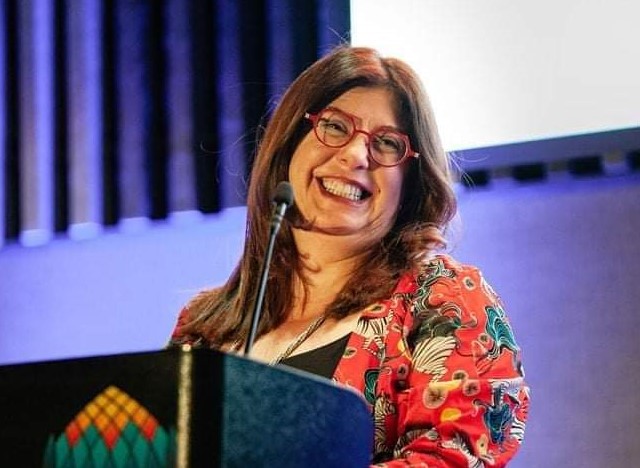
This week has been a time of meaningful re-engagement for our community in the broader societal and interfaith arenas. In the early part of the week, our national director, Wendy Kahn, and youth liaison, Gabi Farber Cohen, participated in the G20 Interfaith Forum in Cape Town. A key and recurring theme was the need for moral and ethical leadership, and the roles that religious leaders should play in fostering this.
Kahn delivered a thoughtful and well received response to the keynote address by Archbishop Thabo Makgoba. In her remarks, she delved into the Jewish understanding of peace, shalom, drawing from its root in “sheleimut” (wholeness). The concept is echoed in the South African ideal of ubuntu, which affirms our interconnected humanity and shared harmony. Both notions defy simple translation into English, yet they converge on a shared idea, namely that true peace emerges when we embrace our collective wholeness. Kahn went on to describe the importance of the interfaith space, explaining that for it to function, there’s a requirement for a basic level of respect for each other’s rights and for each religion to have their beliefs.
The South African Jewish Board of Deputies is further represented at the G20 by KwaZulu-Natal Council President Alana Pugh-Jones Baranov in her capacity as the country director of HIAS South Africa. Pugh-Jones Baranov’s address outlined how Jewish sacred texts and traditions as well as the ancient and recent history of escaping persecution and discrimination has informed our response to refugees and asylum seekers. In fact, Jewish values motivate HIAS to assist those in need to use interfaith relationships to produce humanitarian assistance to people of all faiths, races, ethnicities.
We were also warmly surprised to see a contingent of Israelis included in the programme.
Notably, the Israeli contingent’s contributions extended far beyond Jewish-Muslim relations or Middle Eastern concerns, addressing critical issues such as Africa’s challenges and the preservation of cultural heritage at sacred sites. Its inclusion reflects the forum’s commitment to fostering an open, inclusive platform that welcomes diverse expertise and respected voices. This stands as a powerful example, particularly in light of the past two years, when too many platforms in South Africa have sidelined or boycotted some of the most compelling voices simply due to their association with Israel.
The Israeli contingent included two rabbis from an organisation called Ohr Torah Interfaith Center, who participated with Muslim scholars on the topic of Jewish-Muslim fraternity. At this remarkable meeting, the parties signed a document agreeing to a respectful dialogue rooted in the deep complexities that have shaped our humanities, and the acknowledgement of our common Abrahamic heritage. The group aims to embark on a process for Muslim-Jewish relations that will parallel that of the Nostra Aetate declaration of 1965 which marked a shift in Christian-Jewish relations.
Later this week, we look forward to joining the National Dialogue, another vital platform aimed at deepening understanding and charting a path forward for our nation.
After periods of feeling sidelined from public discourse, despite our persistent efforts to secure a voice in the country’s key forums, it’s encouraging to be actively involved in both the G20 and the National Dialogue. We must seize these opportunities to contribute constructively and to ensure that we are heard. Interfaith spaces can be uncomfortable and uneasy, and the G20 certainly had its share of challenging moments, but discomfort is most often the catalyst for the most authentic dialogue, growth, and transformation.
As the late United Kingdom Chief Rabbi Lord Jonathan Sacks observed, “G-d has given us many faiths, but only one world in which to coexist.”




Dennis Wiener
August 20, 2025 at 8:08 am
Please email me the questuinaire