


Voices
Dysfunctional South Africa is fertile ground for xenophobia

Anarchy is a form of oppression. It curtails the freedoms of law-abiding citizens who must barricade themselves behind burglar bars and expensive security systems while criminals wield their illicit power. Like all forms of oppression, anarchy will also find resistance, which often erupts in the form of xenophobia, as we are seeing in Johannesburg, kuGompo (formerly East London), Gqeberha (formerly Port Elizabeth), and other parts of South Africa.
The situation will only worsen, unless Africa faces its demon: corruption, which leads to conflicts over resources. According to the Africa Center for Strategic Studies, 16 countries on the continent are experiencing internal conflicts, leading to the displacement of more than 40 million people. Some leave in search of economic opportunities that aren’t existent in their home countries, and often they enter another country illegally.
In Israel, for instance, the Knesset reported that there are approximately 33 000 illegal foreign workers and a further 30 000 asylum-seekers from Africa, particularly from Eritrea and Sudan.
Immigrants are always a political football, and it can be humiliating.
I experienced this as a student in Germany, even though I was invited by the German government, granted a full bursary, and all my papers were intact. It was only two months after the Berlin Wall had fallen. Germany was a geopolitical faultline; the Soviet Union was still occupying the former East Germany, and West Germany still hosted American, French, and British troops. In the midst of all that, there were many people from Turkey (now known as Türkiye), who had come to rebuild Germany as cheap labour. As the former communist countries of Europe opened up, their citizens also descended on a hopeful Germany. They were poor, skilled, and burning with the desire to live a decent life, so they started at the bottom, doing the work that the Germans didn’t want to do. There was also a large contingent of African students and former freedom fighters because both the East and the West were trying to influence the nascent African intelligentsia. As a response to all that, there was a strong feeling of xenophobia in Germany. Everywhere, there was graffiti that said “Ausländer raus!”, meaning “Foreigners out!” It didn’t feel good to be in a country that was still struggling to deal with the smouldering emotional ruins of World War II. The Holocaust was not even discussed, and the Germans seemed to feel guilty only about invading Poland.
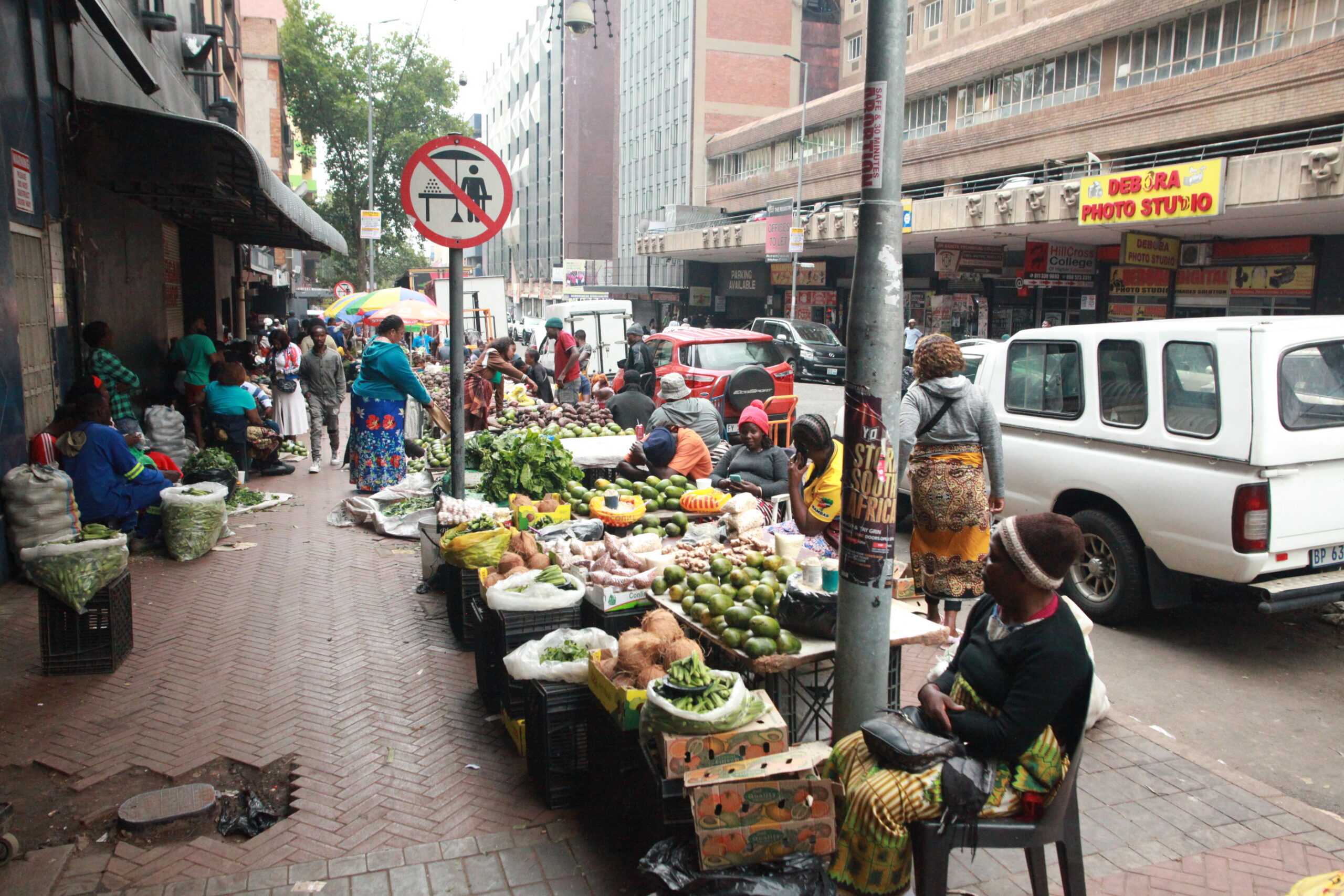
If the blight of xenophobia could regrow in the reunified Germany, where all government systems performed like clockwork, predictable and repeatable, how much more so in South Africa, where public services have all but collapsed? The economy has ground to a halt, criminal syndicates are in government, as commission after commission reveals, and it now shows on the ground. I go into the Joburg city centre quite regularly and local languages have become scarce, with many South African fruit vendors pushed out. Their children aren’t working and their homes back in the township are now derelict. The political parties in power are either unwilling or unable to solve the jobs crisis, and the opposition are unable to galvanise desperate voters. It’s clear that South Africa’s greatest problem is leadership.
It will get worse before it gets better, because President Cyril Ramaphosa’s government has chosen showmanship over statesmanship in geopolitics. When it had the unique chance to be a peaceful arbiter after 7 October, and the subsequent Gaza War, it chose brinkmanship and tried to demonise Israel at the International Court of Justice. Peacemakers understand that you cannot bring a piece of paper to a fire fight. Court orders mean nothing where rockets are flying.
Ramaphosa’s actions have reduced his voice to that of a clown in peace-making forums. Now, the absence of a credible South African voice can be felt on the continent. There is no one who can talk to the warring parties as Thabo Mbeki did in the Congo, Burundi, and Sudan conflicts. While Ramaphosa is obsessed with Palestine and Iran, Zulu armies are marching, terrifying innocent children in city centres, which is reminiscent of the violent days of ANC-Inkatha violence.
Immigration is both irreversible and unavoidable. It can only be managed at the source. The governments that treat their people poorly must be made to pay a heavy price. The citizens of those countries must hold their own government accountable and fight for change. They cannot enjoy the fruit of the labour of their neighbours, who paid for their own freedom with blood.
Four years after the establishment of the State of Israel, the African American civil rights activist Dr WEB Du Bois, who held a Harvard doctorate, gave a speech at an event organised by Jewish Life. It was themed “Tribute to the Warsaw Ghetto Fighters” and he told his audience he had visited the ruins of the ghetto.
“Nothing in my wildest imagination was equal to what I saw in Warsaw in 1949. I would have said before seeing it that it was impossible for a civilised nation with deep religious convictions and outstanding religious institutions; with literature and art; to treat fellow human beings as Warsaw had been treated. There had been complete planned and utter destruction,” he said.
Du Bois told them he’d been a student at the University of Berlin some 40 years before the Holocaust. He’d gone to a social event with a German friend in a small town. He’d soon realised that things were amiss, so he mentioned this to his friend. “It’s not you they are objecting to,” the friend whispered. “It’s me. They think I may be a Jew.” Du Bois was shocked because he knew that his friend was pure German. It was “his dark hair and handsome face” that made him a suspect, as he wrote.
Xenophobia is a symptom and not the disease, which can only be cured through bread, books, water, and all the fruits of peace.
- Muzi Kuzwayo is the chairperson of South Africa’s Promise, a non-profit company that works with young people across the country to help them unleash their potential.