Religion
‘Know thyself’ because you, alone, are accountable

The Talmud (Rosh Hashanah 18a) explains that on Rosh Hashanah, we stand alone before G-d in judgement. This means that we, alone, are held accountable for our choices, responses, and values. We cannot blame our parents, our friends, or our society for our life choices. This is terrifying, but it’s also empowering because it means that Hashem desires and expects us to be true to ourselves.
Therefore, the first step in spiritual growth must be self-awareness.
The maxim of “know thyself” – believed to be inscribed at the entrance of Apollo’s Temple in Delphy – profound as it may be, isn’t merely a piece of advice, it’s a charge, a burden, and a responsibility that we will be held accountable for by our Creator.
But how do we get to know our true selves?
Rabbi Eliyahu Eliezer Dessler (1892-1953) writes in Michtav Me’Eliyahu Vol. 4, the following short but potent statement: “A man finds himself in three ways: (a) isolation, (b) by being a giver and not a taker, and (c) by attempting to become and not to have or acquire.”
Isolation: Self-awareness and self-actualisation centres on isolation, away from the noise of modern society and finding the time and space to think deeply. All profound thinkers, powerful leaders, and accomplished achievers were deep individualists. They invested time to be alone, away from “the herd”, to discover who they really were and what they were thinking. In quiet spaces, they asked themselves, “What are my dreams? What are my fears? What are my thoughts?”
As Nietzsche wrote in Daybreak, “I go into solitude so as not to drink out of everybody’s cistern. When I am among the many, I live as the many do, and I do not think as I really think. After a time, it always seems as if they want to banish me from myself and rob me of my soul.”
Our forefathers and prophets – Moshe; Jeremiah; Eliyahu; Elisha; King David – often isolated themselves from society to find clarity, courage, and G-d.
Be a giver not a taker: “Bribery blinds the eyes of the wise, and perverts the words of the righteous.” – Devarim 16; 19.
Bribery doesn’t only blind the eyes of the judge or distort the words of the witness, we are all victims of cognitive distortions due to the bribery of our sensual desires and social pressures. Psychologists and researchers of behavioural economics list dozens of different types of personal and social biases that affect our judgement. We regularly fool ourselves into believing that our thinking is objective and rational, yet research clearly demonstrates that our cognitive processes are highly biased and conclusions cannot always be trusted. Physical desire, emotional investment, self-preservation, and conservation of energy are all factors that contribute to the list of cognitive biases. Whether it is confirmation bias; the halo effect; or the illusion of control; and the many others that researchers have identified, they all have one thing in common – self-interest. It’s this self-interest that causes bias; it warps our perception and pollutes our insight.
If we wish to know who we really are and have some inkling of the depth of our spirit, then we must stop obsessing so much about ourselves, and take genuine interest in others and their welfare. The less we worry about what we can get out of others, focusing rather on what we can contribute, the more we can clear our minds of the clouds of our bias and have an honest perspective of the world around and within us.
Being not having: One of the most piercing existential questions a person must ask themselves is what defines us. Are we defined by our parents’ definition or by society’s definition of ourselves? Are we defined by what we have – is it our job that defines us? Does the world outside of us determine our existential worth?
For most people, the material world outside of the self is what defines them, and is viewed as the source of their contentment and anguish. It’s the cause of their failure or success. One of the first signs of spiritual maturity is the ability to distinguish between having pleasure and being content; between feeling safe and being secure; between receiving honour and being honourable; between having much wisdom and being wise; between being and having.
The spiritually mature person will define themselves by what they are, not what they have, because they know that what they own will forever remain outside of themselves. They find fulfilment by focusing on being what it is that they seek, not buying it. They work on becoming secure, not feeling safe; they seek equanimity and do not avoid suffering; they find serenity by accepting the things they cannot change; and do not attempt to silence their howling emptiness with alcohol or other destructive behaviours. They find more fulfilment in giving, and find little joy in gifts.
This is the “long-short road” to self-knowledge and spiritual maturity. It will remove our anxiety and doubt, and give us the courage to live honest and meaningful lives. This is the charge and the benefit of the journey to self-knowledge.
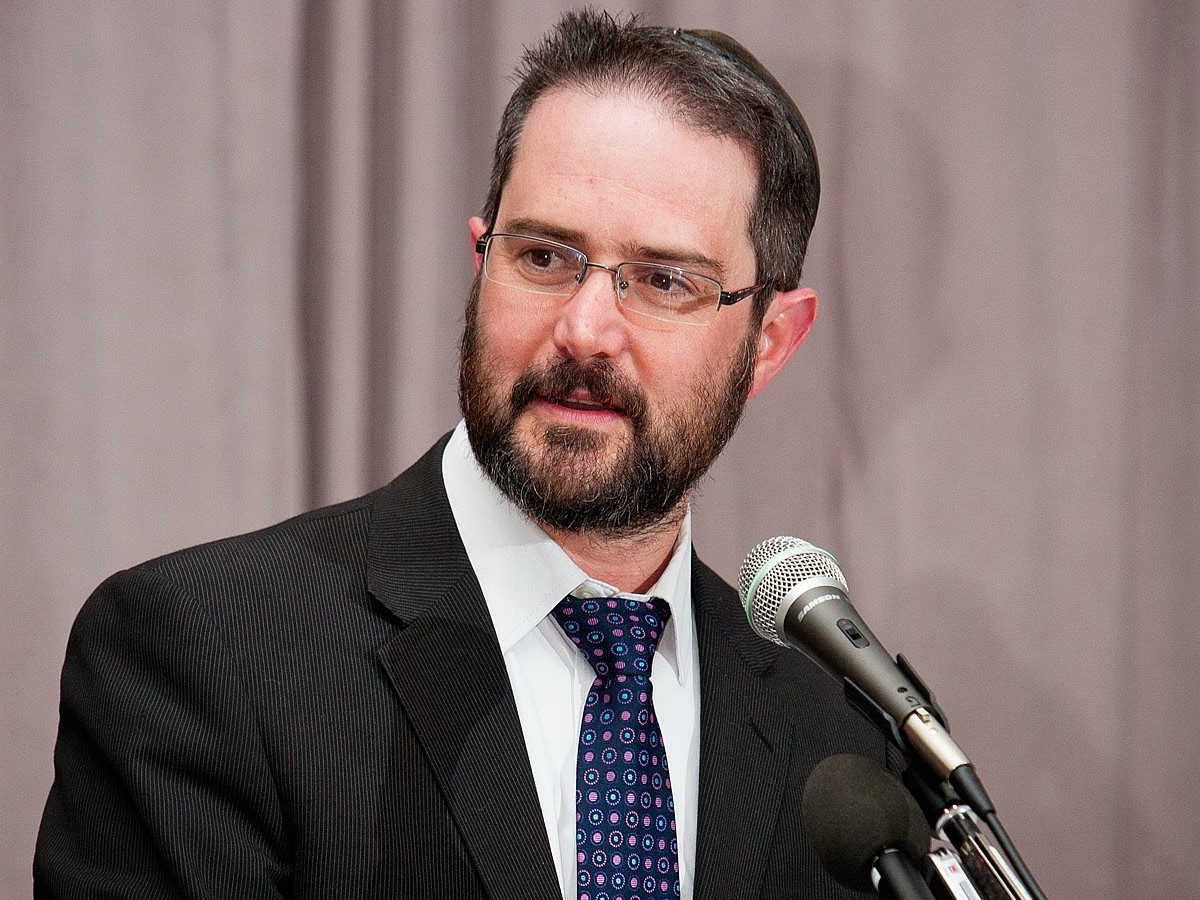
- Rabbi Gabi Bookatz is the rabbi of Waverley Shul, a teacher at King David High School Linksfield, a lover of heavy metal music, Nietzsche, and a passionate Zionist.