



Religion
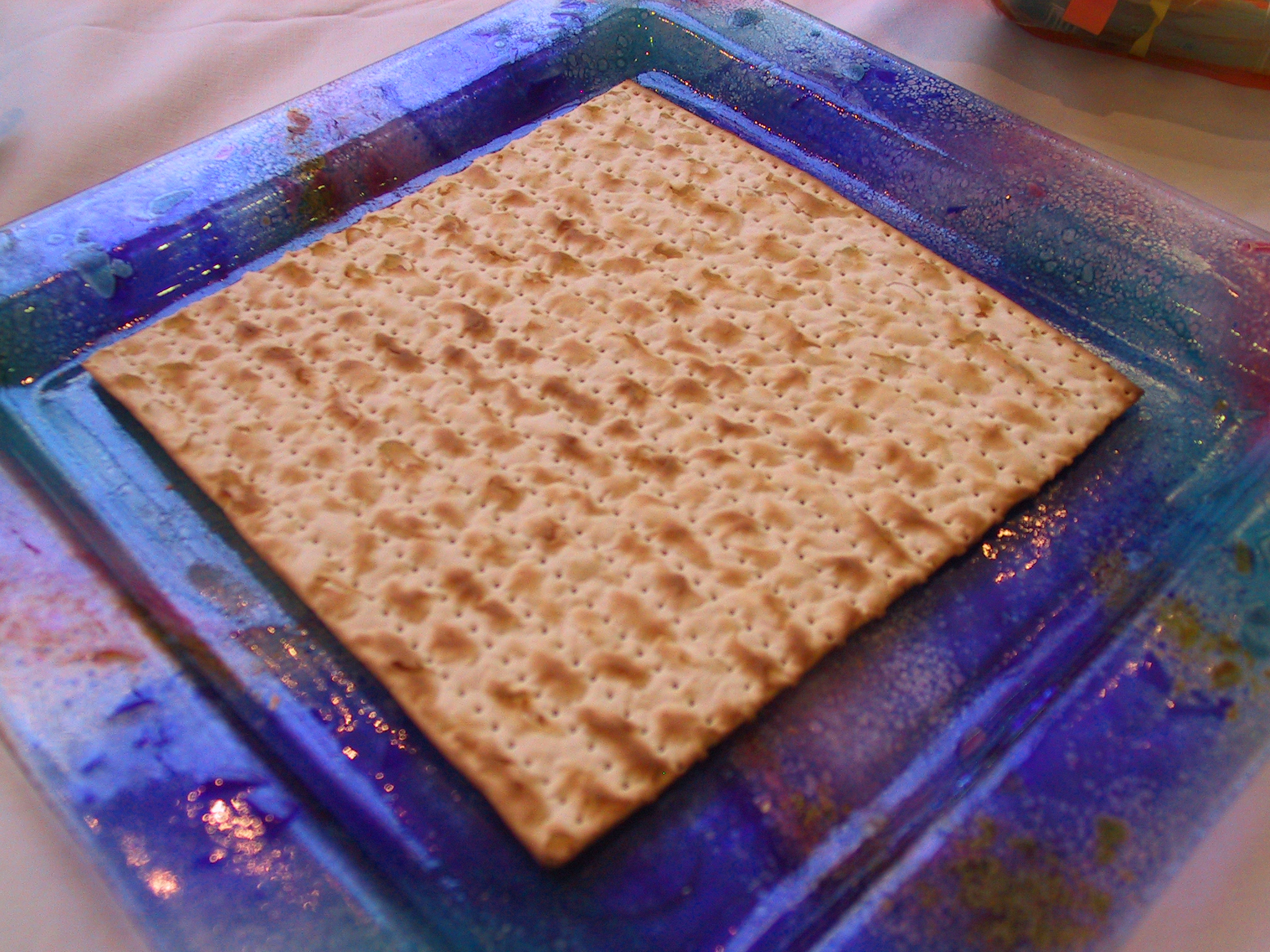
Half a matza

Passover is around the corner and I will be so presumptuous as to suggest you may have opened your favourite Haggadah to have a look and start preparing for the big seder night.
Seder means “order” and one of the items in the order of the seder agenda is yachatz. Well, what is yachatz?
It’s one of the first things we do on seder night, even before anyone says the Ma Nishtanah. We break the middle of the three matzahs on our seder plates. The larger part is put away for the Afikomen and the smaller part remains on the seder plate throughout the recital of the Haggadah, until we say the blessing of Hamotzi.
This is true lechem oni, the bread of poverty. Not only is it matza; it is plain flour and water with no flavouring whatsoever, just a flat, tasteless wafer but broken as well. Back in Egypt, the slaves were fed the simplest, cheapest food. Bread of affliction, prisoners’ bread, what the most miserable pauper might be able to afford, a mere morsel rather than a proper meal. And now that it’s been broken, it’s a morsel of a morsel.
It’s bad enough that the Jews were forced to eat a matza, but now they are eating a broken matza.
Rabbi Shlomo Riskin has pointed out that, seeing as the custom is to show the broken matza during the recital of the Haggadah, we therefore say all of maggid, virtually the entire Haggadah, over half a matza. And he makes a very powerful conclusion.
The whole Haggadah over half a matza. And isn’t life just like that?
There is always something eluding us. For some, it may be health, for others wealth or success, nachas or happiness in general. Somehow, as much as we achieve in life, there is always something more we want that keeps slipping out of our grasp.
Isn’t it so true – our whole life is but half a matza.
Our sages taught, “No person dies having achieved even half of his ambitions and desires.”
“Really?” you may say. Aren’t there many individuals who’ve achieved everything they set out to achieve? I know a couple of guys who seem to fit the description of “the man who has everything”, Just have a look at the Forbes list of billionaires.
The answer is yes; there are such people. The problem is that as soon as they achieve one ambition, they have broader horizons, and new and bigger ambitions. With each success, ambitions develop further.
The rabbis put it simply. “If a man has $100, he wants $200. And if he gets $200, he then wants $400.” And so it goes, on and on.
Take the lottery. When we’re in the fantasy stage of winning, we’re prepared to give a big percentage of our winnings away to charity, and family and friends. “Master of the Universe, if you help me buy the winning ticket, I promise to give 20% to tzedakah. I will renovate the synagogue, refurbish the seats – just tell me and I’ll get it done.” But once you do win (you should be so lucky!), and it’s no longer make-believe Monopoly money but cash in your pocket, suddenly, it’s not that easy to give away.
Take the story of Harry, the guy who won $50 million. His family heard about the win before he did, and they were worried he might have a heart attack when he heard the news. So, they called his doctor to come and give him the good news. This way, if Harry went into shock or had a coronary, the doctor would be there with a remedy on the spot to administer an antidote.
In comes the doctor and says, “Harry, my friend, what would you say if I told you that you just won the state lottery? Fifty million smackers?” And Harry replies, “Doc, you’ve been so good to me all these years. If I won the lottery, I would give you half!”
And the doctor dropped dead of a heart attack!
It’s easy to give it away when you don’t have it. But when you do have it, it’s not so easy. When it’s yours, you don’t give half away so quickly.
The truth is that we do go through life with only half a matza; we never seem to get to the full one. While many of our dreams and aspirations do materialise to one extent or another, there is always something that remains frustratingly, mysteriously, almost hauntingly elusive.
But let me ask you. Just because we can’t have it all, do we desist from acquiring as much as we can? Do we say it’s either all or nothing? Or do we settle for as much as we can acquire? Do we turn down a deal that will make us a profit, even if it doesn’t make us instant millionaires?
The Kotzker Rebbe was renowned for his sharp wit and wisdom. He once asked his disciples, “What is the enemy of good?” One said that the enemy of good is bad. Another suggested it must be evil. But the Rebbe said “wrong” to all their answers.
“Do you really want to know what the enemy of good is? I will tell you,” he said. “The enemy of good is excellence.” The Kotzker Rebbe explained that many people strive for excellence, but because they cannot achieve it, they stop trying altogether.
How many of us never achieved success in any given field of endeavour because it just wasn’t right, the conditions weren’t suitable or because “if I can’t do it right, I’d rather not do it at all”. So, what happened? Nothing. While we were waiting for the perfect opportunity, every other opportunity passed us by, and we were left with nothing.
“All or nothing” sounds very idealistic and principled. But it isn’t practical. When we say “All or nothing”, we usually wind up with nothing.
The seder reminds us that if the whole Haggadah can be recited over a broken matza, then there is nothing wrong with half a matza. If “half a loaf is better than no loaf” then half a matza is better than no matza.
Yes, says the Kotzker, the greatest enemy of good is not evil, but excellence. And the unrealistic demand for perfection – or nothing.
So, take half a matza. Take the broken morsel. It doesn’t have to be the end, the ultimate. But it can be a beginning and a good beginning.
Say kiddush. Put on tefillin. Light the Shabbat candles. Come to the shiur (a class on Jewish learning), even if you won’t become a rabbi. Do the deal, even if it isn’t the mother of all deals. And get married, even if he or she isn’t the fulfilment of every single fantasy. Don’t make the mistake of saying, “All or nothing.” You don’t have to settle for second best; just start somewhere, even if it is only a morsel of a morsel.
Yes, we recite the whole Haggadah on half a matza. And we can live our whole life on half a matza. And it can still be very satisfying indeed.
I wish you Passover seders that satisfy, physically and spiritually. Chag Kasher v’Sameach!
- Rabbi Yossy Goldman is the life rabbi emeritus at Sydenham Shul, and president of the South African Rabbinical Association.