


SA
Mossad left Iranian general in SA after interrogation

When Israel released an Iranian general after interrogating him in 2021 about the whereabouts of missing Israeli Air Force navigator Ron Arad, it didn’t send him back to his country, or to Syria, where he’d been captured in a daring operation. Instead, he was brought thousands of kilometres to South Africa and released on the streets of Johannesburg.
It has been 40 years since Arad went missing in action over Lebanon, and Israel has been trying to determine his fate and bring him home ever since. Now, it has emerged that South Africa was part of that story.
In 2021, Israel-South Africa relations remained strained over the Israeli-Palestinian conflict, marked by sharp diplomatic friction and political opposition from Pretoria. But that didn’t stop Israel from coming into the country and leaving an Iranian general on the pavement. Since then, relations between Israel and South Africa have worsened, while relations between Iran and South Africa have strengthened.
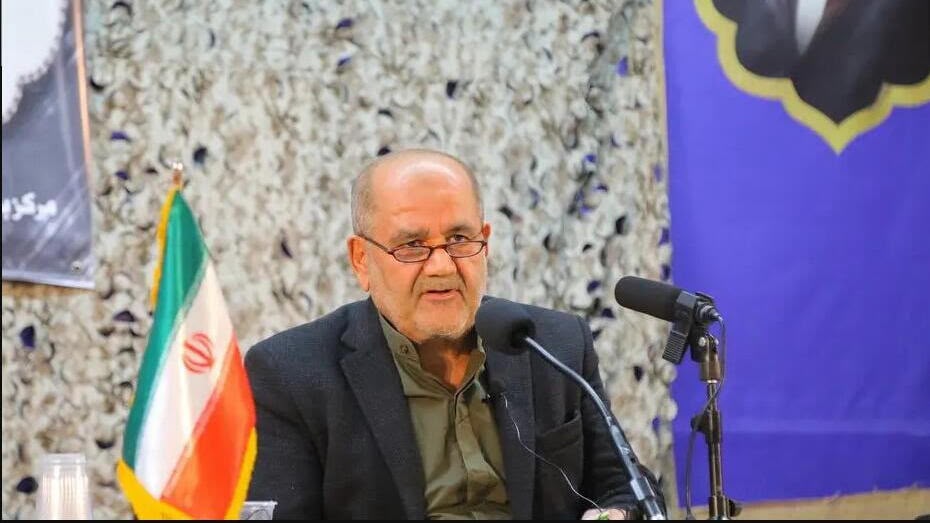
The Iranian general, Abdullah Saberi, was left on a Johannesburg street with a small amount of cash and a phone number to contact the Iranian embassy.
This is according to a new investigation by The New York Times, on Israel’s mistaken assumption that Iran or its officials held information regarding Arad, whose jet was shot down over Lebanon on 16 October 1986. Arad was captured alive by the Lebanese Shiite militia Amal before being handed over to Hezbollah. Intelligence now indicates that he probably died in Lebanon in about 1988, but Israel officially still classifies him as missing in action.
According to The New York Times report, Saberi was captured in Syria. An Iranian commander, he went jogging early one morning in an upscale diplomatic quarter of Damascus. Israeli intelligence officers waited nearby. They pretended to be house movers and carried an oversized refrigerator box.
The Israelis had managed to slip past the neighbourhood’s security checkpoints. As Saberi headed for a nearby park, the Israelis restrained him, drugged him, threw the refrigerator box over his head, and left with him in a white van.
As a veteran of Iran’s powerful Islamic Revolutionary Guard Corps, Saberi was a wealth of information. But after a lengthy and unsuccessful interrogation regarding Arad in Israel, he was left on a Johannesburg street, thousands of kilometres away from where he was captured. It is unclear what has happened to him since, but there have been no reports of his death.
Willem Els, a terrorism expert from the Security Initiative for Africa, told the SA Jewish Report that it is unclear why Israel brought Saberi all the way to South Africa, but he can speculate why.
“It’s easy to bring someone like this into South Africa and release him, because I doubt South Africa’s intelligence services picked it up at all. Conditions are conducive for this type of operation in South Africa,” says Els.
In addition, if they had released him in a country that they had a good relationship with, “it could have jeopardised that relationship”, he explains. But with the relationship with South Africa already strained, there wasn’t much left to save. “So maybe that was one of the reasons, because they didn’t want to risk any of their good relationships,” surmises Els.
He says it also could be because of South Africa’s close relationship with Iran. “Even though it happened in 2021, South Africa was already in the BRICS camp and on excellent terms with Iran,” says Els.
International relations expert Professor Glen Segell speculates that “South Africa was possibly the cheapest and quickest option [to release Saberi in], a country already hostile to Israel, so it wouldn’t endanger friendly relations. If, for example, he’d been dropped in Cyprus, it would have been a major diplomatic crisis.”
Segell says that in general terms, suspects are released because nothing further can be gained by holding them longer, or more information can be gained by tracking them after they are freed.
Terrorism expert Professor Hussein Solomon speculates that “given the close ties between Iran and South Africa, Israel knew that South Africa would safely get the general back to Tehran”.
The executive director of the Middle East Africa Research Institute, Benji Shulman, guesses that South Africa may have been chosen “for the same reason that other groups working under the radar like to use South Africa. It’s because you’ve got mostly first world infrastructure – roads, cars, banking – but you’ve also got zero law enforcement.”
On the other hand, “if you were to do this in Europe or America, there would potentially be people tracking you. And to do it in other African countries might be a hassle.” Therefore, South Africa was an easy option.
In October 2025, an X account in Persian attributed to Mossad published a post claiming that the Israeli intelligence agency had indeed abducted Saberi.
Mossad chief at the time David Barnea said, “It was a courageous, daring, complex operation, but it was a failure.”
In 2021, Naftali Bennett, Israel’s prime minister at the time, had revealed that Mossad agents had recently gone on a mission to uncover Arad’s whereabouts.
“It was a complex, widescale operation,” Bennett told the Knesset plenum in remarks at the start of the winter parliamentary session. “We made further efforts on the path to understanding Ron’s fate.” Bennett said the operation involved both male and female Mossad agents.
He said that the return of captives “is a Jewish value that has become one of the holiest values of the State of Israel”, and noted that continuing to search for news of Arad after more than three decades was “the kind of thing that looks strange, and perhaps a little extreme for those who look at the State of Israel from outside. But this is what defines us and sets us apart.”
Bennett vowed to “continue to act to return all our boys home, wherever they may be”.
Little was he to know that just two years later, Hamas would hold more than 250 hostages in Gaza.
In October this year, marking 40 years since Arad’s capture, Israel’s former ambassador to Australia and Lithuania Amir Maimon shared a photograph of himself, Arad, and two other classmates when they were teens.
“Ron Arad, my friend and classmate, was forced to eject his F-4 Phantom near Sidon, Lebanon,” wrote Maimon on Facebook. “Forty years passed and he is still missing in action. Today and every day we remember … I remember.”