OpEds
The genocide blood libel

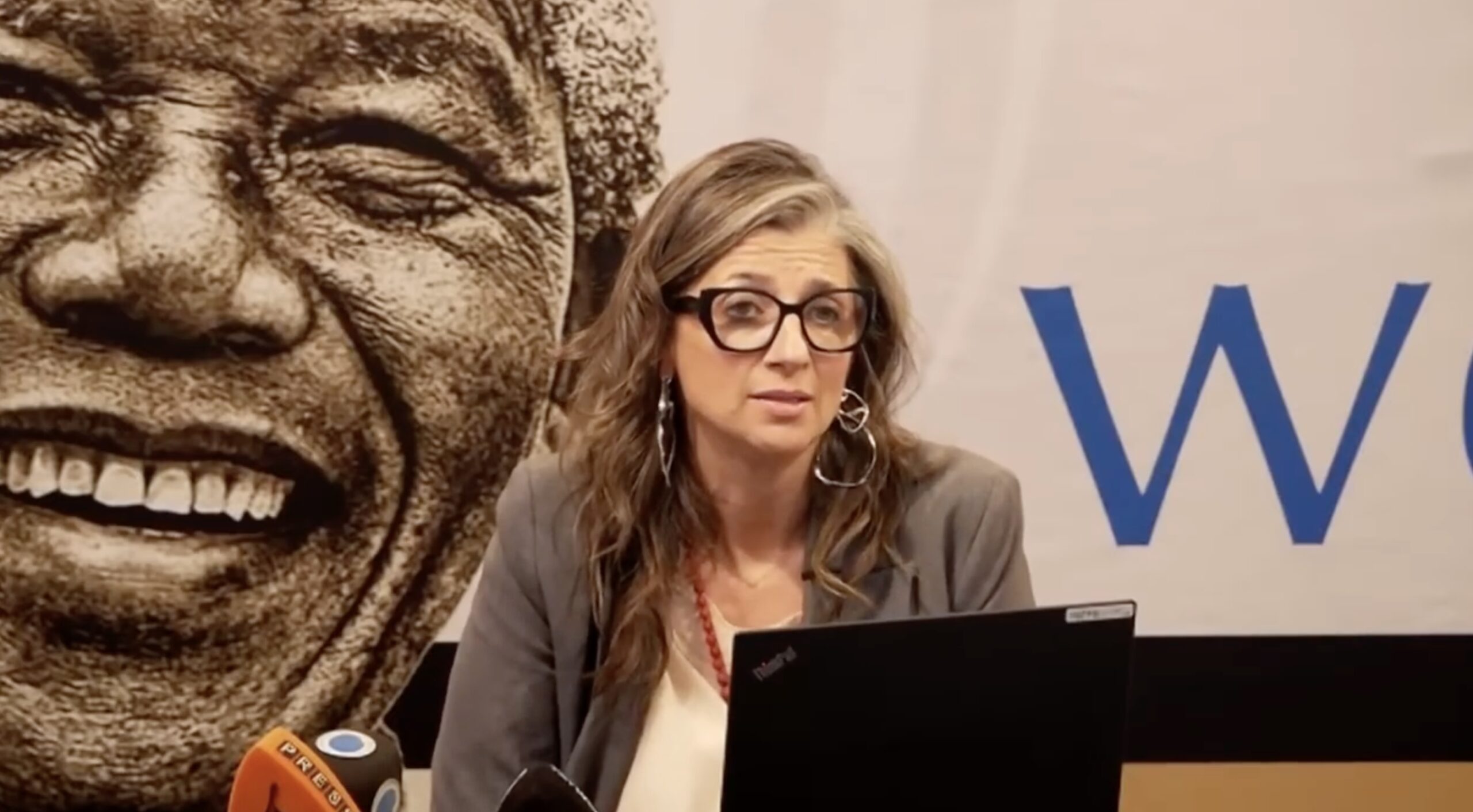
With the high profile visit to South Africa of Francesca Albanese, the United Nations Special Rapporteur on the Occupied Palestinian Territories, and her recent report to the UN General Assembly, it has become clear that the blood libel against Israel – that it has perpetuated a genocide in Gaza – hasn’t gone away. In fact, despite the war now seeming to die down, the campaign seems to be gathering momentum. Let’s analyse the legal and factual aspects of this false claim.
Legal definition of genocide
In short, according to the 1948 UN Convention, genocide involves acts committed with the intent to destroy, in whole or in part, a national, ethnical, racial, or religious group. These acts include killing members of the group; causing serious harm; deliberately creating life conditions intended for the group’s physical destruction; preventing births; or forcibly transferring children.
The key point to understand from the definition, is that it requires intent – or dolus in legal terms – which requires proof that the perpetrators subjectively aimed to destroy the protected group, in whole or in part, as their objective. Without this intent, the act, even if it causes great harm, isn’t considered genocide.
This is where the case against Israel is extremely weak. The bulk of the case of intent depends on statements made by certain Israeli Cabinet ministers – mainly, but not solely, Itamar Ben-Gvir and Bezalel Smotrich – to clean out Gaza and destroy it. However, these two, although in Cabinet, don’t control the war effort and never sat in the war Cabinet. The fact that they made some wild and outrageous statements is hardly conclusive of anything – they have said similar things about the left wing opposition in Israel! If Israeli generals told their troops to go and destroy Hamas and its supporters and generally made it clear that this group was different to the rest of the civilian population, that’s surely to be expected of generals trying to “gee up” their troops in war, and similar statements are made by generals all over the world. What does the special rapporteur expect generals to say to their troops?
Such statements are taken out of context and twisted to try to create a false conclusion. What’s ironic is that when President Cyril Ramaphosa went to visit United States President Donald Trump in the White House, he had similar statements from a South African politician not in government thrown at him by Trump to try and create a false conclusion of a genocide in South Africa. Both sets of accusations of intent, resting on statements of politicians, are equally flimsy, and don’t satisfy the strict onus required.
Analysing the facts in Gaza
Reported Palestinian fatalities, according to Gaza’s Hamas-controlled Health Ministry, are about 67 000 as of early October 2025. Of course, this number lumps civilian and Hamas fighters together, and lacks any real independent verification. However, even accepting this number, there must then be deducted an amount killed by Hamas by misfiring rockets into its own civilian areas; the killing of “collaborators” and opposition gangs in Gaza, etc. On top of that, there must be deducted natural deaths that weren’t caused by Israel, and that gives a more likely figure of 57 000. Once you also deduct the amount of Hamas fighters claimed to have been killed by Israel of 24 000, that gives a civilian tally of just more than 33 000 deaths. Add on some extra deaths from those bodies not yet discovered in the rubble, and you get a more likely figure of about 35 000 deaths. That’s still a tragic amount, but much lower than 67 000.
To give some context of how war is always hell, and large amounts of civilians always die in war, here’s an analysis of civilian casualties in World War II in some German and Japanese cities that were heavily bombed:
Hamburg
In Operation Gomorrah (July-August 1943), a joint British-American bombing campaign, and one of the most destructive of the war, the raids killed between 40 000 and 50 000 people, mostly civilians. The attack created a massive firestorm with winds of hurricane force and temperatures reaching more than 800°C, incinerating many residents. Note that this high number of civilian deaths was reached in two months. The bombing destroyed 60% of the city’s homes, and left an estimated one million people homeless.
Dresden
In February 1945, an intense, multi-day bombing campaign by British and American forces created a firestorm that consumed the city. Estimates place the number of deaths at about 25 000. The raid remains controversial because Dresden was known more for its cultural significance than its military industry.
Pforzheim
In February 1945, a short but extremely destructive Royal Air Force raid used a combination of high-explosive and incendiary bombs. About 20 277 people were killed, about one-third of the city’s population.
Tokyo
When the B-29 Super Fortress came into being, the US Army used it extensively over Japan, most specifically over Tokyo. According to reports, 90% of the bombs dropped on Tokyo were done by B-29s.
Of all the operations against the city, the most intense occurred from 9-10 March 1945, dubbed Operation Meetinghouse. This attack is still considered the single most destructive bombing campaign ever. About 1 700 tons of bombs were dropped into the city, which destroyed 286 358 buildings and killed more than 100 000 civilians with the explosions and resulting firestorms, plus about one million were injured.
Atom bombs
Estimates of the total number of people killed by the atom bomb being dropped on Hiroshima were about 70 000 to 80 000 people killed instantly, with more deaths occurring in the immediate aftermath and many more in the following months and years due to injury and radiation sickness. By the end of 1945, the total death toll was estimated to be about 140 000. In Nagasaki, about 40 000 died instantly, with the total reaching 74 000 by the end of the year.
To be clear, the argument being made isn’t that because the Allies killed more civilians, it exonerates Israel, but rather that in all wars, even those fought with noble intent and by democracies like the Allies, civilians die. That’s the sad reality. The fact that Israel killed fewer civilians than the Allies did in their intensive bombing campaigns, despite fighting an enemy embedded in the civilian population, hiding among schools, mosques, and hospitals, and in such a highly concentrated and densely populated area like Gaza, speaks volumes as to how this cannot be a genocide.
Comparing civilian deaths in Gaza to those in World War II simply shows that it isn’t possible to fight an intense war without civilians dying. To expect otherwise is to ignore reality. No one in their right minds would accuse the Allies in World War II of genocide, and it’s hard to understand why Israel is being treated any differently to them. To judge Israel so harshly for the number of civilian deaths is to expect it to comply with impossible standards.
Finally, for a country supposedly so keen to inflict a genocide, Israel was very quick to accept the ceasefire once it was offered to it together with a guarantee that all the living hostages would be immediately released!
Real genocide
To create context, there is a real genocide taking place before the eyes of the world. Sudan has plunged into a civil war in which more than 150 000 people have died in the conflict across the country through massacres, starvation and disease; and about 12 million have fled their homes in what the UN has called the world’s largest humanitarian crisis.
In addition, while an exact figure is impossible to determine, at least 522 000 children are estimated to have died from malnutrition and related illnesses since the start of Sudan’s conflict in April 2023. This number doesn’t include those killed directly by violence, and is considered a conservative estimate.
Strangely, the world isn’t taking any drastic action here to intervene, and when Sudan brought a case against a country accused of arming the rebels to the International Court of Justice, the ICJ refused to hear the case for lack of jurisdiction!
- Baruch The Balanced is an attorney who can’t be named for professional reasons, but who also studied politics and international relations at university.