





Personal Story
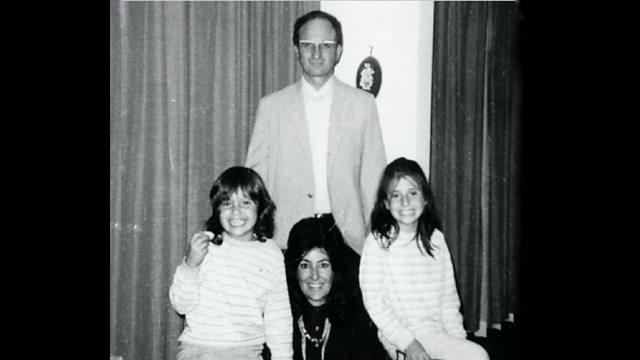
The man who went into Soweto

Every morning, my father, Dr Melville Leonard Edelstein, drove into Soweto.
Let that sit for a moment. The sprawling township southwest of Johannesburg was under the architecture of apartheid, and for a white man to enter willingly, every single day, not as an enforcer of the system but as a servant of the people within it, was not ordinary. It was, in its quiet way, revolutionary. He has been referred to, by the late journalist Jon Qwelane, as “the unsung hero of the Soweto riots”.
My father worked for the West Rand Administration Board as a social worker. He was a mediator between worlds that the government had declared must never meet. He sat with families ground down by impossible circumstances and helped them find a way to cope. He created workshops for disabled members of the community ‒ people who had been doubly excluded, by race and by ability ‒ giving them not just a place to work, but a place to belong, a place to find dignity, purpose, and a small income they could call their own.
And alongside all of this, he was conducting research. His second thesis, the work that occupied so much of his intellectual life, was titled “What do young Africans think”. Not what should they think. Not what are we afraid they think. But what, in their own hearts and minds and voices, do they actually think? It was a question that required listening. And my father was, above all else, a man who knew how to listen.
He was loved by those he worked with. By everyone in Soweto. They knew, because they could feel it, that this white man came with no agenda, no ulterior motive, no performance of charity. He came because he believed it was right. He came because they mattered. He came back because they had always mattered, and tomorrow they would still matter, and that would never change.
There are people who choose their purpose, and there are people whose purpose chooses them. My father was the second kind. He did not set out to become a hero. He set out, every morning, to do what was right. And in doing what was right, in a country that had made doing right a dangerous and radical act, he became something far greater than a hero. He became a witness. A bridge. A quiet, unwavering flame in the middle of a very long darkness.
He was a man of few words and many actions. My father did not speak about justice. He enacted it. He did not debate the humanity of those around him. He simply treated every human being as human.
On the morning of 16 June 1976, something broke open in South Africa. Pupils in Soweto, thousands of them, rose up against the decree that they must be educated in Afrikaans, the language of their oppressors. They marched. They were met with police. What followed is now written into history as the Soweto Uprising, one of the most significant turning points in the long and agonising story of apartheid’s undoing.
My father was in the wrong place at the wrong time. That is what they said. His offices were at the Morris Isaacson High School, the very heart of where the uprising ignited. In the chaos and fury of that day, in the eruption of decades of suppressed pain, my father was bludgeoned to death a week before my Batmitzvah.
He was killed by the very community he had spent his life serving.
I have sat with that sentence for nearly 50 years. I am still sitting with it. In fact, I have ended up working in a school, not even on purpose, around the corner from where he was killed.
The day my dad passed was obviously the worst day for me and my sister, Shana. We were taken away to the home of my aunt’s best friend while the chaos was carrying on. And when we were fetched to go home, we didn’t know the fate of my father.
I said to her, “Is my father okay?” And she said, “Janet, I don’t know.” She obviously did. “But whatever happens, you’re the oldest. So, you have to look after your mother and your sister.”
That was the narrative that also changed my life in some way. I just took on this role, a leadership role, and I probably am still in it. It didn’t make it that simple for me in terms of grieving.
My mom needed to go out and start working again. She had sold her business a year before and now had to find a way to bring in an income. While we had my grandfather’s help, she still needed to work full-time, and so I took over caring for my sister. I navigated from then, and I probably am still trying to navigate, why this happened and how it impacted on me.
Later, I was asked to go to the Truth and Reconciliation Commission, and asked what we would like as reparations. I said I just wanted my father’s name to be acknowledged in history. I wanted it known that he was killed on that day. I think I made an assumption here that he was also seen as a protagonist of the apartheid regime because he worked between the two worlds. His heart though was in Soweto, and his heart was with the children.
My mother, who is now 91, remains healthy, with only very slight dementia ‒ not bad at all for her age.
My sister, Shana, went on to build an incredible fashion design school. She has four children, and after selling her business to a conglomerate, she has turned her talents to pottery, creating beautiful cups for vassing. In many ways, it feels like her story has come full circle.
Hashem blessed us with two wonderful men, Shana’s husband, Sean Rosenthal, and my husband, Allen Goldblatt. They have been extraordinary partners, supporting us and helping to care for our children throughout the years.
- Janet Goldblatt is Dr Melville Edelstein’s daughter and a transformational catalyst.




Alfreda Frantzen
June 11, 2026 at 12:31 pm
We owe our fathers many blessings. Thank you for sharing your story
Bendeta Gordon
June 11, 2026 at 6:33 pm
Beautiful tribute by a talented Mom, sister, friend and professional.
Oral Minyi
June 11, 2026 at 6:55 pm
A touching tribute to Dr Melville Edelstein. I feel that his name, like that of so many on that occasion, has not been etched into the books of history. We salute him, though.
MARILYN BASSIN
June 12, 2026 at 12:19 am
Janet your dad must be so proud of you, you emulate his empathy and love for everyone. You live your life with the same values as him, spreading goodness where there is strife.
JO-ANNE CANDASAMY
June 12, 2026 at 4:38 am
Thank you for sharing your story!! I knew about the 1976 Soweto uprising,but this story I didn’t know!! Stay blessed you and your family ,in every way!!
Bongani Madondo
June 12, 2026 at 11:19 am
Oh my!
This is deep. Complex.
As a former youth activist myself and now an author I always think of what is meant by these words, “the revolution eats its young” or something to that effect.
But what do we do? Particularly those of us in the vanguard, those of directly under the thumb of oppression and even experiencing what can often feel like permanent colonial trauma,after the oppression has been legislated away but the effects still very much in place; what we almost never deal with, or come back to account for, is: What about those who looked like our oppressors, who lived with the privilege accorded our oppressors but work to navigate both worlds…what is to ve done with them?
Additionally, what about those who emerge from a collective privilege and benefit from a racialised trauma of the oppressed but are conscious and conscientious enough to face their privilege, their families (I’m not going to say their race here because since when has Jews been “white”, even with some Eastern European roots Europe’s idea of “whiteness” is not automatically associated with Jews, at least in my mind, although I stand to ve corrected: whuteness is such a new, and such an intrinsically Western European phenomenon, down to late 18th-19th Century eugenicists); so, what about those who risk it all and throw their lot with the oppressed?
I omagine the same conundrum must have faced some of the leading figures of the SACP from the late 1950s-to-the 1980s, the epoch of our Black Consciousness pride and activism.
Often than not, in the hour of chaos, men (and women, though it’s mostly men, for all kinds of societal patriarchal set up), often the masses have turned on the same men who were committed to their liberation cause, even perhaps much more selfless. It’s a complex psychological issue we have not dealt with properly, if at all.
Could it be that the masses are politically illiterate? Could it be that pent up anger knows no logic?
Could it be that the true revolution achieves its aims, however chaotically, when there are clearly demarcated lines, clearly marked us&them?
Jewish history and faith insofar as the story of emancipation from Egypt has much to enlighten us on this matter of clearly marking and delineating between friend and foe, oppressor and the oppressed.
The Russian-Chilean-American writer Ariel Dorfman writes beautifully, and heartbreakingly, about these complexities. You say when the TRC Reparative Committee (my insertion) asked, you just said only for your father to be recognised,remembered.
I don’t know, I feel like that would still be inadequate for you. That you still carry not only his memory (which is understandable) but also the unresolved trauma of why would they do this to a man clearly on their side?
Janet, have you and your family met some of the June 76 student activists, Black victims of the chaos -yes there a lot- and engaged in conversations away from institutional interventions?
Lastly: Janet, it is not too late to make a documentary film about your father. Or write a book.
Not too late at all.
I have other questions too about your father, but perhaps there will be a next time.
I’m not going to say I hope you find closure. I think it’s best to keep him alive at all costs,including through lack of closure. Big love to the men in your and your sister’s lives, too.
Avraham Edelstein
June 12, 2026 at 11:33 am
This is so excellently written. You have captured in a few words a great man – whom I met a number of times – contextualised into an intense historical role that teaches us how greatness is expressed – by the little deeds of caring and courage. That was Dr. Meliville Edelstein’s life and his legacy. Thank you for sharing.
Morris stern
June 16, 2026 at 4:45 pm
All honour to your father.May his memory be a blessing!
Thandile Babalwa Sunduza
June 16, 2026 at 4:22 pm
He will always be honoured and be in History Books , if the youth then knew who he was they would not have killed him. Thank you
Letepe Maisela
June 19, 2026 at 1:09 pm
I remember the tragedy. I was staying at a youth center opposite Morris Isaacson High School in Soweto where at my mid twenties age was a Youth Worker assitng with the youth who visited the centre for cultural activities like Ballroom Dancing and Drama.We onlh heard about the brutal maurder of Dr Edelstein following morning in newspapers. That was among other horrible atrocities of the day mostly commited by Apartheid Regimes police. This was a sad period in our youthful development and cant even understand how we survived the period without even some therapy of some kind. My belated condolences nevertheless to the Edelstein family. It must have been a hard pill to swallow.