Lifestyle/Community
An autism diagnosis can be the key to liberating self-acceptance

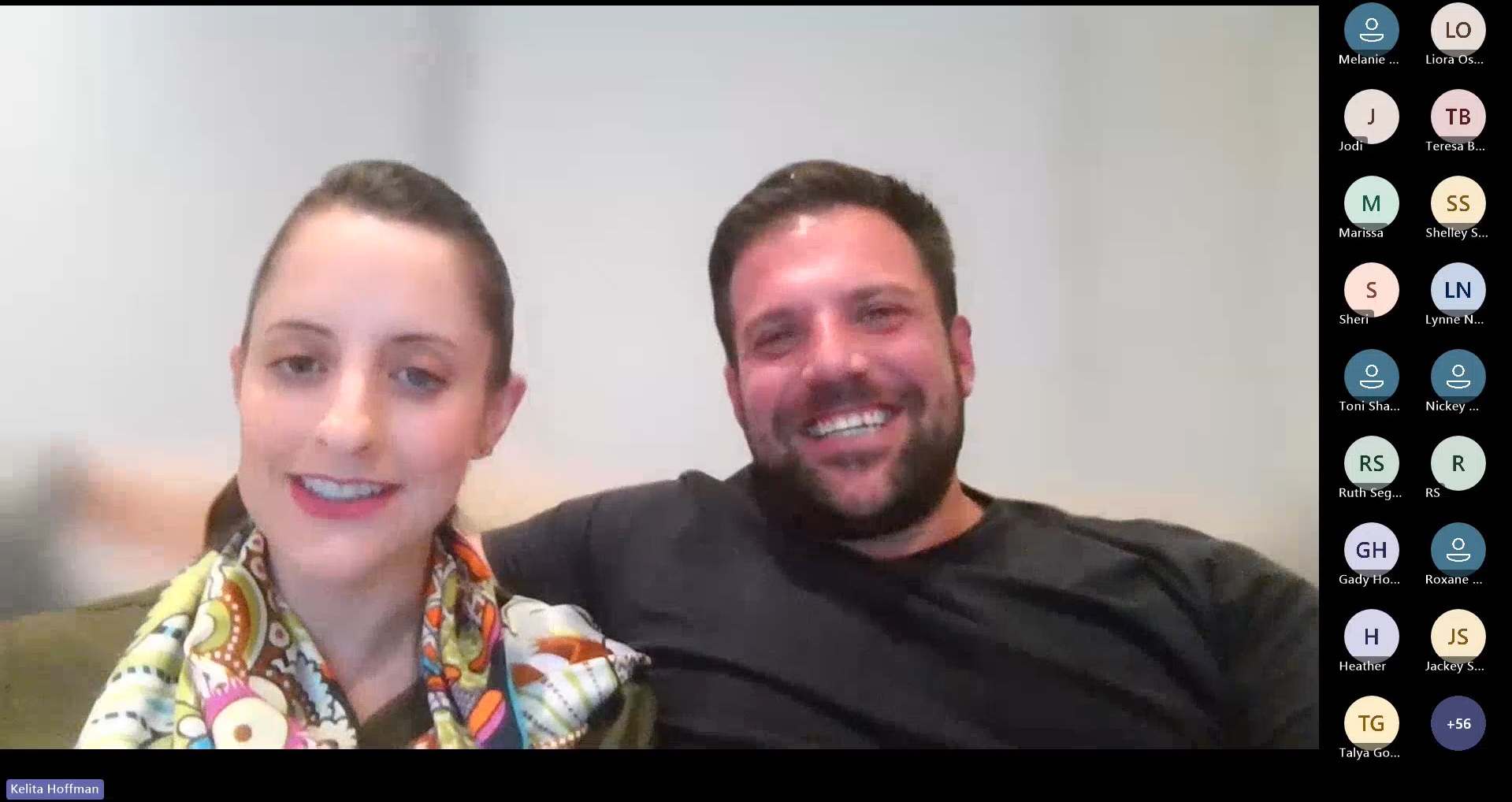
“We couldn’t understand why there was so much hype,” Kelita Hofman says of the overwhelming response to the couple’s online community talk on autism, hosted by the Chevrah Kadisha on 25 February. “We did it very casually. And then there were WhatsApps, emails, people stopping us at school drop-off.” It took a moment for it to click. “Talking about your differences, about the imperfect parts of your life – apparently that’s still novel.”
For her husband, Elan, those differences now include a formal autism diagnosis. He received it in late 2024, decades after first feeling that something about the world didn’t quite fit. “What does it mean?” he asks. “It means nothing – and it means everything. I’m the same person I was five years ago, 10 years ago, 20 years ago. But now I understand why I am the way I am.”
Autism Spectrum Disorder can be described as a lifelong difference in how a person’s brain works that affects communication, social interaction, and how they experience the world. It works along a spectrum because it’s different for everyone. Some people need a lot of support in daily life, while others need very little. It’s not an illness or something that needs to be fixed. It’s simply a different way of thinking and experiencing the world.
Born in 1986, Elan grew up at a time when autism was far more narrowly defined. “If you looked at what autism was in 1986, it was a much more limited picture. Today it’s a much wider spectrum.” As a child, he learned to adapt. “I thought I needed to be a chameleon. I needed to fit in and mirror the people around me. That’s how I felt comfortable.”
He had friends and excelled at sport. He studied accounting and business simultaneously. “People saw me as a jock rugby player. They didn’t see the guy waking up at 05:00 to do his work.”
Now, when people discover he’s autistic, he says, the reaction is predictable. “Shock. Disbelief. ‘But you look normal.’ There’s still this stereotype – Rain Man, the kid flapping his arms. But the spectrum is wide.”
It was their son Raziel who ultimately led Elan to his own diagnosis. “We thought the cleft lip and palate would be the hardship,” Elan says of Raziel’s early medical journey, which included around a dozen surgeries.
But as speech delays and behavioural differences became more apparent, further diagnoses followed: autism, attention-deficit/hyperactivity disorder (ADHD), and epilepsy. “Often we’d sit in therapy sessions,” Elan says, “and the advice they were giving about Raziel felt like it was directed at me.” Kelita remembers joking that perhaps Elan should see the same psychiatrist. “And then,” Elan says, “my curiosity was sparked.”
They printed the DSM-5 criteria at home and went through them line by line. “We dissected every word,” Kelita says. “Did you meet all three criteria? Two out of three? What does ‘social reciprocity’ actually mean?” Eventually, Elan underwent a full assessment. “When I got the diagnosis, it didn’t change who I was. But it changed how I understood myself.”
That understanding explains the intensity of his sensory world. “I cannot sit in the room when someone is eating fruit,” he says, half-laughing. “I would much rather take an olive and stick it under my eyelid than listen to that slopping sound. That’s what it feels like.” It explains his precision with language. “If someone says it’s quarter past eight, I have to say, ‘It’s actually nine minutes past eight.’ I can’t help myself.” And it explains why summarising something into two neat sentences feels impossible. As Kelita puts it, “He genuinely cannot understand why you wouldn’t want the extended explanation.”
Diagnosis has reshaped their marriage as much as it has reshaped Elan’s self-understanding. “If we’re sitting and talking, I want him to look at me,” Kelita says. “If he’s staring off into the distance, I feel like he’s not listening.” Elan responds simply, “I am listening. I just feel more comfortable sitting at an angle.” Now, instead of interpreting that difference as indifference, Kelita can say, “I need you to look at me – not because you’re wrong, but because I need that connection.” Elan says, “Knowing that we operate differently prevents a whole lot of fights.”
He’s also quick to dismantle the idea that autistic people lack empathy. “That’s not true. For me, empathy is more logical. Something bad happened. The person is sad. The appropriate response is to console them. I might not get teary-eyed. But that doesn’t mean I don’t care.”
In their home, autism isn’t a whispered label. “In our house, ‘autism is used freely’,” Kelita says. “Our daughters know what it means.” They explain to Raziel that his brain works differently. “That means superpowers and that means challenges,” she says. Elan adds, “Sometimes friendships are tough. Sometimes the playground is overwhelming. But he has an outstanding memory. He’s incredibly bright. He has amazing insights.” Elan doesn’t hesitate when asked if he would change anything. “There’s nothing I would change about him. Not today. Not ever.”
Raziel attends Bella Vista, a remedial primary school that has become, in Elan’s words, “probably the best thing that could have happened to us”. Kelita acknowledges that choosing a remedial setting can stir complicated emotions for parents. “Sometimes we’re grappling with our own expectations. We had an image of where our child would go to school. You have to ask yourself – is this about what’s best for my child? Or about the picture I had in my head?”
With three children, balance is deliberate. “We speak about the ‘glass child’,” Elan says – the sibling who becomes invisible because attention centres on the neurodiverse child. “So we prioritise time with our daughters,” Kelita explains. “And we validate their frustration.” Their daughter will sometimes ask, “Is this because he’s autistic or because he’s my annoying brother?” Kelita smiles. “And sometimes the answer is both.”
Professionally, diagnosis has also been empowering. “A lot of people are scared to declare hidden disabilities,” Elan says. “I saw it as an opportunity.” He now has access to flexibility, quieter workspaces and noise-cancelling headphones. “When I cut the noise out, I can make two hours the most productive two hours. My brain sees patterns. That’s not a weakness – that’s a strength.”
Ultimately, Elan resists being reduced to a single label. “Yes, I’m on the spectrum. But I’m also a father. A husband. A Jew. An accountant. Kind. Impatient. Introverted. All of it at the same time.” Kelita describes him as “a living example of self-discovery”, adding, “It doesn’t mean the journey is perfect. But it’s worth it.”
Elan pauses before summing it up. “I’m only now learning to be unapologetically myself,” he says. “Being comfortable with who I am. Why I am the way I am.” Kelita’s response is simple. “We want our son to be unapologetically himself. If diagnosis gives him that understanding, then it’s worth everything.”
“Different isn’t bad,” Elan says finally. “It’s just different.”