Lifestyle/Community
Traditions practised differently

Passover is often called the holiday of tradition, but traditions differ in various communities, and marrying across them is never easy. When an Ashkenazi Jew marries into a Sephardi or a Lubavitch family, for example, there’s a lot to learn.
“I was very ‘Ashkenazed’ before I got married,” Mikayla Moshe says, reflecting on a childhood defined by the rhythms of a religious Ashkenazi household. That world offered a certain seamlessness that she took for granted. “I don’t really have a favourite thing about it, but I guess it was the convenience. My school, my shul, and my home lifestyle were all the same … everything was just available because it’s one of the more common sects in Judaism.”
That sense of uniformity was most apparent during the high-stakes preparation for Passover. “Pesach before my marriage was much stricter and on a totally different level,” she says. “My parents are part of a very religious shul, and that’s just the way I grew up. Pesach was very strict.”
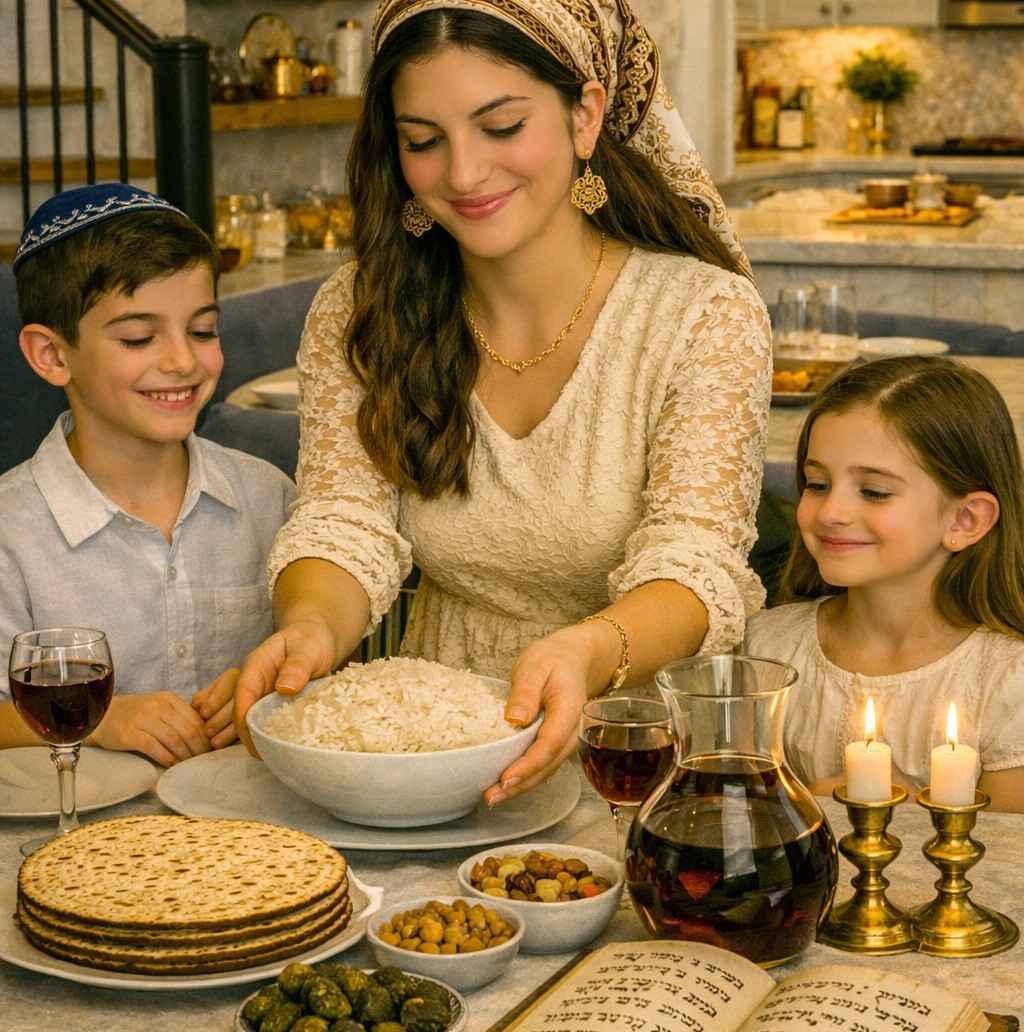
Today, however, her home looks and tastes remarkably different. “I am now Sephardi. My husband’s family comes from Iraq, and we obviously have a lot of different things now. We have kitniyot [legumes, seeds, and grains], and there’s just slightly more leniency in terms of cleaning for Pesach and the food we can have. Even in terms of buying things on the ‘green list’, it’s more lenient than my parents would be. We are now allowed rice and corn and all of the different legumes.”
The shift wasn’t just about what’s on the dinner table; it required a rewiring of her spiritual habits. “In terms of changing traditions, there was a whole new way of davening and benching,” Moshe explains.
“There are a lot of new Iraqi traditions, which are beautiful. But to change all of it takes a lot of time, effort, and commitment. Now, I’m so happy that’s what I’m able to give to my family. I would never compromise on those traditions.”
Nevertheless, the “sectarian” divide creates logistical hurdles when it involves her extended family. “It’s complicated because my family obviously can’t come to me,” she says. “We can only go to them. It’s really complicated because we have the rice and the corn and all the different legumes.”
Despite the complexities, Moshe views the effort of bridging these two worlds as a vital part of her story. To her, the beauty of the Iraqi tradition wasn’t just something she married into – it’s something she chose to make her own.
For Tamar Cohen*, transitioning from a traditional South African upbringing to a Lubavitch lifestyle was like “leaping from here to China”, with added stringency, particularly in the kitchen. “I can’t just go to the shops to buy everything,” she explains, saying that her mother-in-law makes everything almost from scratch. In this environment, the reliance on processed goods vanishes: “They buy no sauces. She’ll make her own tomato sauce. She makes her own mayo.” The restrictions even extend to the spice rack, with only store-bought salt and pepper there. Family members roast peppers before Pesach, to make their own paprika. “This level of preparation is extensive and demanding,” she says.
The most significant change for Cohen on Pesach is the strict observance of gebrokt, which forbids “wetting your matza”. “We can’t put spread on our matza or have a matza sandwich,” she says, meaning “no matza pizza, no butter on matza, no jam”. This practice even delays holiday favourites: “We can’t have kneidlach until the last day of Pesach, because that’s like wetting your matza meal.”
Beyond matza, Lubavitch dietary laws include the requirement to peel all produce. “We can’t eat fruits and vegetables unless they’ve been peeled,” she explains, saying that even the skins of tomatoes and cucumbers are removed.
As she navigates this new world, Cohen has realised that everyone has their own level of strictness. “I think for people with kids, it’s a lot harder because these foods aren’t necessarily what kids are going to want to eat.” She can have boiled eggs for breakfast, but a child might want cereal. “I know a lot of people will buy the more processed stuff for their kids, but they won’t eat it themselves.”
She points out that while the main principles are shared, some people use garlic, but others won’t. “There’s some people who will have apple on matza, and there’s some people who won’t.” Some individuals make exceptions for specific foods, such as avocado on matza.
These varying standards also transform the social landscape of the holiday, as the differences in stringency can make communal dining nearly impossible. “I have friends who won’t accept invitations to a lunch meal during Pesach because they are so strict and they don’t know someone else’s level.”
Despite the “crazy” adjustments, she finds a beauty in the stricter traditions. “Everything is so natural, there’s no preservatives. There are no bad things. It’s only good things in this food.”
*She asked not to be identified in order not to embarrass anyone.