Lifestyle/Community
The Goldmans: 50 years of building SA Jewish life

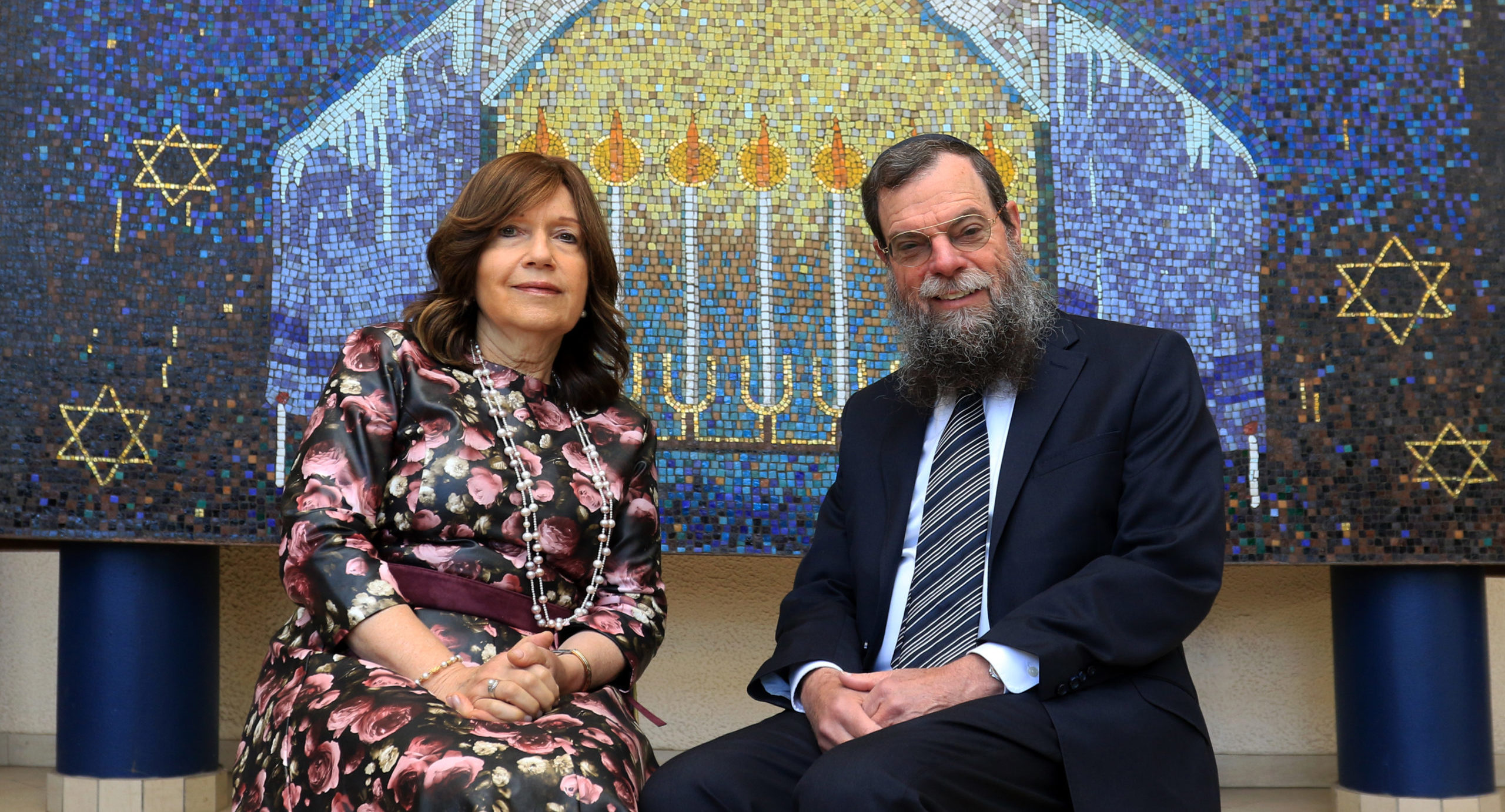
When the young and determined New York Rabbi Yossy Goldman arrived in South Africa in 1976, he never imagined he would celebrate half a century on the southern tip of Africa.
He came as part of the global network of emissaries of the Chabad-Lubavitch movement, known as shlichim. These rabbis and their families are sent around the world to strengthen Jewish identity and community life. Goldman, who had received rabbinic ordination from the Rabbinical College of Canada in Montreal in 1973, arrived in Johannesburg with his wife, Rochel, and a clear sense of purpose.
“I came here as a young rabbi on a mission,” Goldman recalls. “The Rebbe’s vision was never just about building a movement. It was about reaching every Jew and making Judaism accessible to them.”
From the outset, Goldman emphasises that the work of a shaliach is never done alone. “In Chabad, the rebbetzin plays a major role,” he says. “Rochel was a full-time partner in everything we did. She taught classes, she had people over every Shabbos, and she created a home that was open to the entire community.”
Their work began in Yeoville, where one of the first Chabad centres in South Africa was established. “We wanted a place where any Jew could walk in and feel at home,” he says. “That was always the philosophy.”
Public celebrations quickly became a cornerstone of that outreach. “Purim is the most joyful holiday on the Jewish calendar,” Goldman says. “We started organising big Purim parties that brought the whole community together.” Chanukah celebrations took on a similarly public role. “Lighting a giant menorah in a public space sends a powerful message about Jewish identity and pride,” he says.
Youth engagement was another priority. “One of the earliest successes was the Gan Yisrael day camp,” he says. “Children had fun, but they were also building a lifelong connection to their heritage.”
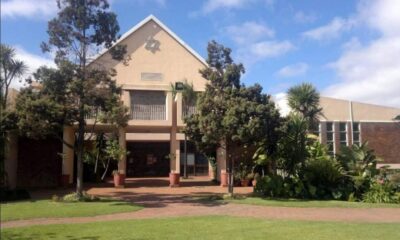
Education soon became central to Goldman’s work. He recalls the early development of Torah Academy, nearly 50 years ago. “Our own children were among the first students in the nursery school. Torah Academy was built on a site that used to house a church – that’s where it all started.”
As the school expanded, the community was offered a much larger property. “We didn’t have money and we wanted only one building,” he recalls. “But the owner told Rabbi Lipskar, ‘Take the whole thing. I’ll give you a good deal.’” The land included 22 acres in what Goldman describes as “prime Jewish suburbia”. “They bought it for R750 000,” he says. “The rand was equal to the dollar then, but it was still remarkable value.”
The acquisition proved transformative. “Today it’s arguably the most beautiful Jewish school campus in the country,” he says.
A few years later, Goldman faced another defining moment. In 1986 he was approached to become the rabbi of the Sydenham-Highlands North Hebrew Congregation, widely known as Sydenham Shul.
At the time, the congregation was huge. “There were about 1 100 families, and close to a thousand people in shul on a Friday night,” he recalls. “If you arrived late, you struggled to find a seat.” He once again sought the Rebbe’s guidance. “Sydenham wasn’t a Chabad institution,” he says. “But the Rebbe wasn’t interested in building a movement. He was interested in reaching Jews. If I could reach 1 100 families every week, he supported it.”
Goldman began the role just two weeks before Rosh Hashanah. “I was 36 years old and suddenly responsible for this massive congregation,” he says. “I was thrown in the deep end. But thank G-d, I swam.”
From the beginning, he set out to transform the synagogue into a centre of learning and engagement. “I didn’t take the job just to do what I call ‘hatch, match, and dispatch’ — weddings, Barmitzvahs, and funerals,” he says. “I took the job to reach out and get people more involved in Jewish life.” One of his early initiatives reflected that vision. “Trivial Pursuit was big at the time,” he says. “So I created a programme called ‘Meaningful Pursuit’. We had about 200 people coming to classes. They had never seen something like that before.”
Over time, Sydenham became one of the most vibrant congregations in the country. “I take some credit for turning Sydenham into the premier shul in the country,” Goldman says. “Other shuls started copying our programmes. But imitation is the highest form of flattery.”
After 35 years leading the congregation, Goldman decided to hand over to his long-time colleague Rabbi Yehuda Stern. “He had been my associate for 14 years,” he says. “When the time came, I felt he was ready to take on the position, and I was happy to become Rabbi Emeritus.”
Even in this new role, Goldman insists little has changed in his day-to-day life. “I don’t believe in retirement,” he says. “If you’re alive, you have to be productive. I’m still at shul most days, health permitting,” he says. “I still give shiurim, I still speak, I still stay involved. It’s not about a contract, it’s about a sense of mission.”
One of his proudest ongoing commitments is his weekly Talmud class, now in its 40th year.
With fewer formal obligations, Goldman has also been able to expand his global reach. “My wife and I have travelled to about 60 communities on six continents in recent years,” he says. “We’re able to accept invitations and speak around the world, which is a great opportunity.”
He has also turned more of his attention to writing. His next book, he says, will reflect a different kind of message. “My first book was on the weekly parsha,” he explains. “This one is about life lessons – lessons from experience that have a broader, more universal appeal.”
Goldman is quick to emphasise the role his wife has played. “Rochel created something very special,” he says. “Through Women of the World, she brought people together, inspired women, and strengthened families. People still tell her those events changed their lives.”
Looking back on nearly five decades in South Africa, Goldman says the greatest reward has been seeing the long-term impact of that work. “When you see children grow up, get married, and build their own families within the community, that’s incredibly meaningful,” he says.
For Goldman, the mission that brought him to South Africa has never really changed. “It has been a privilege to be part of building Jewish life here,” he reflects. “At the end of the day, it’s all about reaching people and helping them connect with their Judaism.”