


SA
Zero evidence that Israel is stoking SA xenophobia

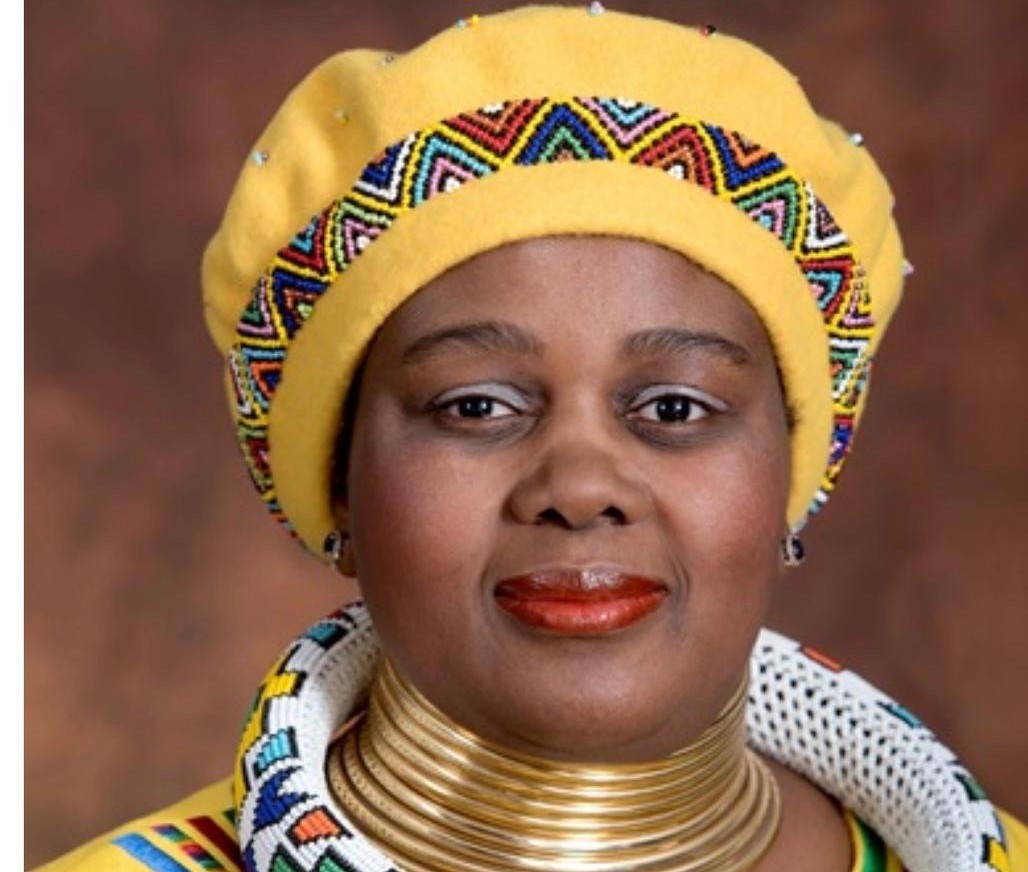
Justice Minister Mmamoloko Kubayi’s remarks that Israel is trying to undermine South Africa in retaliation for the “genocide” case has fuelled a narrative that somehow the Jewish State is behind the anti-illegal immigration protests.
The allegation has been repeated by other politicians and members of the public, yet no proof has been produced to support it.
Following Kubayi’s remarks in the Sunday Times on 5 July, she declined an opportunity the SA Jewish Report offered her to explain or substantiate her comments.
“Unfortunately, the minister is unavailable this week,” her spokesperson, Palesa Rammitlwa, told the SA Jewish Report. “She has longstanding meetings and engagements this week. Apologies.”
International Relations and Cooperation Minister Ronald Lamola had warned in May of possible Israeli “state and non-state actors” seeking to erode South Africa’s human rights standing.
This week, former Economic Freedom Fighters (EFF) member of Parliament (MP) Mbuyiseni Ndlozi insinuated that Israel had been waiting for an opportunity to damage the country’s reputation.
Kubayi did not provide evidence linking Israel to the anti-illegal immigration protests or to the March and March movement leading them.
Israel’s Ministry of Foreign Affairs responded sharply to her comments.
“SA loves lecturing on human rights, but its ‘Rainbow Nation’ is bleeding from violent xenophobia,” the ministry posted on social media. “Instead of taking responsibility, Justice Minister @MmamolokoKubayi falls back on the oldest hate. While openly admitting she has ‘no evidence’, she desperately spins wild conspiracies to mask government panic over a repeat of 2021. Shameful scapegoating. No accountability.”
March and March founder Jacinta Ngobese-Zuma has rejected outright the accusation that Israel funds her organisation.
“I don’t even know anybody from Israel. The only time I ever heard about Israel was in the Bible,” Ngobese-Zuma told the media.
“The amount of time people spend on conspiracy theories really worries me. Have you ever seen us going to Israel and getting money? Why would you run a story you don’t have proof of? If you want to see our bank statements, today I can give them to you.”
Ngobese-Zuma said she found the allegations deeply offensive, arguing they diminished the agency of black South Africans by suggesting they could not organise themselves without foreign backing.
She also rejected attempts to import Middle Eastern politics into the local immigration debate.
“Why do we care about Israel and Palestine in South Africa?” she said. “We are an African country. Why must our African beliefs and values be pushed aside so that we get ourselves involved in things that have nothing to do with us?”
Following his attendance in Tehran of the funeral of Iranian Supreme Leader Ayatollah Ali Khamenei, Ndlozi urged South Africans to “wake up”. He warned that a South Africa weakened by internal division was exactly what “an enemy so merciless so dangerously inhumane” had been waiting for. Like others advancing similar claims, he did not produce evidence to support the assertion.
In recent weeks, EFF MP Carl Niehaus publicly claimed that “Israeli Zionist money is directly involved” in the anti-illegal immigration campaign. He alleged that “there is one particular Zionist businessman in South Africa who wants to destroy South Africa’s image within the African continent”.
Niehaus did not identify the businessman or provide evidence to support the allegation.
Prominent South African Jewish businessman Martin Moshal, a philanthropist and investor, has also found himself drawn into online speculation that his funding of political parties like ActionSA, which campaigns against illegal immigration, suggests he has a hand in the xenophobia. Moshal has also donated money to the Democratic Alliance and Build One South Africa.
Critics say the steady expansion of such allegations reflects a tendency to substitute insinuation for evidence.
Craig Pantanowitz, national chairperson of the South African Zionist Federation, said, “The minister offered no evidence of any foreign role, because there is none to offer.”
Also referencing Minister Lamola’s comments, he said, “Two senior ministers, the same insinuation, and between them not a shred of proof.”
Pantanowitz argued that the allegations diverted attention from longstanding domestic problems.
“This matters, and not because Israel needs defending from a claim this thin. It matters because when senior members of Cabinet reach for a hidden foreign hand rather than account for a failure at home, and do so months before a local election in which immigration is being openly exploited, it stops looking like a careless remark and starts looking like a habit.
“And Minister Kubayi knows better, because she has said better. She has acknowledged that there were elements of political campaigning in the mobilisation, and that some saw an opportunity to advance local government ambitions.”
Long before South Africa took Israel to the International Court of Justice (ICJ), xenophobic violence had scarred the country, he said. “Dozens were killed in the attacks of 2008. More died in 2015 and again in 2019. It cannot have been caused by a court case filed 15 years after the first bodies were counted.”
He called on Kubayi to withdraw the remarks.
Political analyst Daniel Silke said the insinuations “smack of a cheap attempt to smear Israel instead of acknowledging the government’s own manifold failures on immigration policy”.
“History is littered with political entities not willing to own up to their own deficiencies and instead finding an external enemy, which they feel absolves them from blame,” he said. “The broader demonisation and delegitimisation of Israel provides a useful scapegoat. Insinuations and innuendo from the South African government are simply irresponsible without presenting sufficient evidence of culpability.”
Benji Shulman, executive director of the Middle East Africa Research Institute, said, “None of the politicians or activists who have been promoting this claim have been able to come up with a shred of evidence to back it up. Xenophobia has been a feature of South African life since 2008 and this is the first time that Israel has been linked to it at all.
“Israeli diplomacy tends to focus on promoting commonality between Israel and South Africans and engaging with its many friends that are in the country. The suggestions that a destabilisation policy would be at all helpful, including the removal of the ICJ case, is complete nonsense and clearly does not stand up to any logical scrutiny.”
Sara Gon, a fellow at the Institute of Race Relations, described Kubayi’s comments as “truly outrageous”.
“It’s widely agreed that the xenophobia that’s plaguing South Africa has everything to do with poor economic policy and the level of high unemployment as a consequence,” she said.
“Why Israel should care or even know about South Africa’s xenophobia issue, and what it would gain from being behind it, is beyond comprehension. Linking the two is embarrassing for the country as it would make no sense whatsoever.”