Sport
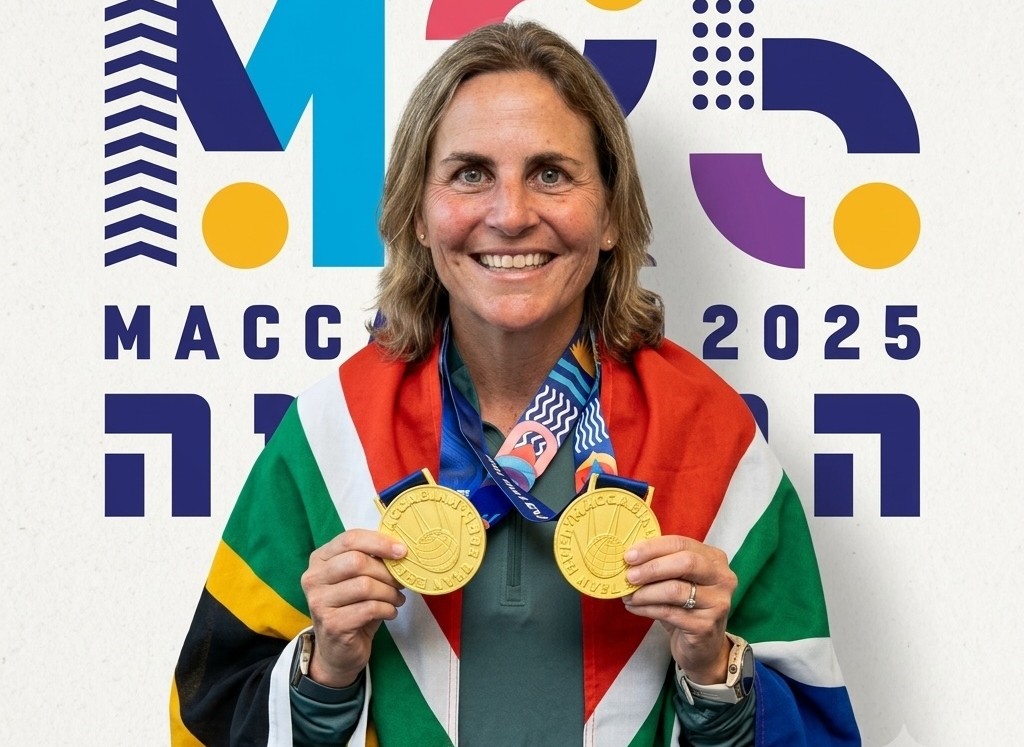
Boyd claims her ninth gold at Maccabi Games

Capetonian tennis player Jacqui Boyd has etched her name even deeper into South African Maccabi history, winning her third consecutive Masters singles gold medal at the Maccabi Games. The triumph adds to a glittering career that has made her one of South Africa’s most successful Maccabi athletes.
Since starting her Maccabi Games career when she was 14 years old, Boyd has competed in six Maccabiah over the years, winning a total of 11 medals, nine gold and two bronze. She also notched up her fifth consecutive mixed doubles title this year.
Winning gold for the third time in a row was especially meaningful. “I’m super stoked, but also quite relieved as the pressure is gone now,” she said. “It’s a big goal of mine, and hopefully in three years, I’ll be back to defend it again.”
For Boyd, this year’s Maccabi Games were extra special because of last year’s postponement due to Israel’s 12-day war with Iran.
“On top of everything else, it was especially difficult because we were so excited and had prepared so hard last year, only for the Games to be cancelled three weeks before they were due to begin. It felt like all that hard work had gone to waste, but we had to pick ourselves up, get back into training, and prepare all over again a year later.
“It was tough, but it was worth it. To be here now, and to win at such a meaningful time for the Jewish people around the world, makes it incredibly special,” she said.
Boyd was never in doubt about whether she would go to Israel to defend her title.
“We’re all so glad that it did happen, and I think it was important for Israel for it to happen, for the country and the people and everyone who came. So there were doubts at times, but I think I just kept being positive and training and thinking, ‘It’s going to happen, it’s going to happen’,” she said.
“The Maccabiah this year has been quite special and memorable, given everything that’s been going on in the world and in Israel in the past three years.”
The hardest parts of this year’s tournament were acclimatising to the intense heat and playing 10 matches in 10 days.
“It’s trying to manage my body. You know, I’m also 47 years old. I’m not getting any younger; it’s managing my body, but I still wanted to try and enjoy myself and do things. But also, first prize is gold; I’m here to play tennis and to do well and to compete,” she said.
To prepare for the Games while continuing her full-time job required discipline and careful time management. She increased her strength and conditioning work, interval training, and match play, as well as maintaining regular on-court practice. Recognising the importance of preserving muscle strength as she gets older, she committed to early-morning gym and tennis sessions before work, as well as evening practice.
Her dedication ultimately paid off.
In her final match on 12 July, Boyd was playing the person she had beaten in 2022 to win gold for the second time.
“I had a bit of confidence, but she’s tough, and it’s four years later; you never know. Things change; people change. I was a bit nervous, and I had the pressure because I’d beaten her before; she was gunning for me. She’s an Israeli so of course everyone wanted her to win, but I was pretty confident. I just knew what I needed to do. I’d done all the hard work over the past year or two [so] that if I just followed my game plan and kept a strong head ‒ I’m always quite mentally tough ‒ I should be able to pull it through.”
She explained that when she got to match point in that final game, she could taste the gold medal. “I was like, let’s just get the job done before anything. We always say that the last point is the hardest to win, that one point. So, when I hit a return, and she missed it, I could see it was going out. It was such a sense of relief, but also joy,” she said.