Sport
Koffler conquers the Deadly Dozen

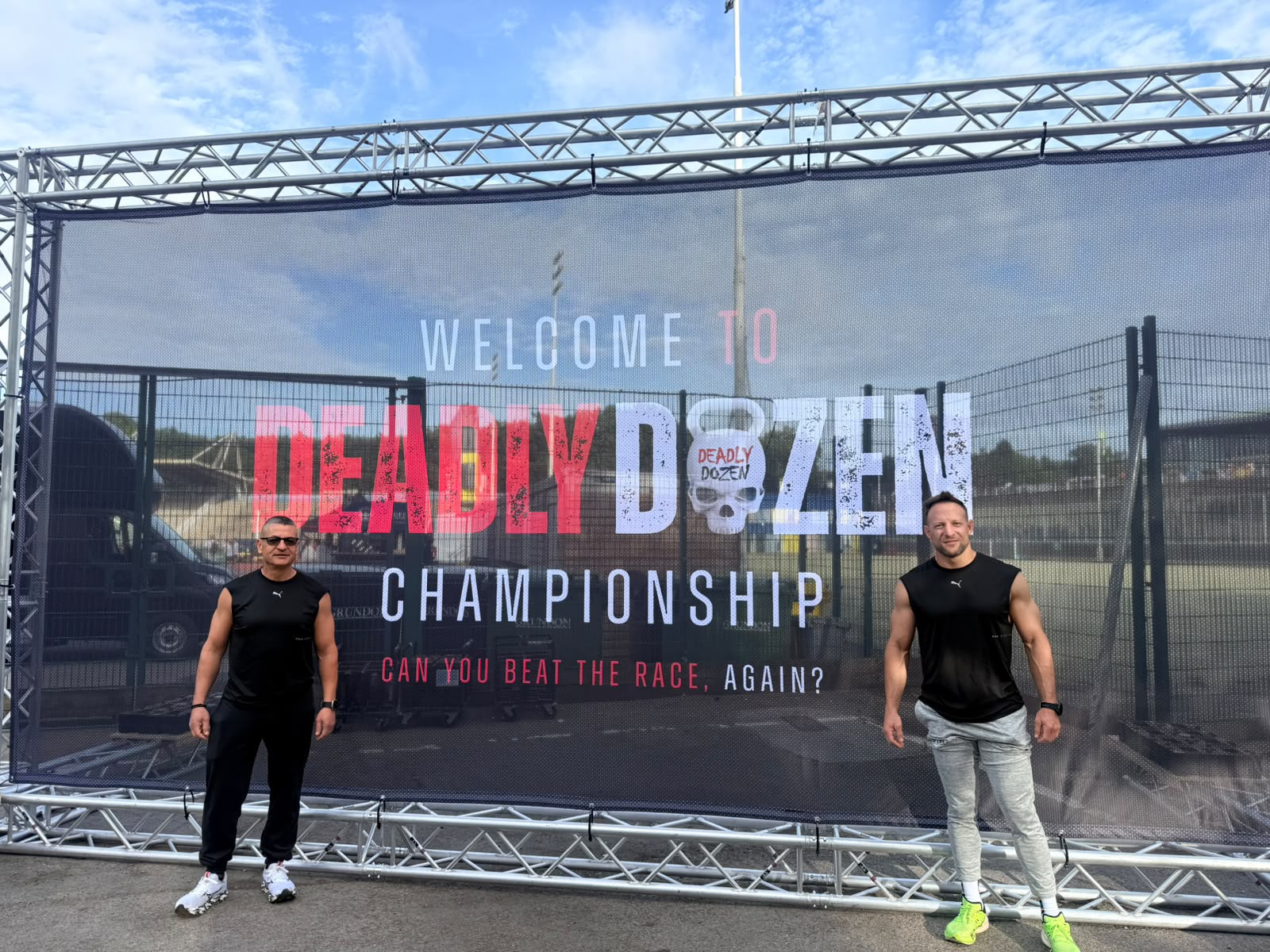
At 55, Paul Koffler never expected to represent South Africa on a world sporting stage. Yet this month, he was in London wearing the green and gold, competing at the inaugural Deadly Dozen World Championships.
Koffler finished fifth at the championships, in which more than 60 countries were represented, with about 190 South African athletes travelling to Crystal Palace.
The Deadly Dozen is a hybrid fitness race that combines running with functional strength exercises. In the standard track race, athletes complete 12 400m runs and 12 exercise stations, known as Labours. The Labours use bodyweight movements, kettlebells, dumbbells, and weight plates.
For Koffler, his achievement was the culmination of a transformation that began with a simple decision to give his gym routine purpose.
He had been going to the gym for years but was looking for a clearer goal when a friend sent him a social media post about Deadly Dozen last year.
“We basically go to gym, and we have for a number of years,” he said. “But going to gym, you’re like almost a seahorse in the ocean, going where the current takes you. These hybrid sports came about to actually give the gym-goer some kind of direction and some kind of goal.”
He began training and entered his first Deadly Dozen event as part of a relay team. “I went there and I nearly died. But I loved it.”
Koffler soon decided to attempt the event as a pair. He spoke to his neighbour Lance Keir about finding a partner. “I said, ‘Lance, I think the next event that they have, I’ll find somebody in my gym,’” Koffler recalled. “He phoned me half an hour later and said, ‘Paul, you’ve got a partner.’” Keir, a 39-year-old athlete who practises jiu jitsu and CrossFit and competes in Hyrox, offered to join him.
That partnership became an important part of Koffler’s journey. The pair entered competitions, improved their times, and eventually qualified for the World Championships. In London, they cut four minutes and 40 seconds from their previous time, an improvement of more than 10%.
The competition also carried a personal significance for Koffler. He had never imagined that he would represent South Africa as an athlete.
“Even if I was younger and a reasonable athlete, there’s no chance I would have represented South Africa in anything,” he said. “To do it at this age is just mind-blowing. I’m humbled by it and highly appreciative.”
The South African team experience added another layer to the achievement. Athletes arrived the day before the event and were given South African shirts, socks, and other team items.
“It was just a dream,” he said. “I’ve always believed in South Africa. I love South Africa, I love South African sports, and I love South African people.”
The support extended well beyond the competition venue. Koffler said his family, employees, friends, and members of the Jewish community supported him throughout his preparation.
“The way my employees galvanised around me and supported me was spectacular,” he said. “We all went on this journey together.” His training became a theme within the business. Staff meetings included discussions about personal transformation and improving different aspects of their lives.
He also saw changes at home. His eating patterns changed, as did the family’s approach to nutrition and exercise.
His two sons are sportsmen, and Koffler said his training gave him a different kind of credibility with them. He has run two 10km night races with his 13-year-old son, with the pair winning medals.
“You can tell your kids what to do, but if you don’t have credibility behind it, it doesn’t really mean much,” he said.
Koffler credits his wife, Caroline, with helping him through the uncertainty and pressure of training and competing. “She had to put up with me being nervous for an event, or just unsure of myself. Having her there to calm me down and speak about the bigger picture and the benefits of going down this road was incredibly important.”
His experience also connected him with other athletes and members of the community. He mentioned several South Africans who inspired him by continuing to train and compete later in life.
For Koffler, that has become one of the central lessons of the experience. “I think for me, mostly it was all the wasted years,” he said. “The years of having ability as a youngster, then throwing it all away by getting lazy and into bad habits.”
He now sees physical training as a way to pursue broader personal growth. “One of the main things is actually using the body as a portal for human growth as a whole. And also, to live the latter part of one’s life with dignity and energy.”
His competitive journey is not over. Koffler is currently ranked third in his age group and wants to reach number one. He has entered three upcoming races in South Africa, giving himself three opportunities to pursue the South African record in his age group. He is also considering competing next year in Hyrox, the sport that first introduced him to hybrid fitness racing.
For now, Koffler is reflecting on what it meant to stand on an international stage wearing South African colours.
He said the achievement wasn’t really about being on the world stage. It was about discovering what’s possible with effort and commitment. “Life’s not about being stagnant,” he said. “It’s not about what one thinks the convention is. We’ve got to be dynamic. We’ve got to move. We’ve got to keep on creating, no matter what age.”