





Sport
Nathan synonymous with the growth of SA golf

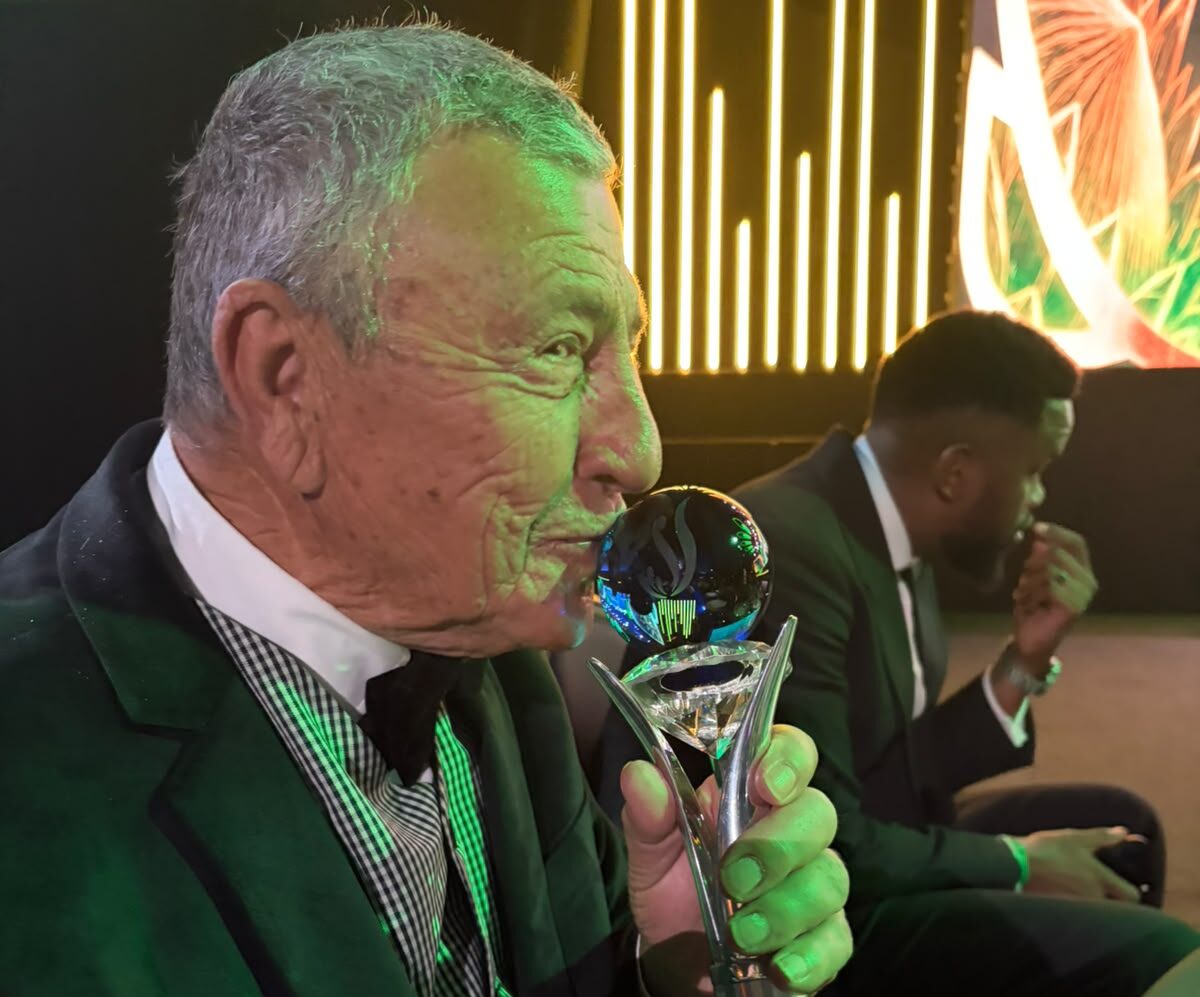
Just days after receiving a national lifetime achievement award, Selwyn Nathan is looking back on more than five decades in South African golf.
Nathan was handed the Steve Tshwete Lifetime Achievement Award at the 19th South African Sports Awards at Sun City on 23 August. He was one of three recipients of the award, alongside boxing official Siya Vabaza-Booi and veteran Sowetan photographer Veli Nhlapo.
Nathan has spent most of his adult life helping to shape professional golf in South Africa. Along the way, he helped build international opportunities for South African golfers and expanded access for women and historically disadvantaged players. Now, he’s stepped down from his executive role, although he remains on the Sunshine Tour board as a non-executive member.
For Nathan, the story began close to home. He grew up near Observatory Golf Course in Johannesburg. As a child, he and his friend Gary Wilson would sit under a tree watching the Henning brothers play. “We would spend more time on the golf course than we would at school,” he says.
That early fascination developed into a career that would take Nathan across South Africa and around the world. His first involvement with the Sunshine Tour came in 1969, when he was a young assistant professional working alongside Brian Henning and Helen Bland. He later became involved in promoting tournaments before serving as commissioner on several occasions.
The role of commissioner wasn’t always a permanent position for Nathan. He repeatedly stepped back into the job when successors left or when the Tour needed his experience. He eventually became executive director, a position he held until June this year.
His career coincided with major changes in South African golf. Nathan was closely involved in the Unity Programme during the late 1980s and early 1990s. It brought together previously separate golf organisations during the country’s transition to democracy.
He remembers the discrimination that existed within golf before that. One of the most painful examples was Sewsunker “Papwa” Sewgolum, the golfer who faced discrimination because he was an Indian South African. Sewgolum was prevented from entering clubhouses and, after winning tournaments, was sometimes forced to receive his trophy outside.
Nathan later helped establish the Papwa Sewgolum Class on the Sunshine Tour. The programme created opportunities for historically disadvantaged professional golfers to compete on the Tour. For Nathan, increasing access has been a recurring theme of his career.
He was involved in creating the Sunshine Ladies Tour about a decade ago. The women’s professional circuit has since expanded its schedule and created a pathway for South African women to compete internationally.
Nathan points to the growth of the women’s game as one of the developments of which he is proud. When the Sunshine Ladies Tour began, it had a small number of events and limited funding. It now provides professional opportunities for women golfers and includes tournaments co-sanctioned with the Ladies European Tour.
The development of young golfers has been another focus. Nathan says South Africa continues to produce talented players because of the structures supporting the game. He points to the success of junior and amateur programmes, as well as South African players progressing through international pathways. He describes this as a “conveyor belt” of talented young golfers.
That pathway has also been central to the Sunshine Tour’s international development. Nathan represented the Tour at the founding meeting of the International Federation of PGA Tours in 1996. He later worked with international golf administrators, including three PGA Tour commissioners and four chief executives of the DP World Tour.
He was involved in developing the strategic alliance between the Sunshine Tour, DP World Tour, and PGA Tour. The resultant “runway of opportunity” allows South African professionals to progress through international levels of professional golf.
Nathan also played a significant role in the creation of the Nedbank Golf Challenge. He was part of the team with golfer Gary Player, tycoon Sol Kerzner, and promoter Sam Feldman that launched the tournament in honour of Player.
But among all his projects, Nathan identifies the revival of the Soweto Country Club as particularly meaningful. The project grew from relationships Nathan developed with black golfers and organisations during unity talks. He had long believed the golf course could be rebuilt into a proper facility. Eventually, he and others began raising money to renovate the clubhouse and then rebuild the course. International and South African support followed. The PGA Tour contributed funding, while South African companies provided financial support and other assistance.
The result was a rebuilt course in the heart of Soweto. The club now has more than 100 members and hosts golf days and professional tournaments. Nathan describes the transformation as extending beyond golf. The surrounding community has also changed. “People are very proud of it,” Nathan says.
He says golf has created friendships and relationships that have lasted decades. Those relationships have often helped him find support for projects that benefit the sport.
Nathan believes this spirit of contribution is one of the strengths of South African golf. Many people involved in the game have served on boards and supported projects without being paid. Their motivation, he says, has often been their love of golf.
That environment has taken him around the world and allowed him to build friendships across the international golfing community.
His Jewish identity has also been part of that journey. The revival of the Soweto Country Club brought this into sharp focus when veteran anti-apartheid activist Dr Andrew Mlangeni initially questioned what Nathan, as a Jewish man, could achieve in Soweto.
Years later, Mlangeni stood on the revitalised course with tears in his eyes after hitting a drive. Gary Player was also present. For Nathan, the moment reflected what could happen when relationships, resources, and determination came together.
As he looks back, Nathan says his greatest source of pride is not one tournament or position. It is the foundation built over more than 50 years. He points to the international relationships established by the Sunshine Tour, the growth of the women’s game, opportunities for young professionals, and the revival of the Soweto Country Club.
He believes the next generation of administrators can continue that work.
Nathan is now looking forward to playing more golf and spending time with his eight grandchildren. After a career that began under a tree beside Observatory Golf Course, he says he has few regrets. “I’ve got great friendships and great memories. I wouldn’t change it for anything.”




Malcolm Block
August 31, 2026 at 8:54 pm
What a fantastic & well deserved acknowledgement!