Sport
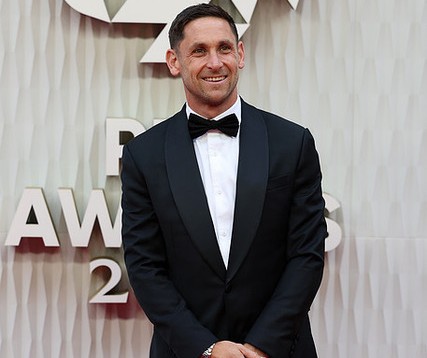
Furman still firmly on players’ side

For Dean Furman, being a former Bafana Bafana skipper brings a host of small advantages. People recognise you on the street and ask you to pose for selfies. They ask your opinion and follow you on social media. Bobbas put their hands to their mouth and, much to their young grandson’s profound embarrassment, exclaim, “Wasn’t he in Bafana Bafana!”
Furman, you sense, takes such things in his efficient stride, balancing sundry intrusions with the upside of being recognised by strangers. Having played 58 times for the national team provides another advantage, this time a subtle one: the privilege of having seen a Bafana Bafana dressing room from the inside.
As a result, he isn’t quick to criticise or apportion blame when it comes to Bafana Bafana’s slightly disappointing World Cup run. He prefers to look on the bright side of the ball, forgiving, explaining, hoping that things are rescued in the match against South Korea.
“After a poor start against Mexico we had another one against Czechia,” he says. “They defended deep and it’s never easy to break down a team who sit behind the ball.”
“At times I thought we needed to be a bit more patient in the final third, but we got our breakthrough, which keeps our dream alive. The great thing going into the South Korea game is that we know exactly what we have to do. I’m hoping that we will play Oswin Appollis and Relebohile Mofokeng from the start.”
Looking back, rather than forwards, Furman singles out Teboho Mokoena for his fine performance in the 1-1 draw against Czechia. “He was fantastic. His absence against South Korea will be sorely felt.”
In a more general vein, Furman is undecided on a 48-team World Cup. He thinks the expansion is “great” but wonders if it hasn’t correspondingly meant a dilution in quality. One of the themes of the tournament so far has been that of heavy defeats. He mentions Tunisia, but might also have mentioned Curaçao, Qatar, and Sweden, all of whom have shipped too many goals.
“I like the look of France and Spain to be there at the business end,” he says. “I wonder if we won’t be looking at a South American team at the end because they’ll adapt to the heat.”
As far as the twilight of his own football career is concerned, Furman says, with what you imagine is a grin, that he’s still “clinging onto the dream”.
He still plays, turning out semi-professionally nowadays in the Northern Premier League for Warrington Rylands, the seventh tier of football in England, where he rubs shoulders with teachers, window fitters, electricians, and accountants.
“We’re semi-professional,” he says. “We train two nights a week and play on weekends with guys who are good footballers but went on to pursue other careers. Warrington [which is about 25km west of Manchester] is really rugby league country, so football has to compete with league. Our dream at Warrington Rylands is to get ourselves into a position where we can be a full-time professional club.”
Furman turned 38 on Tuesday, 22 June ‒ he says his birthday tends to get overlooked in a welter of family birthdays and anniversaries ‒ so although “the body feels good”, he recognises he can’t carry on playing forever. “I’m in talks with the club to plot the way forward but at the same time we have two young children and I’ve got a responsible day job, so we’re looking to see how we can manage that.”
Furman works as a player services executive for the Professional Football Association (PFA), the professional players’ union, a job he loves. The transition from full-time playing to a more formal working environment wasn’t always easy but he’s been doing the job for three years and is now finding his mojo. “Football is quite a closed environment and trust is key. At the PFA we understand what players are going through because we’ve experienced the same things ourselves.”
What services does the PFA offer its 6 000 members? Among other things, appropriate support and advice, whether this be related to contracts, being out of contract, or, more extremely, what a player should do when, say, he or she fails a drug test.
It also provides mediation services and education opportunities. “We protect players’ rights, represent their views, and provide support through a wide variety of educational, financial, and well-being services,” says the PFA website.
“I can’t tell you that as a player I ever bothered to read the fine print of a contract,” says Furman. “But that’s what we help with and encourage players to do at the PFA. At the moment we’re in pre-season and some players might find themselves out of contract, so we offer a course at Champneys Spa in the [English] Midlands for 40 players a week to keep them fit and motivated so if they do get a trial, they’re in the best possible shape to take advantage of it. Everything is subsidised by the PFA.”
Although Furman doesn’t use the word “existential”, he is sensitive to the fact that we must all find meaning in life, something he calls “a purpose”. “You have to find a reason to get out of bed in the morning,” he says. “I needed to refashion myself out of playing and into something else. It wasn’t always easy.”
True enough, but you rather feel that Furman is now on the right side of the halfway line, moving towards goal with the ball at his feet. Who wouldn’t be in his boots?