





Jewish News
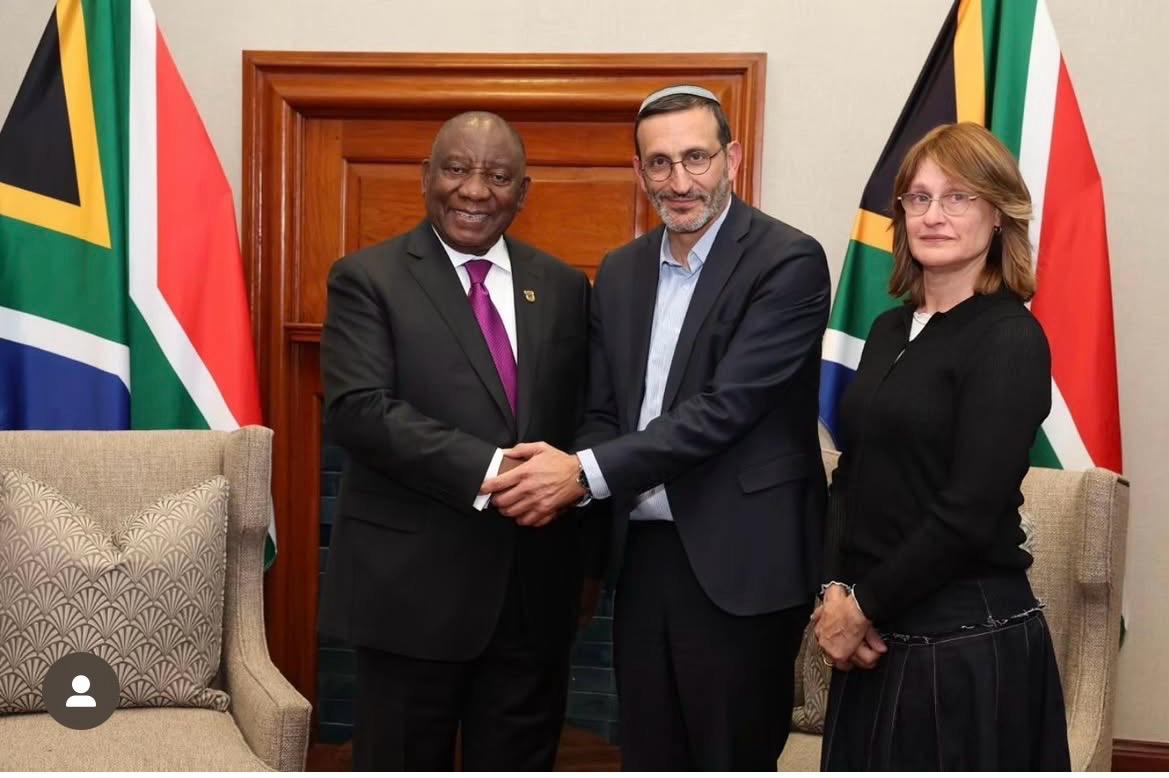
Father to father – Ramaphosa helps World Zionist president

President Cyril Ramaphosa became personally involved in efforts to bring home the remains of slain South African-born Israeli soldier Captain Daniel Perez from Gaza – an intervention the Perez family believe spared them more months of anguish.
It was an extraordinary intervention that cut through the bitter divide between South Africa and Israel.
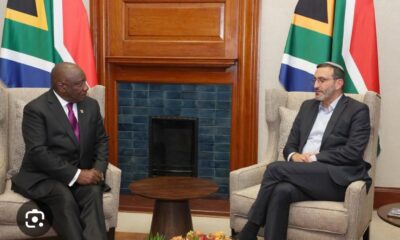
The Presidency publicly confirmed the government’s role this week following a poignant meeting between Ramaphosa and Daniel’s parents, Rabbi Doron and Shelley Perez. Rabbi Perez, also born in South Africa, is president of the World Zionist Organization and executive chairperson of the World Mizrachi movement.
“President Cyril Ramaphosa has met the family of the late Captain Daniel Perez following the intervention of the South African government in facilitating the release of his remains by Hamas,” the Presidency said on Monday, 10 August.
Exactly what Ramaphosa and the South African government did behind the scenes, whom they approached, and through which channels they worked remains undisclosed because of the sensitivity surrounding the process.
“Unfortunately, I can’t give you the details of the process behind the scenes,” Presidential Spokesperson Vincent Magwenya told the SA Jewish Report.
He did confirm that this case had personal significance for Ramaphosa. “The meeting was a very touching moment for the president,” Magwenya said. “As a parent himself, he felt the pain the Perez [family] felt with the loss of their son, and he was grateful that, at the very least, the intervention of the government that he leads could help bring closure to this tragic situation.”
Perez posted on Instagram: “Shelley and I met President Ramaphosa as South African parents in order to express our heartfelt gratitude to him and the South African government for the role they played behind the scenes in bringing our beloved son, Captain Daniel Perez, back to Israel for burial.”
“Daniel,” he stressed, was “a born and bred South African” who was killed on 7 October and whose body was taken into Gaza.
“Without their direct intervention, our son’s body would in all likelihood have come back months later, causing us additional pain and suffering,” Perez said. As it was, the family had waited two years for the return.
Sunday’s encounter was the second time Perez and Ramaphosa had come face to face. Their first encounter took place in Washington in May 2025, shortly after Ramaphosa’s White House meeting with United States President Donald Trump. Perez flew from Israel to meet Ramaphosa in Washington, and the two spent time together discussing Daniel’s story and his family’s anguish while his body remained in Gaza.
Perez told the SA Jewish Report that during both encounters, Ramaphosa displayed “warmth and openness” towards him and his family.
The South African Jewish Board of Deputies (SAJBD), which had been working quietly behind the scenes, helped to facilitate the first face-to-face meeting. For SAJBD National President Zev Krengel, it was part of a far broader effort that began in the aftermath of the Hamas attacks of 7 October.
“Even if we fundamentally disagree on ideological issues, we work with the democratically elected government of the day,” he said. “Although we differ dramatically on key issues, channels of communication remain open.”
Daniel Perez, 22, was born in Johannesburg and attended Yeshiva College before making aliya with his family. Jewish Israeli men and women are subject to conscription from age 18. Daniel went on to become an Israel Defense Forces (IDF) tank commander.
On 7 October, he was stationed at Nahal Oz military base when Hamas terrorists stormed southern Israel. He was killed in battle and his body taken into Gaza by Hamas.
For 163 days, his family clung to the hope that he might still be alive. It was only on 17 March 2024 that the IDF informed the Perez family, based on intelligence, that Daniel had been killed on 7 October.
His family held a funeral at Mount Herzl military cemetery in Jerusalem while continuing their campaign for the return of his body. Daniel’s remains were finally returned to Israel two years after he was killed, allowing his family at last to lay him to rest.
What remained largely out of public view until now was the extent of the South African government’s involvement in getting him home.
Krengel said the government played a significant role in efforts to secure the return of Daniel’s remains, and that Ramaphosa had taken a personal interest in the case.
“The president took it seriously,” Krengel said. “There was a commitment from the South African government to do what it could to bring Daniel back. Ramaphosa’s involvement made a material difference.”
The details of precisely how the return was achieved remain closely held.
Daniel’s fate captured hearts and minds across the community, where the Perez family is well known; and his story increasingly resonated beyond communal boundaries.
His plight also reached Parliament. In May 2025, Patriotic Alliance Member of Parliament Ashley Sauls raised Daniel’s case in the National Assembly, appealing for the government to become involved in efforts to get him home.
Krengel said the SAJBD’s involvement was largely through phone calls and engagement with South African officials. He travelled to Israel during this period, and held countless conversations as efforts continued.
The objective, he said, was never to create publicity. “It was about getting a successful result, not about headlines.”
All of this was taking place during one of the most acrimonious periods in South Africa-Israel relations. South Africa had taken Israel to the International Court of Justice (ICJ), accusing it of “genocide” in Gaza, an allegation Israel vehemently rejects. Diplomatic relations between the two countries dropped to an all-time low, and neither country has an ambassador posted in the other.
Krengel said the SAJBD’s relationship with the government during this period was therefore extremely complex. “We have been unbelievably disappointed with the government’s stance on Israel, taking Israel to the ICJ and cutting diplomatic ties,” he said.
Yet this had to be distinguished from the government’s relationship with and responsibility towards its own Jewish citizens.
“At the end of the day, it is the government that protects the South African Jewish community, and the security cluster has been incredible,” Krengel said.
The Presidency, meanwhile, placed its involvement in Daniel’s case within its broader efforts to assist South Africans caught in conflicts abroad.
For Doron and Shelley Perez, Sunday’s meeting was intensely personal.
The couple were able to sit with the president as parents whose son had finally been brought home, and to thank a man they believe helped make that happen.
“Amid geopolitical complexity and division, humanitarian considerations often shine through and ought to rise above all else,” Perez said.
The meeting stemmed from “the profound spirit of both South African ubuntu and the Jewish value of hakarat hatov”, expressing personal appreciation, he said.
For Krengel, the meeting showed that “even if there are profound differences of opinion, it is still about showing appreciation. It was the right thing to do.”
He said this story is a reminder that reality is rarely that simple. “Very few things are black and white,” he said. “Everything is grey.”




Alfreda Frantzen
August 13, 2026 at 9:21 pm
Very happy at the outcome. Best wishes to all concerned.