OpEds
Government legally obliged to help return Perez’s body

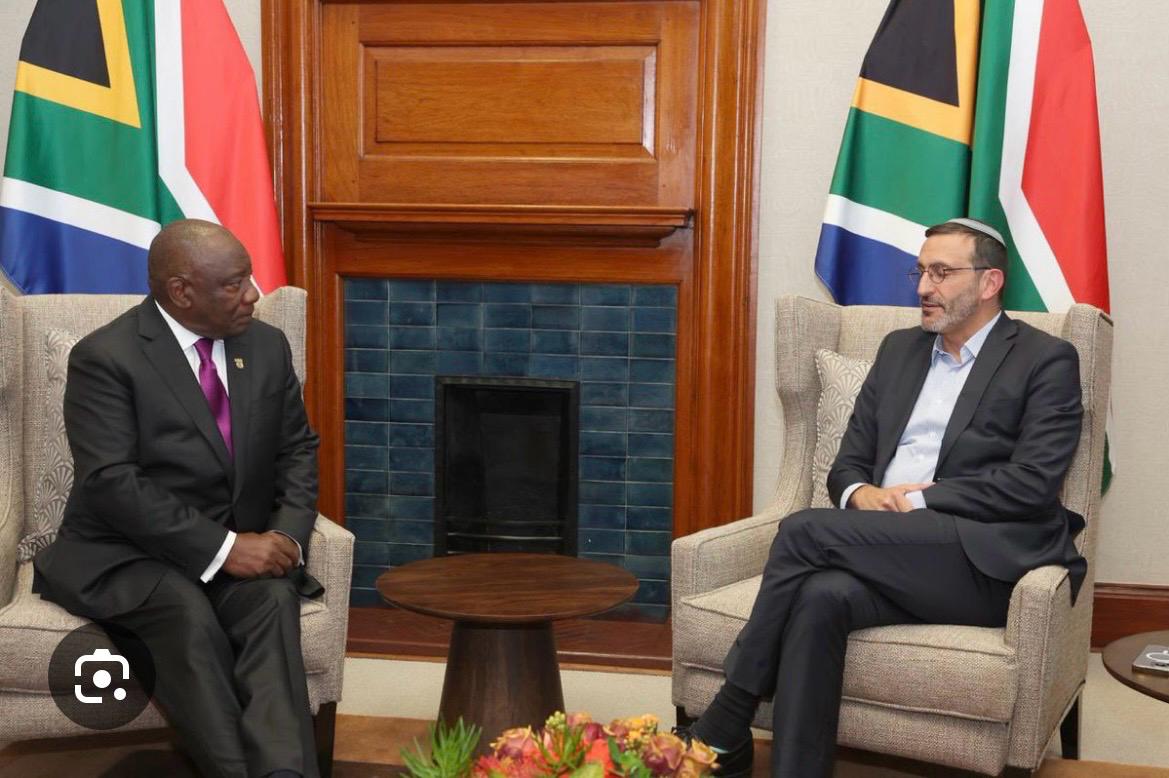
No one should have any moral or legal difficulty with President Cyril Ramaphosa’s intervention to secure the return of Captain Daniel Perez’s body. The president has done the right thing and should be unreservedly commended for it. There are humanitarian considerations that transcend conflicts.
In Jewish tradition, the Teruah shofar blast is said to signify the sobbing of Sisera’s mother – Sisera was the military leader of one of ancient Israel’s greatest foes – as she waits in vain for her son to return from battle with Israel. This teaches us that Judaism expects empathy for human suffering, even that of our worst enemies.
This expectation is also manifested in modern international humanitarian principles governing armed conflicts. It is reflected in the overarching principle of humanity, which dictates that human suffering should be limited only to what is necessary to win wars.
This principle protects not only civilians but combatants, the latter ordinarily being legitimate targets for attack. Hence the limitation on types of weapons that cause additional suffering beyond simply killing their target. The same principle dictates that a combatant who no longer presents a threat on the battlefield is to be treated humanely.
Similar logic underpins international legal norms regarding the mortal remains of fallen enemy soldiers. The Geneva Conventions require dignified interment of the dead and arrangements that allow for future exhumation of remains and their transportation to their home country. The exact positions of graves are to be communicated as soon as circumstances permit.
The International Committee of the Red Cross goes further and asserts as a principle of binding customary international law that “parties to the conflict must endeavour to facilitate the return of the remains of the deceased upon request of the party to which they belong or upon the request of their next of kin”.
If these humanitarian obligations apply to parties directly engaged in armed conflict with each other, how much more so can we expect powers that are not involved directly in a conflict to employ their best efforts to facilitate the return of fallen soldiers to their grieving families?
So even if official South Africa persists in its antagonism towards Israel, in advancing the patently false accusation of “genocide” in Gaza and in casting Israel Defense Forces (IDF) soldiers as villains, this should not stand in the way of a purely humanitarian gesture towards a bereaved family.
Of course, this writer would like to believe that the South African government’s conduct in this matter holds additional significance. Does this good deed, along with the decision to make it public, denote a slight, but not inconsequential, realignment with its professed policy of non-alignment, which was abandoned wholesale in relation to Israel?
The official accompanying statement of the Presidency affirming “South Africa’s support for an all-inclusive peace process that will deliver a lasting peace for the people of Israel and Palestine” has the appearance of balance. To some, it might sound vaguely conciliatory.
Dare we perceive a glimmer of understanding that IDF soldiers, proud South Africans among them, are our finest sons and daughters whose parents wait anxiously for their return, risking their lives to defend their fellow human beings against cruel and powerful forces openly seeking not “a lasting peace”, but their destruction?
David Benjamin is a rabbi and international law specialist living in Israel.