Israel
The issues on the minds of Israeli voters

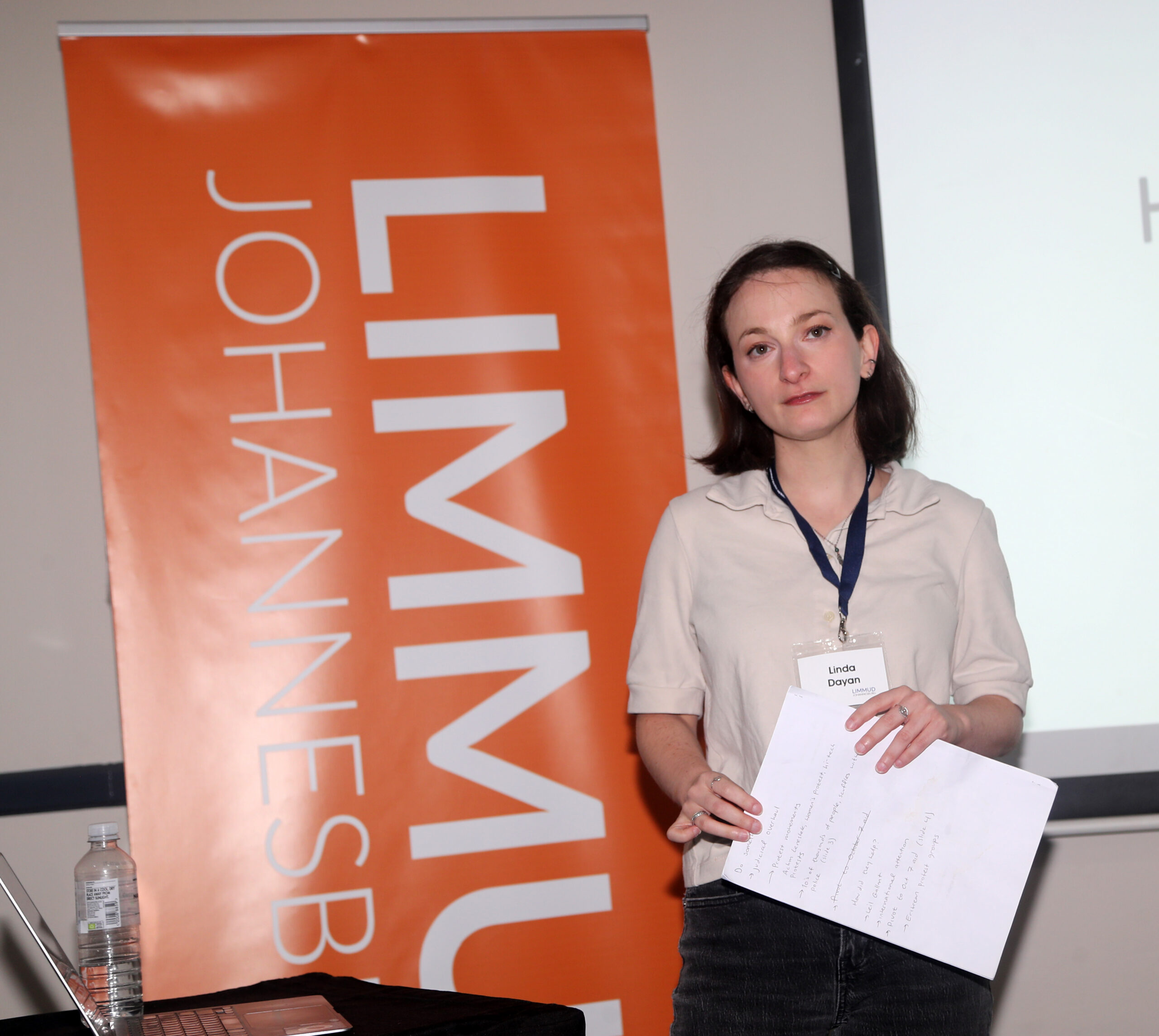
Who is left, right, or centre on the political spectrum is insignificant in the coming Israeli election, according to Haaretz reporter Linda Dayan, who spoke at Limmud Johannesburg.
“When we talk about left and right in Israel, usually we’re talking about the Palestinian question, what people think should be the solution to the Israeli-Palestinian conflict,” she said. “Very few of these parties now have any commentary on what to do about the Israeli-Palestinian conflict. Some of them, I would say, are kind of right-wing, but socially progressive,” she said.
Dayan predicts that Yashar, the party led by former Israel Defense Forces Chief of Staff Gadi Eisenkot, will do well. If he gets the majority, Eisenkot will become the first Sephardi and Mizrachi prime minister.
“I think a lot of the older Sephardic crowd who are slightly more secular are going to go with Eisenkot because of representation,” she said.
Eisenkot is seen as an everyman and, while he is leaning towards the right, is socially progressive, according to Dayan. “He calls Israeli settlers who attack Palestinians ‘Jewish terrorists’, which is a big deal, and it’s becoming a more mainstream position. He believes in protecting the settlements, but not to the detriment of national security. He doesn’t believe in annexation of the West Bank.
“So he doesn’t believe that the territories should be taken over and absorbed into Israel, the way that [far-right ministers Bezalel] Smotrich and [Itamar] Ben-Gvir do. And he’s spoken out against it. He called that idea ‘a messianic fantasy’, and there’s no way it is possible,” she said.
Most parties support the establishment of a commission of inquiry into 7 October and drafting the Haredi community into the military, said Dayan. The only ones not in favour of this are Likud, led by Benjamin Netanyahu; Ben-Gvir’s Otzma Yehudit; the Religious Zionist Party, headed by Smotrich; and the ultra-Orthodox parties.
The populist rhetoric of Likud, which Dayan described as “the Bibi Show”, increasingly draws on terms such as the “deep state” and the “left-wing elite”, borrowed in part from the United States and countries such as Hungary and Poland where there are also anti-liberal populist movements. Another key part of Likud’s platform has been weakening the courts.
However, much of the public anger at Likud stems from its alliance with the Haredi parties, according to Dayan. “Part of the reason that a lot of people are upset with Likud is … the way it’s been staunchly keeping its promises to its Haredi allies, such as adding a provision to the basic laws allowing Torah study to equal military service, which deeply upsets the majority of Israelis.”
She said Israelis essentially vote for who they believe will uphold their desired future of Israeli democracy. The most vital issues determining that are where they stand on threatened judicial overhaul, Haredi power and conscription, and an official probe into 7 October.
“This current government is blocking a formal state commission of inquiry into the 7 October attacks and the subsequent war. Why? It’ll say a lot of things about who should be held accountable and in what ways they should be held accountable, and those people don’t want to be held accountable. So, most of the opposition parties have, as part of their platform, a commission of inquiry into 7 October as part of the rehabilitation of the country following that war,” she said.
Israelis don’t vote directly for a prime minister or individual candidate, but for a political party, or “slate”. The Knesset has 120 seats, allocated proportionally according to parties’ share of the vote. A party must receive at least 3.25% of the vote to enter the Knesset; otherwise its votes are excluded from the allocation.
Once the results are announced, parties negotiate to form a coalition, as a government needs at least 61 of the 120 seats to hold a majority and none of the parties can reach this alone. These negotiations can involve agreements over ministerial positions, legislation, and other political priorities. The president, whose role is largely ceremonial, then consults with the parties and gives one politician a mandate to form a government, usually the person seen as most capable of securing a coalition. That politician has 28 days to do so. If they fail, another politician can be given the opportunity. If no one succeeds, the country may be forced to hold another election.
“That’s what happened in 2019, and it happened over and over and over and over and over,” Dayan said.
The two ultra-Orthodox parties, for the Ashkenazim and Sephardim, will form a coalition with pretty much anyone as long as it serves their interests, which are “Please don’t draft me, please don’t cut off my benefits, and please don’t regulate my school system”, said Dayan.
Israelis go to the polls on 27 October.