


Israel
Gaza, Haredi enlistment, and Netanyahu dominate election debate in English

Nine Israeli political representatives faced questions about Gaza, military service, and the failures surrounding 7 October during an online English-language election debate on Sunday. Their exchanges exposed sharp divisions over Israel’s security, political leadership, and the future direction of the country, ahead of the 27 October election.
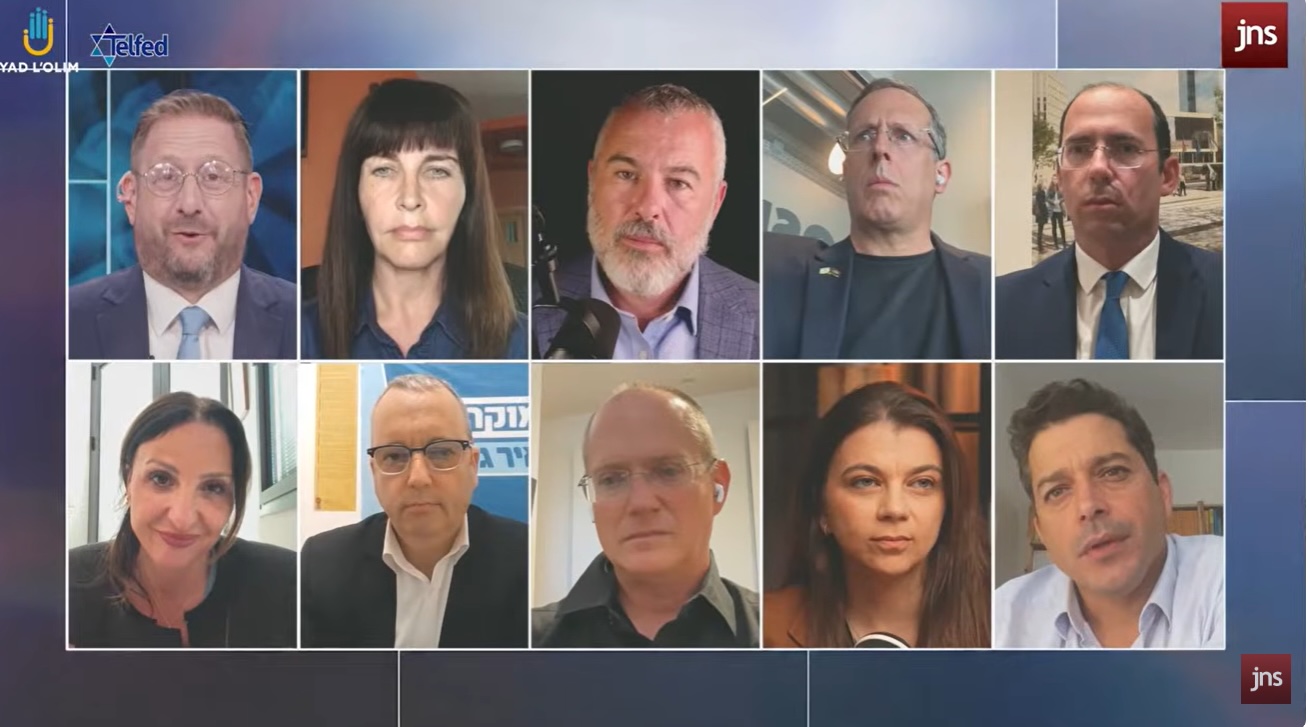
Presented by Yad L’Olim, the Jewish News Syndicate (JNS), and Telfed, the online debate was moderated by former Knesset member Dov Lipman, alongside JNS journalist Ruthie Bloom.
The participants represented parties across Israel’s political spectrum. They included Diaspora Affairs Minister Amichai Chikli of Likud, Alex Rif of Yashar, Oded Forer of Yisrael Beiteinu, and Gilad Kariv of the Democrats. Also participating were representatives of B’Yachad, Religious Zionism, Otzma Yehudit, Amcha Yisrael, and The Reservists-Economic Party.
The first question they were asked is how Israel could prevent another attack like the Hamas-led massacre of 7 October. Candidates offered sharply contrasting assessments of the government’s conduct and the steps needed to prevent Hamas rebuilding its military capabilities.
Chikli argued that Israel’s 2005 disengagement from Gaza, when it withdrew its settlements and permanent military presence, had been a fundamental mistake. He also criticised the Oslo agreements and the 2011 prisoner exchange that secured the release of hostage Gilad Shalit.
He maintained that Israel needed to retain control over its security position in Gaza and continue targeting Hamas commanders. He argued that previous Israeli governments’ decisions had contributed to the conditions preceding the October 2023 attack.
Rif offered a different assessment, accusing Prime Minister Benjamin Netanyahu’s government of failing to turn military achievements into lasting strategic change. “We will not buy temporary quiet while Hamas prepares the next 7 October,” Rif said.
He called for the dismantling of Hamas’s military and governing power, and prevention of it rebuilding. He advocated cooperation with the United States and regional states to protect Israel’s long-term security.
Forer criticised Netanyahu’s decision to continue transferring money to Hamas before the attack. He argued that Israel should end its responsibility for Gaza’s civilian population and transfer that responsibility to Egypt. He called for the Israel Defense Forces to retain freedom of action against terrorist organisations, including before they launch attacks.
Fleur Hassan-Nahoum, representing Amcha Yisrael, proposed separating Gaza’s civilian population from Hamas fighters. She advocated establishing a weapons-free zone and facilitating voluntary emigration for Gazans who wished to leave.
Yishai Fleisher of Otzma Yehudit argued that Israel should regain control of Gaza and encourage emigration. He opposed transferring control to Egypt, warning that this could create further security threats.
Kariv called for a change of political leadership, arguing that Netanyahu’s government had failed to prevent the attack. He said Israel should begin implementing US President Donald Trump’s proposed 20-point plan for Gaza.
Moshe Tur-Paz of B’Yachad also criticised the government’s handling of the war. He advocated disarming Hamas, replacing Qatar and Turkey with Egypt and the United Arab Emirates in Gaza’s future arrangements, and increasing the number of soldiers available to protect Israeli communities.
The candidates also debated compulsory military service for Haredi men, an increasingly contentious issue as Israeli reservists continue serving repeated tours during the war.
Forer called for every Israeli citizen to serve from the age of 18. Those unsuitable for military service would instead perform national service in hospitals, police departments, and fire services. He argued that exemptions placed an unfair burden on people who serve, work, and pay taxes. Forer proposed withholding state benefits from people who refused both military and national service.
Simcha Rothman of Religious Zionism defended his party’s approach, saying it sought to increase Haredi participation in the army, society, and the economy. He rejected proposals that would alienate the community from the state.
Rif also called for a practical and enforceable arrangement to increase enlistment.
The exchanges reflected a broader dispute over equality of responsibility, religious identity, and the state’s obligations to different communities.
Another major point of disagreement was how Israel should investigate the security and political failures of 7 October.
Chikli called for a national, parity-based investigative committee rather than one controlled by the judiciary. He argued that the investigation should examine events before the attack as well as the failures on the day itself.
Rothman similarly supported a committee backed by at least 80 Knesset members from the coalition and opposition. He argued that the judiciary should not investigate itself because it had been involved in security decisions.
Kariv rejected this approach. He called for a state commission of inquiry, arguing that government ministers who held office at the time of the attack had an interest in controlling the investigation. The government should not appoint the body responsible for examining its own conduct.
Kariv maintained that a state commission offered the appropriate mechanism for establishing the truth.
Candidates were also asked whom their parties would recommend to form the next government.
Chikli and Rothman backed Netanyahu. Hassan-Nahoum said Amcha Yisrael would support Netanyahu as the leader of the right-wing bloc, although she called for a different approach to the war. Rif named Yashar leader Gadi Eisenkot, arguing that he could unite Israelis across political divisions. Tur-Paz backed B’Yachad leader Naftali Bennett, citing his experience as a former prime minister.
Forer said his priority was replacing the current government. He identified Yisrael Beiteinu leader Avigdor Lieberman as the candidate best equipped to lead a new administration.
The possibility of a Palestinian state also revealed deep divisions. Several representatives rejected any form of Palestinian statehood. Chikli pointed to settlement expansion in Judea and Samaria as evidence of the current government’s position.