


Israel
Festival bows to pressure and drops Jerusalem photographer

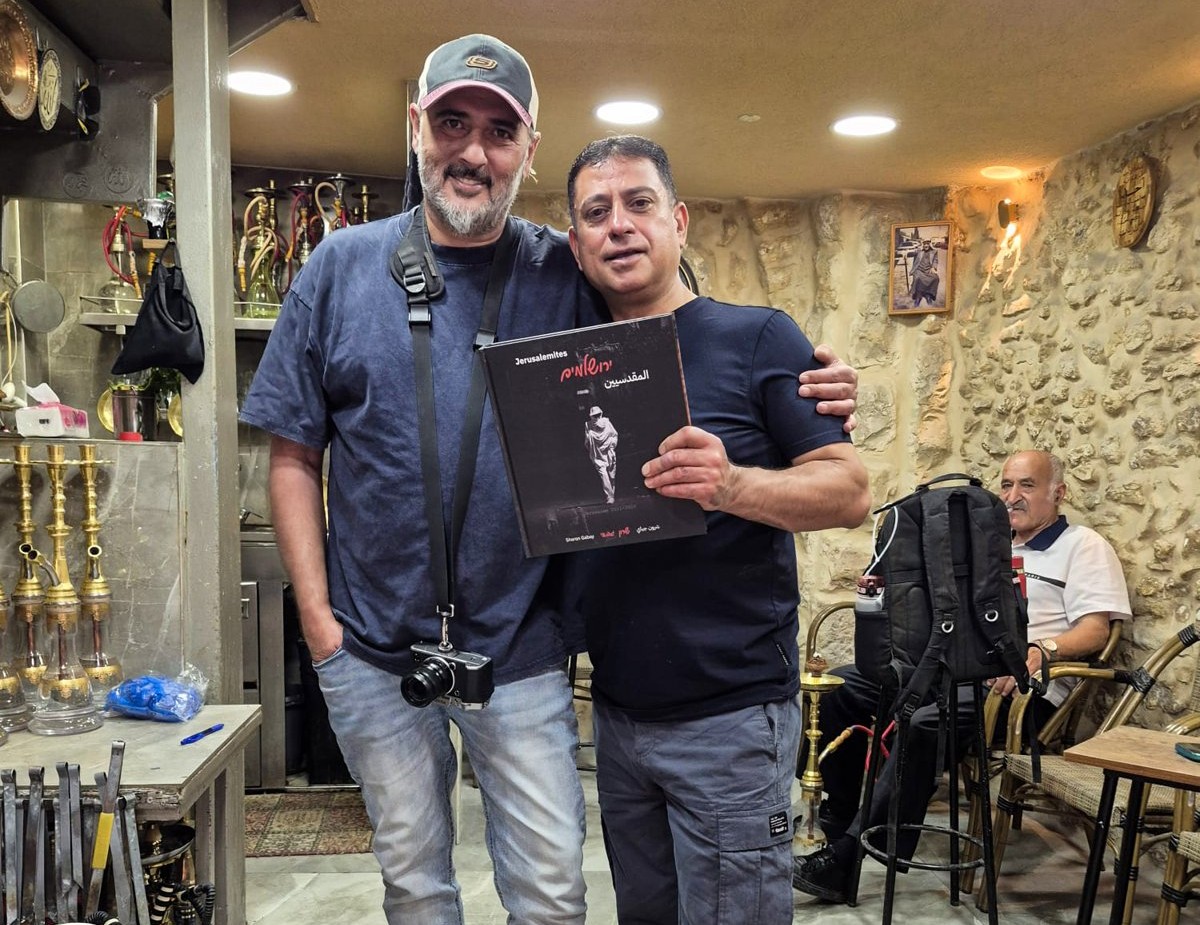
Israeli photographer Sharon Gabay’s book Jerusalemites was selected on artistic merit for the Indian Photo Festival. Hours after his name and nationality were made public, it was dropped from the exhibition following outside objections.
Gabay’s book portrays the diverse people of Jerusalem through photographs, accompanied by English, Hebrew, and Arabic text. It was selected for exhibition by a five-member jury that included two National Geographic photo editors, who judged submissions without knowing the photographers’ names or nationalities.
Gabay received an official email on 18 September congratulating him on being selected for the festival’s Photobook Exhibition and instructing him to confirm his participation, submit promotional material, and send a physical copy of the book to Hyderabad. His name was published on the festival’s list of selected photographers as “Sharon Gabay / Israel”.
However, when he went to look at the festival website a few hours later, he found that his work wasn’t there.
“I refreshed the page and saw that my name still hadn’t come back, so I sent them an email asking what had happened,” he said. The festival had decided to remove Gabay’s submission after “certain concerns” were raised about his inclusion. It also stated, “We stand against genocide, violence against civilians, and all forms of human rights violations.”
Gabay, whose family has lived in Jerusalem for generations, compiled his book from 15 years of street photography between 2011 and 2026. Rather than focusing on Jerusalem’s landmarks or presenting the city primarily through politics and conflict, Gabay focuses on the people who live there and their everyday interactions.
Over those 15 years, Gabay said, he had taken roughly 1.5 million photographs, eventually selecting 233 images for the 304-page book. The photographs are unstaged and depict Jerusalem’s Jewish, Muslim, and Christian residents, religious and secular people, young and old, going about ordinary life – eating, laughing, praying, travelling, dancing, and interacting in the city. Gabay describes the work as a visual essay of the Jerusalem rarely seen in the news – and ultimately, about the possibility of coexistence.
“We know how to live together. I go into every neighbourhood in Jerusalem, east and west, and I feel at home. You see Muslim families shopping alongside ultra-Orthodox Jewish families, passing each other and smiling. All of that is in the book. Jerusalem is one of the most complicated cities in the world, and everyone talks about its potential to explode, but 99% of the time, we are okay. That’s the Jerusalem I wanted to show.”
The festival confirmed that the objections to Gabay’s inclusion had been raised by people outside the jury process, after the selection was announced, and that those objections – and the likely consequences of proceeding despite them – had informed its decision not to exhibit the book. It maintained that the reversal was separate from the artistic evaluation of Jerusalemites and didn’t reflect its artistic merit.
“They later told media outlets that the decision wasn’t related to the quality or artistic merit of the book. In fact, they said the book was appropriate and was one of the best they had received,” said Gabay.
The festival also said that its anonymous selection process doesn’t allow evaluators to see the photographer’s “name, nationality, or background”. It added that in future, it would “introduce additional measures to ensure greater alignment with its vision, values, and commitment”.
Gabay explained that while having his work removed from the festival was insulting, “I wasn’t angry because, in a way, it was predictable. But because of the character of the book, the three languages, and the fact that you cannot tell from the photographs who created it, I had hope. When they selected me, I thought, ‘Okay, they have overcome their prejudices.’ But in the end, they didn’t overcome the pressure and the threats.
“Now everyone should know that this festival isn’t necessarily presenting the best photobooks; it’s presenting the best photobooks that it is willing to show.
“I also have French citizenship and a French passport. I could have submitted the book as a French citizen, but I didn’t. I am first and foremost a proud Jewish Israeli. I haven’t done anything wrong – quite the opposite – and I didn’t deserve to be treated this way. Seeing the consequences the festival is now facing does give me some satisfaction,” he said. There has been widespread criticism of his exclusion, including from US Ambassador to Israel Mike Huckabee.
Gabay explained that while this isn’t the first time something like this has happened to him, it’s the first time it’s been so blatant.
“They chose the book, they published my name, and then they went back on their decision. Now I have documentation of everything. I’m not just telling a story; it’s all there on paper.
“I hope this can influence people to judge art as art, rather than looking at who the artist is or what passport they hold. There was an Iranian photographer selected for the festival, and I didn’t care. In fact, I was happy and thought maybe I would meet them there. I never look at where an artist comes from.
“After they removed me, I thought about whether they had removed anyone else, but they hadn’t. In my view, this wasn’t about the work; it was about me being Jewish and Israeli,” he said.