





News
Fear – too familiar for SA Jews in London

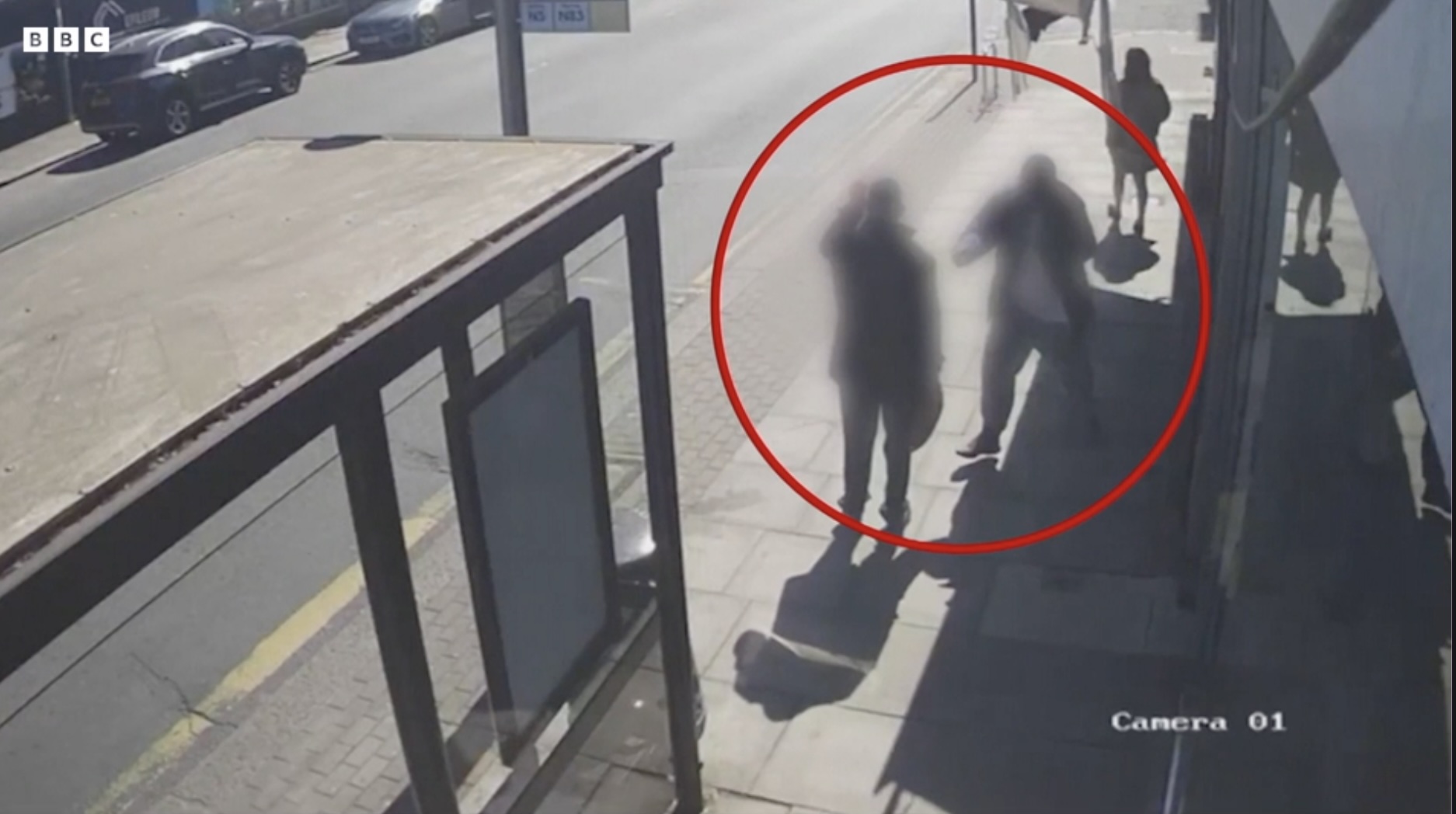
When a stabbing attack unfolded on Golders Green Road last week, panic spread quickly through one of London’s best-known Jewish neighbourhoods. Police sealed off parts of the road. Jewish-owned shops shut their doors. Parents frantically called children and relatives. WhatsApp groups exploded with warnings to stay inside.
For many South African Jews living in London, it was the moment fear stopped feeling abstract.
“Can people please stop trying to kill Jews right by my work?” said Rachel*, who works close to where the attack took place. “It’s really bringing the workplace vibe down and then I have to deal with my mom messaging me to see if I’m alive.”
Comedian Claudine Ullman said conversations in the Jewish community have become darker and more urgent. “Living as a Jew in London right now is, quite honestly, bloody unsettling,” she said.
The stabbing was another of the antisemitic incidents that have shaken Britain’s Jews in recent weeks. There have been arson attacks linked to Jewish sites and on a Jewish-owned ambulance service, and threats against Jewish institutions.
“Things that should be simple and ordinary suddenly aren’t,” said Ullman. “Parents are thinking about security in schools in ways we never imagined we would. I find myself asking questions no parent should have to ask, like whether my child can safely wear a kippah on the way to school”.
For Ullman, who grew up in South Africa, the emotional shift has been particularly jarring. “I grew up in South Africa, where conversations about safety were part of daily life,” she said.
“When I experienced being hijacked at gunpoint, the question everyone asked afterwards was, ‘Where are you going?’ Meaning, where are you going to move to feel safe? What is so shocking now is hearing that same question again, but for a completely different reason.”
She said conversations among Jewish Londoners increasingly revolve around escape plans and second passports. “‘Where are you going?’ ‘Where could you go?’ ‘What passport do you have?’ That shift is deeply unsettling,” she said.
Amy Lazarus, a Johannesburg-born mother living in Golders Green, said the recent violence had hit close to home in the most literal sense. “When something happens literally down the road from your house, you do feel more vulnerable,” she said.
The two men were stabbed on roads her family use daily. “It’s a route that my children and I walk all the time. My kids walk there to get ice cream from the shops.”
Lazarus described the atmosphere after the stabbing as surreal. “A lot of the Jewish shops were closed,” she said. “Most of Golders Green Road was blocked off because it was a crime scene.”
She said the police presence in the area increased dramatically. “They’ve definitely stepped things up There are more patrols and much more security present.”
Though community members gathered for a pro-Israel rally shortly after the attack, Lazarus said the mood underneath the singing and solidarity was tense. “The vibe of the rally was uplifting and positive, but the actual feel of the day was dampened.”
Josh*, who has South African parents but was born and raised in London, described watching antisemitism intensify online and on the streets. “The cycle is: people hate Jews because we’re evil, they try to attack us, it gets on the news, people think we get too much media attention because we run it, they get angry, they hate Jews because we’re evil, they try to attack us,” he said. “Throw in some hate of Israel and blaming people outside Israel for the government’s actions, and you’ve got a real societal issue.”
Rabbi Naftali Schiff, head of educational organisation Jewish Futures, said the attacks have shocked him. “There was an implied personal threat against me,” he said.
Schiff said he had never imagined he would witness this level of hostility in the UK. “My grandfather served in the British army in World War I, my father served in World War II, and I went to school and university here,” he said. “It’s a very civil and polite society. Extremism resorting to violence in this way is very shocking and saddening.”
But Schiff warned against allowing terror to dictate Jewish life. “The definition of terror is exactly that. It strikes terror. But I don’t think one can live in fear. That is exactly what terror wants.”
He said he still wears a kippah in public and refuses to hide his Jewish identity. “We’re a generation that vowed never again,” he said. “Part of never again is that we will stand tall and proud.”
Still, even those determined not to retreat acknowledge that the emotional toll is mounting. Ullman said, “That reality is exhausting. It is frightening. And it is deeply sad that something so core to who we are can feel like a risk.”
Some Jewish Londoners have started changing daily routines. Others avoid public transport, remove Jewish symbols like kippot and Magen David jewellery, or think carefully before speaking Hebrew in public.
According to people interviewed for this article, parents are increasingly worried about children travelling to Jewish schools, while synagogues and communal organisations have tightened security. Schiff said organisations now work closely with security groups and police before events or trips.
Yet both Schiff and Lazarus stressed that fear has not stopped communal life. Following the Golders Green attack, thousands gathered across London for Lag B’Omer celebrations. “There were huge bonfires and gatherings,” Lazarus said. “Everyone was out. No one was afraid to appear Jewish, to behave Jewish, and to celebrate.”
At the same time, many Jews say they feel abandoned by parts of wider society. Several people interviewed described feeling that antisemitism is minimised, excused, or quickly politicised.
Rachel said, “I feel like people are waiting for Jews to die before they take antisemitism seriously.” Others spoke about a growing sense of isolation since the start of the Israel-Hamas war.
Ullman said she tries not to contribute to the anger consuming social media. “I am not interested in pretending everything is fine. It isn’t,” she said. “But I also don’t believe that amplifying fear or anger alone is what moves us forward.
“For me, the response is to keep showing up with honesty, with humanity, and with content that educates, builds understanding, and reflects the depth and richness of Jewish life,” she said.
Schiff believes Britain still has the ability to confront the problem, but warned that extremism must be challenged directly. “People need to be taught to debate and enter dialogue, not to resort to violence.”
He warned that antisemitism is often a sign of deeper societal fractures. “The Jews are often the canary in the coalmine,” he said. “If that alarm is ignored, it doesn’t bode well for any part of society.”
For now, many South African Jews in London remain caught between fear and defiance. Parents still send children to Jewish schools. Synagogues remain full. Restaurants and kosher shops continue trading. But beneath that determination lies an anxiety that many say they have not experienced before.
*Sources have requested anonymity for security reasons.




Alison Goldberg
May 8, 2026 at 12:13 am
Please publish a list of the writers who are boycotting the 14th International Writers Festival in Jerusalem.