





World
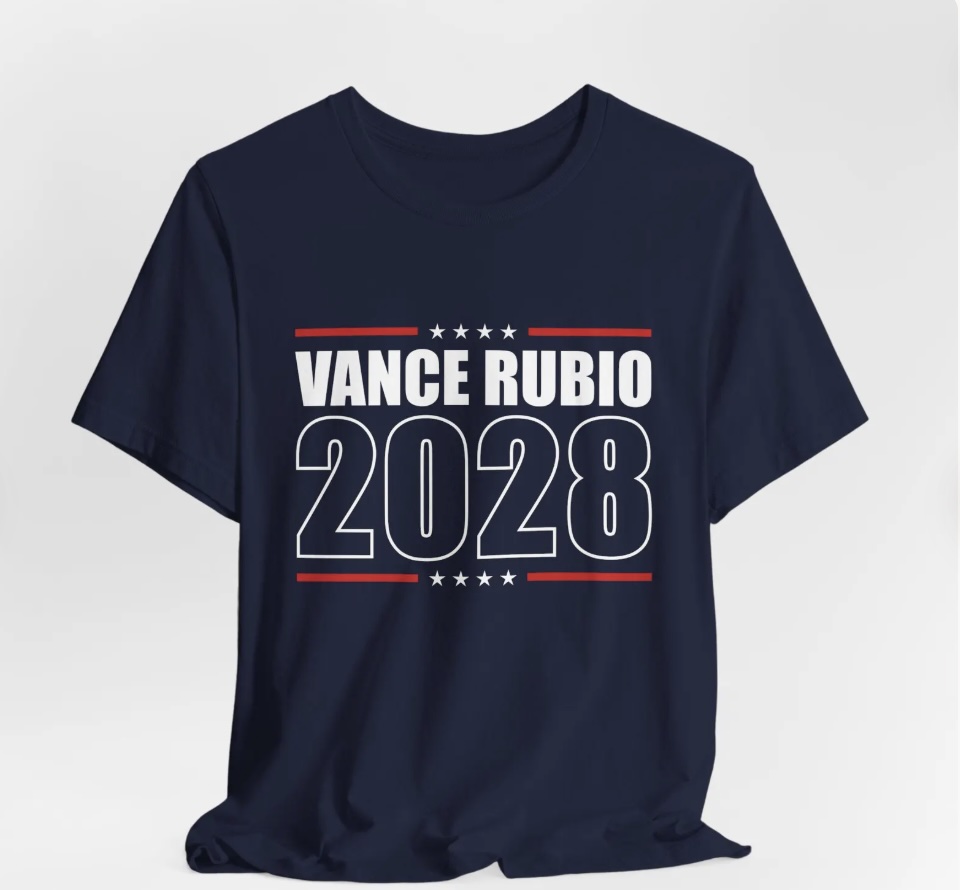
As Jewish Republicans sour on JD Vance, many are rallying behind Marco Rubio for 2028

JTA – It’s no secret that JD Vance has lost the confidence of many Jewish Republicans, who have taken issue with the US vice-president’s reprimanding of Israeli officials, indulgence of anti-Israel conspiracy theories, and silence on Tucker Carlson, the prominent pundit who has turned against Israel.
But Vance is still thought by many to be President Donald Trump’s most likely successor at the top of the party’s ticket in 2028, leaving the Republicans’ Jewish supporters with the question of whom to back when Trump’s second term ends.
Many are finding an answer elsewhere in the Trump administration.
“The overwhelming majority of American Jewish MAGA [Make America Great Again] voters, donors, and policymakers are enthusiastically supporting a Marco Rubio presidential run,” Shabbos Kestenbaum, whose high-profile activism against campus antisemitism has made him a hero among Jewish conservatives, told the Jewish Telegraphic Agency (JTA) this week. “I look forward to voting for him as well.”
Kestenbaum was offering an update on a claim he made in an interview at a Republican Jewish Coalition (RJC) gala in May.
“I can certainly tell you with confidence that in the American Jewish conservative circles, it’s Marco Rubio by a margin of 99 to 1,” he said at the time. “In fact, that’s probably underselling it, it’s probably closer to 100 to 0. I can’t think of anyone within the American Jewish MAGA movement who would not want Marco Rubio as the nominee.”
Rubio, who is Trump’s secretary of state and national security adviser and served as a US senator from Florida for 14 years, has won the support of a number of Jewish Republicans with his staunch support of Israel and hawkish opposition to Iran. He has signalled a willingness to remove restrictions the Biden administration had placed on violent Israeli settler groups in the West Bank and this week vowed to dismantle the International Criminal Court (ICC), which has an arrest warrant for multiple Israeli leaders including Prime Minister Benjamin Netanyahu.
The RJC praised Rubio’s ICC vow on Monday, tweeting, “Leadership. Thank you, @SecRubio.”
Some, including the far-right Jewish activist Laura Loomer, have also pointed to Rubio’s hardline stance on pro-Palestinian protesters; he celebrated revoking hundreds of student visas in connection with such protests last year.
“We are finally getting the pro-Hamas thugs OUT,” Loomer wrote on X, adding that Rubio “is a LEADER” who is “not afraid of taking on Islamic immigrants who don’t belong here”. In another post, Loomer revealed her ambitions for Rubio, “He is going to be President someday. Mark my word.”
Rubio’s deep ties to the pro-Israel community predate his national profile; his main benefactor during his career in the Florida legislature was Norman Braman, a major donor to Jewish causes. Rubio’s support for Israel is typical of Cuban-American politicians who see the country as a bulwark against communism. His closest ally in the Florida legislature was Adam Hasner, who is Jewish.
Some Israel critics who have spread conspiracy theories about Jews and the Jewish State are now accusing Rubio of working toward Israeli interests above American interests, and say Israel is pushing his candidacy.
Besides his pro-Israel bona fides, Jewish conservative commentators have praised Rubio for his fiery rhetoric about his hope for the future of the United States, including in a speech at the Munich Security Conference, which Commentary editor Seth Mandel called “profound”.
Eric Levine, an RJC board member and major Republican fundraiser, said there is “overwhelming support” for Rubio, among both Jewish and non-Jewish Republicans.
“Look, my first choice in 2016 was Marco Rubio,” said Levine, who spoke in a personal capacity and not for the RJC, adding that he was an early fundraiser for Rubio’s 2016 presidential campaign.
“Marco has always been an extraordinarily strong and effective advocate for the American-Israel relationship,” Levine said. “More importantly, he’s a very strong and effective communicator regarding America’s place in the world.”
Vance has seen his support eroding, both in and outside of Jewish circles. Some of Trump’s top advisers are reportedly pushing for Rubio, and not the vice-president, to be the 2028 nominee. Republican megadonor Ken Griffin said last week that he would support Rubio over Vance in a 2028 presidential primary, Axios reported. Even live betting markets say Rubio’s chances are climbing.
Trump himself has floated a Vance-Rubio ticket, without saying which of the two he thinks should be president. The president asked a room of donors at Mar-a-Lago in late February, as he joined Israel in launching a war against Iran, which candidate they preferred, and Rubio carried the room, NBC News reported at the time. Kestenbaum said he had heard about the vote from donors who were there. “To be fair, they’re in Florida, so it’s a bit of a self-selecting crowd ‒ but Marco wins hands-down,” Kestenbaum said.
The RJC has so far refused to wade into the 2028 waters. Chief executive Matt Brooks told JTA at the RJC’s America 250 gala that the presidential primary is “light years away from right now” and that the focus is on holding the Republican majority in the House and Senate come November.
But the group, and Jewish Republicans writ large, have been embroiled in a battle over the party’s stance on Israel, and how it should deal with figures like Carlson, Nick Fuentes, and Candace Owens, all of whom have spread antisemitic conspiracy theories to their large online followings.
Trump drew the RJC’s effusive praise when he disavowed Carlson. Vance, on the other hand, has remained mum despite mounting calls by Jewish conservatives for him to condemn the former Fox News host.
“I’d like to see Vice-President Vance change tack on a lot of this; I hope that he will,” commentator Ben Shapiro said in a New Yorker interview earlier this year, when asked about who in the conservative world “would cast out the kind of characters that Tucker Carlson and company are encouraging”. Shapiro said he would “likely” support Rubio in a primary over Vance.
The State Department didn’t respond to a request for Rubio to comment on Carlson and whether he believes there is rising antisemitism on the right. Other possible 2028 presidential candidates, chief among them Texas Senator Ted Cruz, have been outspoken in warning about the threat of right-wing antisemitism.
Brooks, asked about Vance, told JTA that Trump’s voice is “the voice that matters right now”.
“As we start to head into after the midterms and whether people run or not, I’m sure they’re going to be asked about all these things,” Brooks added.
Levine has weighed in on Vance, telling Politico this week that it’s “hard to find any support for him at all in the Jewish community”. He declined to discuss Vance with JTA.
In the months since calls first escalated for him to condemn Carlson, Vance’s role in seeking to broker a deal with Iran has only further alienated pro-Israel Republicans. He drew backlash from Republican Jews , both from the rank-and-file and from a sitting member of Congress, when he warned Israeli critics of the Iran deal, which has since fallen apart, not to cross Trump, saying, “If I was in the Cabinet of the Israeli government, I might not be attacking the only powerful ally that I have anywhere left in the entire world.”
Florida Representative Randy Fine, the Jewish right-wing firebrand, called Vance’s comments “absolutely inappropriate and frankly disgusting”. He didn’t reply to a texted query about Rubio.
Valerie Greenfeld, an RJC member and former senatorial staffer who now lives in Jerusalem, said in an interview that “it was incredibly arrogant of him to say such a thing, because we’re partners”.
She added that Rubio is currently the most popular choice for president in 2028 among her circle of American voters in Israel. Meanwhile, she said, “the more JD Vance speaks about Israel and antisemitism and teams up with Tucker Carlson and his ilk, the worse it is for him in terms of the Jewish vote”.
American Jewish voters skew heavily towards voting for Democratic candidates. Somewhere between 63% and 71% of Jewish voters supported Kamala Harris in 2024.
But as a growing number of Jewish Democrats say they feel unwelcome in their party amid tensions over Israel and the pro-Israel lobby, there is a sense that a Republican nominee could pick up votes from a Democrat who is more sharply critical of Israel than any of their predecessors.
George Mason University law professor David Bernstein predicted on X that there will be “a significant shift in Jewish behaviour” if Rubio wins the nomination. “The vote change will be relatively modest, but the energy and money will shift dramatically.”
He added, “If it’s Vance, nope.”
Pro-Israel criticism of Vance has grown in response to the terms of the Iran deal last month, which delivered multiple concessions to the Islamic Republic. Shapiro told Fox News that Vance, as a key negotiator, had “not well served the president”. Trump this week resumed the war with Iran and said the deal was history.
Rubio, meanwhile, came out of the deal with positive reviews from the pro-Israel crowd, who viewed his silence as disapproving of the concessions made in the deal. Rubio notably brokered a parallel framework agreement between Israel and Lebanon that undercuts a key objectionable element of the Vance-brokered deal, which codified Iran’s role in Lebanon.
“Rubio does not look happy,” wrote Eylon Levy, a former Israeli government spokesperson, alongside a video of the secretary of state appearing stoic while Trump announced the deal.
Commentator Lisa Daftari wrote, “Today, we are all Marco Rubio.”
Meanwhile, Israel critics on both the left and right have been quick to call out the burgeoning support for the secretary of state.
Cenk Uygur, the host of The Young Turks podcast, wrote that “half the officials” in Trump’s administration “work for Israel”, including Rubio.
Michael Rectenwald, who heads the Anti-Zionist America Political Action Committee, blasted Rubio’s plan to dismantle the ICC and said the “US is ‘israel’s’ bitch”.
Clint Russell, host of the Liberty Lockdown podcast, accused Israel of launching a propaganda campaign and paying influencers to “tank Vance and boost Marco Rubio for 2028”. Russell didn’t provide proof but was steadfast in his accusation.
“They’ve been boosting him for months. Hard,” he wrote. “He’s their guy.”






Lukas
July 20, 2026 at 12:00 pm
JD Vance & bigotry.
Earlier signs:
Nick Fuentes (2021).
Vance blasted Twitter for banning Hitler fan Nick Fuentes.
Marjorie Taylor Greene (2022).
Vance defended Greene after she appeared at a conference organized by Nick Fuentes, saying she had “done nothing wrong.”
Tucker Carlson (2024)
Vance declined to condemn Carlson after Carlson interviewed Darryl Cooper, described as a Holocaust revisionist.
His campaign rejected criticism by saying Vance opposed “guilt-by-association cancel culture.”
JD Vance has repeatedly declined to distance himself from individuals associated with antisemitism.
Examples include:
Nick Fuentes (2025).
Remaining silent after Carlson interviewed white nationalist Nick Fuentes.
Not responding despite Fuentes having previously made racist remarks about Vance’s family.
2. Downplaying Antisemitism.
Vance minimizes antisemitic incidents.
Young Republican Group Chat (October 2025).
A leaked chat contained:
-praise for Hitler,
-gas chamber jokes,
-racist slurs.
Vance responded by:
-calling criticism “pearl clutching”,
-saying “kids do stupid things”.
Reactions from several publications:
The Atlantic:
Argued Vance normalized extremist rhetoric instead of condemning it.
National Review:
The participants were adults, making Vance’s “kids” characterization implausible.
Daily Mail:
Focused on criticism from Republicans who believed Vance should have condemned the messages outright.
USA Today:
Vance’s response sends a poor message to young people about hate speech.
3. Public Statements and Omissions
University of Mississippi Event (October 2025).
A Turning Point USA event where a student made statements, reading out BS from his phone, alleging:
-Israel manipulates the U.S.
-Judaism persecutes [sic] Christians.
Vance:
rejected the idea that Israel controlled Donald Trump,
but failed to directly reject the broader antisemitic premises,
and instead framed the issue as a theological disagreement.
4. Holocaust Remembrance Day Statement (January 2026)
Vance’s official statement:
-omitted Jews,
-omitted Nazis,
-omitted antisemitism,
omitted the six million Jewish victims.
The omission prompted criticism from Jewish organizations and commentators cited in the article.
5. Joe Rogan Podcast (July 2026).
Vance’s appearance on The Joe Rogan Experience.
Rogan speculated about Jeffrey Epstein being connected to intelligence agencies.
While:
-no public evidence supports Mossad-agent claims,
-Vance gave legitimacy to a longstanding conspiracy theory,
-this echoed narratives promoted by Tucker Carlson and Candace Owens.
The New York Times noted no conclusive evidence Epstein worked for Mossad while saying Vance’s comments reflected conspiracy theories that have drawn accusations of antisemitism.
Opinion writers argued Vance framed Israel as a secret actor manipulating American policy.
Vance was also criticized for:
discussing alleged Israeli influence campaigns while downplaying influence from Qatar, China, or Russia.