OpEds
Heat of the war is far-reaching

For years the confrontation between Iran and Israel played out in the shadows. Drones over Syria. Cyberattacks no-one claimed. Proxies doing the dirty work.
That era is over.
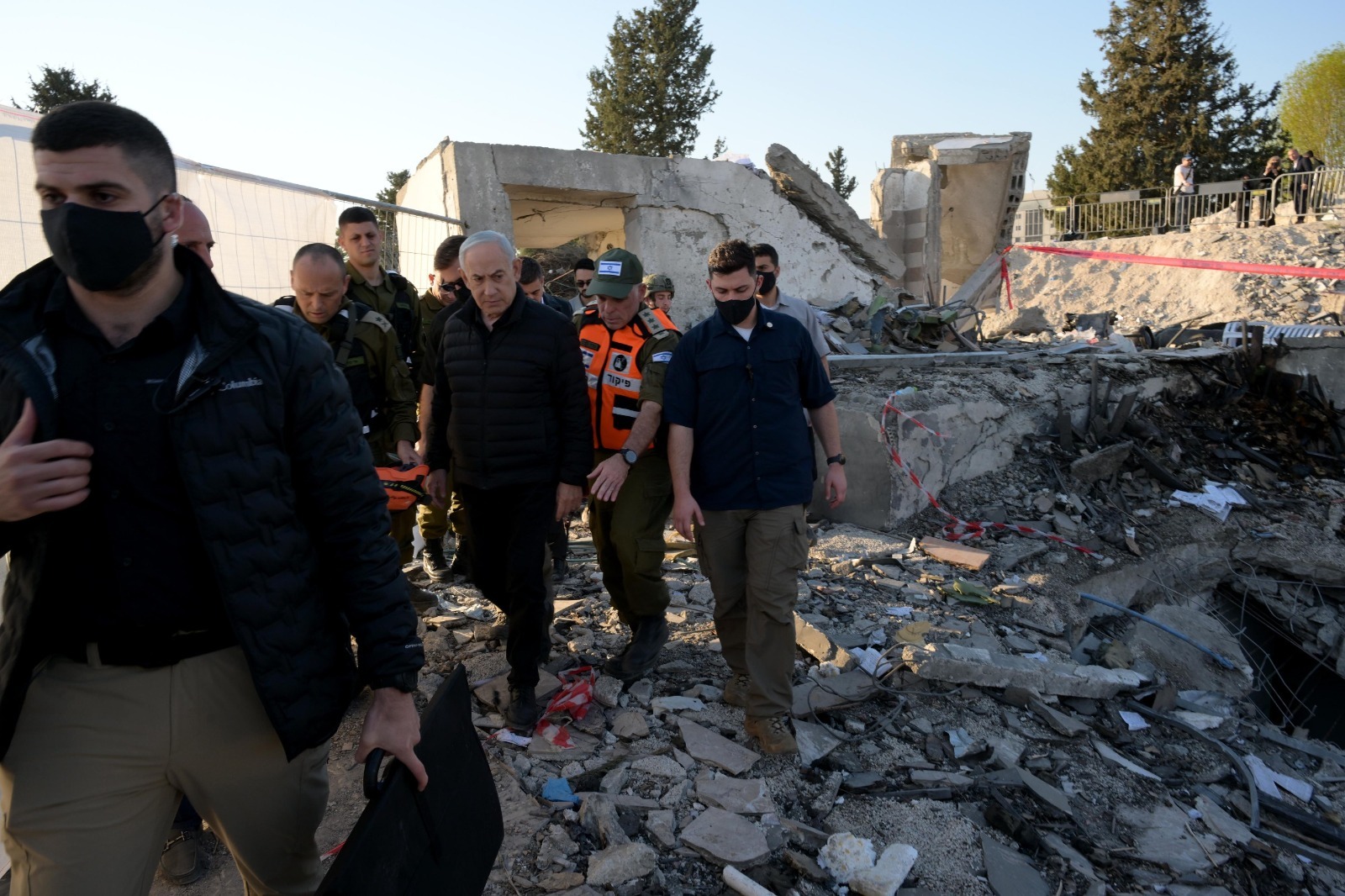
The direct targeting of Iranian leadership, culminating in the killing of Ayatollah Ali Khamenei, has detonated whatever fragile equilibrium remained in the Middle East. What was once a “ring of fire” encircling Israel, through Hezbollah in Lebanon and Hamas in Gaza, has collapsed inwards. The furnace is now central. Tehran and Jerusalem are no longer sparring through intermediaries; they are striking directly. And the missiles hitting Gulf hubs like Dubai and Doha signal something even more destabilising: the war has gone regional, in the most literal sense.
For decades Iran perfected the art of plausible deniability. Hezbollah would fire, Hamas would strike, militias in Syria or Iraq would harass. Tehran could deny, deflect, and retreat into diplomatic ambiguity. That strategy has imploded. Direct confrontation changes the calculus not only for Israel and Iran, but for the Gulf states who quietly hoped the fire would remain contained.
The Gulf now finds itself in a brutal dilemma. Some of its leadership may not mourn the clipping of Iran’s wings; the Islamic Revolutionary Guard Corps (IRGC) has long cast a shadow over regional stability. But when missiles land near civilian airports and luxury hotels, geopolitical chess becomes domestic crisis management.
The Abraham Accords, once heralded as the region’s new architecture, are under their sternest stress test. Although built as a collective deterrent against Iran, they were often framed publicly in terms of “regional stability” and “modernisation”. But behind them there was a significant divergence in strategic priorities between Israel and the Gulf monarchies. While Jerusalem pursued a more aggressive military posture, the Gulf states have historically prioritised regional stability and even sought de-escalation with Tehran to protect their infrastructure.
The current strikes, however, have “vaporised” the possibility of maintaining a neutral middle ground, forcing the Gulf states into involuntary defensive alignment. This shift, combined with high levels of domestic public opposition to normalisation, threatens to turn what was once seen as a strategic security asset into a major national liability. Security cooperation with Israel may quietly deepen.
And then there is energy.
With restricted passage through the Strait of Hormuz, oil markets have responded predictably. Prices have spiked, insurance premiums have soared, and shipping routes have shifted. For South Africa, already limping under economic fragility, this is not an abstract Middle Eastern drama. Higher fuel prices translate into food inflation, transport costs, and social tension. Inevitably, resentment will search for a narrative.
Which brings us home.
Pretoria’s swift condemnation of Israel’s “pre-emptive” strikes as illegal was predictable. The African National Congress’s historical affinity with Tehran, and its posture as a leader of the Global South against what it terms Western imperialism, have long shaped its foreign policy. In the language of sovereignty and anti-colonial solidarity, South Africa positions itself as morally consistent.
But consistency can look selective.
When leaders in Tehran suppress their own people, as we saw during protests earlier this year, the language from Pretoria softens. When the same regime funds armed proxies that openly call for Israel’s destruction, nuance evaporates. The South African government speaks fluently about sovereignty abroad, yet seems less inclined to interrogate what sovereignty means for citizens living under clerical authoritarianism.
As the Department of International Relations and Cooperation urges South Africans in Israel to evacuate, the South African Jewish community again faces a narrative that suggests our support for Israel is at odds with South African national interests. Yet one can argue, quite reasonably, that preventing a nuclear-armed rogue state in the Middle East aligns with global security, and therefore South Africa’s interests too. Regional stability is not a parochial Jewish concern; it is an economic and geopolitical necessity.
Current events, and history, teach us something else. Middle Eastern wars do not remain geographically confined in their social consequences. They reverberate. We’ve seen how conflicts abroad, most notably the recent war with Hamas, correlate with spikes in antisemitic incidents globally. The attack at Bondi Beach was a chilling reminder that narratives cross borders faster than missiles.
And yet, amid the noise, there’s a strategic question we’re not asking loudly enough: what does the “day after” look like?
If regime change becomes a reality, if the leadership that has exported instability across the region is replaced, what possibilities emerge? Could a post-Khamenei Iran recalibrate its posture? Could a Middle East less entangled in IRGC influence open trade corridors, stabilise energy markets, and reduce proxy warfare? For South Africa, which trades across continents and depends on maritime routes, that outcome wouldn’t be ideological; it would be practical.
Instead, our government clings to “strategic non-alignment”, a phrase that increasingly reads as alignment with autocracies so long as they share anti-Western rhetoric. Non-alignment, in its truest sense, demands moral clarity applied evenly, not selectively.
As South African Jews, we live at the intersection of two homes. Pretoria looks at the map and sees imperial overreach. We look at the map and see existential threat. Those perspectives don’t have to cancel each other out. But they do require honesty.
The task before us isn’t simply to defend Israel reflexively. Nor is it to abandon critical thought. It is to remind our fellow South Africans that a world in which Tehran’s proxies are silenced, in which energy routes are secure and in which authoritarian regimes are held accountable, is a safer world for everyone, from Tel Aviv to Johannesburg.
We cannot pretend this war is distant. The flames may burn thousands of kilometres away, but the heat is already here.
- Paula Slier is a veteran journalist and foreign correspondent who has reported from conflict zones across the Middle East, Africa, and Europe. She writes on media, geopolitics, and information warfare.