OpEds
Freedom as a Jewish and South African value

The story of Pesach echoes through the generations: the journey of a people from oppression to freedom, from persecution to liberation, from bondage to dignity. Our Festival of Freedom isn’t merely a memory of the past, but a living reminder of what it means to be human.
Here in South Africa, that story resonates deeply with our history too. Our national journey has been one of profound transformation, from centuries of painful racism, discrimination, and inequality to a democratic society founded on human rights.
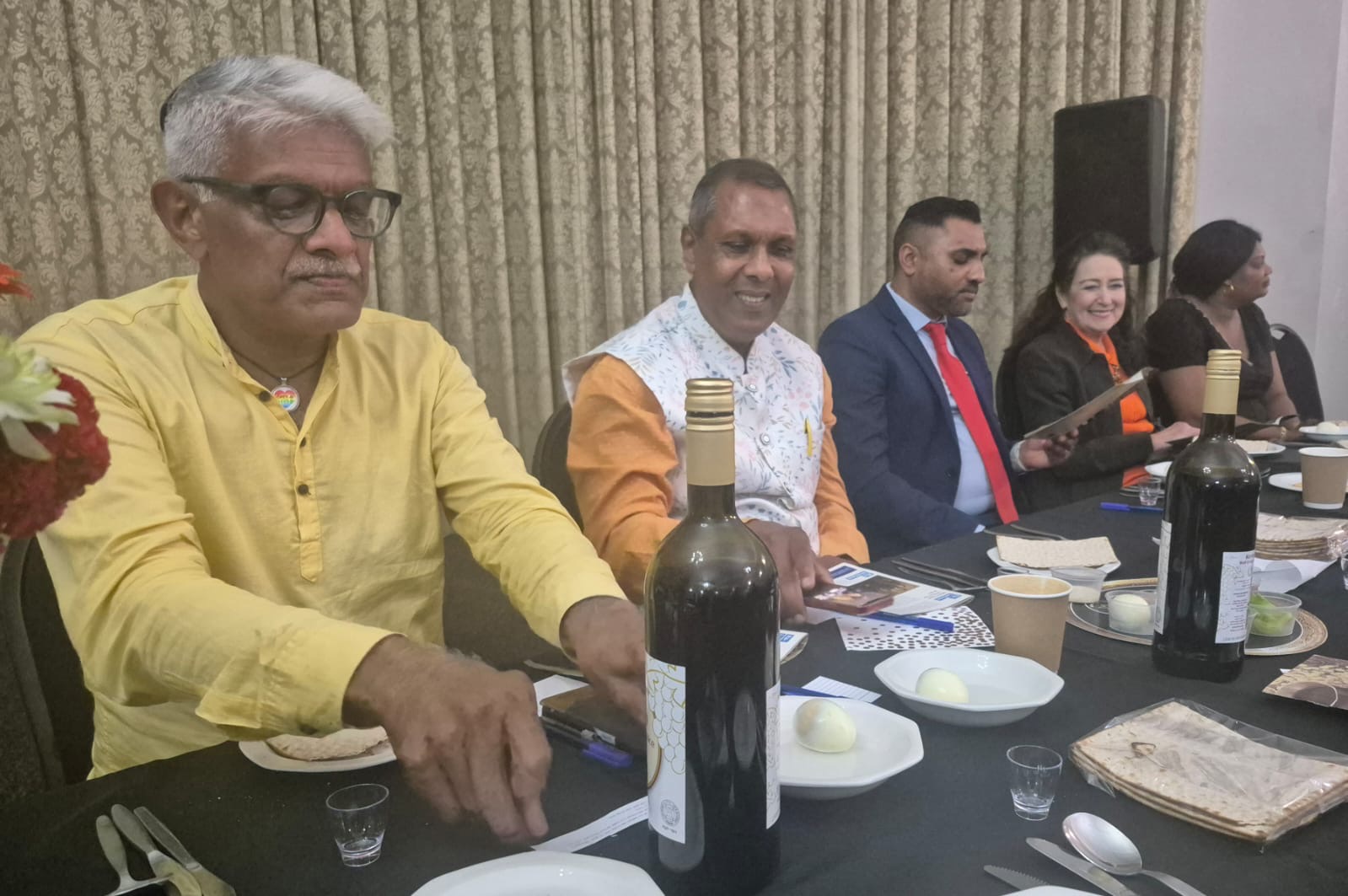
This connection between the Jewish experience and the South African narrative formed a central theme of the South African Jewish Board of Deputies KwaZulu-Natal (SAJBD KZN) Council’s Freedom Seder event on Monday 23 March.
Hosted together with the SAJBD national office at the Durban Jewish Club, our Freedom Seder brought together a diverse and distinguished group of guests from across the broader KwaZulu-Natal and national society, including local government leaders, representatives of political parties, members of the media, and interfaith partners.
Led by Rabbi Gilad Friedman, the intimate and informal evening unfolded with warmth as we explored the traditional elements of the seder plate and shared insights from the Haggadah, interweaving these ideas with contemporary reflections on the challenges facing South African society today. Participants enjoyed a taste of a traditional Pesach meal, complete with matza and soup and kneidlach, and shared similarities with their own cultural foods and traditions.
The timing of our Freedom Seder was particularly poignant, taking place just after Human Rights Day, a moment to reflect not only on how far we’ve come as a country but our responsibility to protect these freedoms. The commemoration of the Sharpeville Massacre, a tragic chapter in our history when peaceful protesters lost their lives in the struggle against injustice, reminds us of the true cost of freedom, and of our duty to honour the legacy of those who fought against apartheid by upholding the equality, dignity, and rights of every person.
A highlight of the evening was the contribution of our guest speakers, including human rights lawyer and former member of the Truth and Reconciliation Commission Ilan Lax; the Reverend Canon Peter Houston from the Anglican Church; as well as Hindu community leader Pravesh Hurdeen. Each of them offered a unique lens through which to understand the concept of freedom, reinforcing both its complexity and relevance across different communities, traditions, and contexts. Rabbi Friedman asked those present to reflect on the miracles they’d witnessed in their own lives, with many sharing the profound impact of the 1994 elections and the peaceful transition to democracy.
Our Jewish community in KwaZulu-Natal has long been an integral part of the province’s cultural, political, and economic life and social fabric. Through philanthropy, civic engagement, and community-building initiatives, Jewish individuals and organisations have contributed meaningfully to social cohesion and development in the province. Events such as the Freedom Seder not only highlight this contribution but also our community’s commitment to ongoing dialogue and partnership in the future.
For the Jewish people, freedom isn’t simply an idea; it’s at the very core of who we are. And so, in both our Jewish tradition and in our South African heritage, freedom calls on us to not only remember but to act: to stand against injustice, to protect the vulnerable, to welcome the stranger, and to contribute meaningfully to the world around us.
- Alana Pugh-Jones Baranov is president of the South African Jewish Board of Deputies KwaZulu-Natal Council and the country director of HIAS South Africa.