


OpEds

Iran at a crossroads, with all the lights red

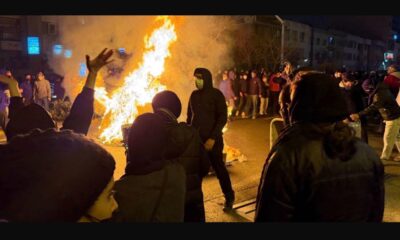
Iran stands at a pivotal moment. The largest and most enduring wave of nationwide protests in its history is sweeping across the nation. The pursuit of uranium enrichment, ballistic missiles, and support for terrorist organisations globally has left the domestic economy in ruins. This devastation is partly due to the diversion of funds for these endeavours and partly due to the “snapback mechanism sanctions” imposed since October 2025.
Demonstrations fuelled by a plummeting currency and escalating living expenses have rapidly spread, calling for regime change. Protesters are aware that conditions may not improve right away, yet they feel they have no other choice. Sustained protests alone may not topple the regime in Iran. A complete change of the situation may be the outcome of six possible scenarios.
The first scenario involves regime erosion. The ayatollah clerics, who seem unable even to entertain the idea of defeat, have always behaved as if divine intervention guarantees their victory. It is these apocalyptic beliefs that have led the country to its current predicament. Governance might further fragment, where the ayatollah might rule the state but not the economy, which could be controlled locally like a Sicilian mafia, through rent-seeking and monopolistic practices.
The second scenario relies on the army staging a coup and weapons falling into the hands of the people. Yet, despite visible tensions within the elite, there have been no confirmed defections. The coercive core of the regime, centred on the Islamic Revolutionary Guard Corps (IRGC), remains intact, cohesive, and more than willing to use force to preserve its power.
The third scenario is constitutional evolution. Supreme leader Ali Khamenei would need to recognise that the only remaining chance to remain in power is to remove the “sycophants” surrounding him and replace them with competent, patriotic figures. The new leadership would address the economic woes, placating protesters. The system would survive without formal change, albeit weaker than before: more paralysed, more isolated, and more reliant on force to function.
The fourth scenario is one of system transition, signifying the end of Safavidism/Shia Islamic rule in Iran. That would replicate Europe since 1648; resolving the conflict between religion and state in favour of the state. However, unlike Europe, Iran doesn’t operate as a pyramid of power. The system is a complex maze enforced by the IRGC. The IRGC is a class of individuals who benefit from the regime and actively uphold it. Unless a solution is found for them, they would be compelled to fight to the bitter end.
The fifth scenario is muddling through until the next protests. It’s not that the people of Iran lack the will, courage, or desire for change. However, no uprising has resulted in enduring structural change. The fate of the current protests could be the same as the past few decades. A burst of defiance that lights up the streets, filling the air with hope, and then fading away. Each time, the pattern holds. Demonstrations surge, the security services crack down violently, and opposition networks fragment.
The sixth scenario has been expressed by many who confront the oppressive regime on a daily basis, feeling that changing the system from within is an impossible task. They hope for external intervention. However, a regime on the brink of collapse doesn’t inherently become cautious; it resembles a rabid dog, wounded yet still incredibly dangerous. Iran still possesses a significant ballistic missile arsenal, a residual nuclear capability, and a steadfast ideological commitment to eliminating Israel and expelling the United States (US) from the Middle East.
US President Donald Trump has offered to help and threatened to intervene if protesters are killed en masse. If the ayatollah aims to use this threat and Israel as a scapegoat to rally Iranians against their domestic economic challenges, then Israel, in collaboration with the US, might launch another attack on Iran. Possibly even before the Persian New Year, Nowruz, on 20 March 2026. Such an attack would be unavoidable, targeting the remaining elements seen as threats to Israel.
None of these scenarios show that the ayatollah will emerge retaining the same authority, unity, or capability. However, the clergy will always retain some form of authority as it is made up of the clerics of the majority religion, Shia Islam. Yet, not being in control of the state doesn’t imply that Iran will transform into a free and open society.
Opposition groups need to come together to seek options for a new political system. The absence of unity or any clear alternative leadership to the ayatollah highlights a grim vision. Otherwise Iran is likely to face a tumultuous future that could be even more dire than the current situation.
Regardless of the circumstances or outcome of the scenarios, the path ahead for coming weeks is evident. The Islamic Republic may resort to killing protesters and attempt to endure the demonstrations, but the regime can no longer regain the authority or popularity it had when it ousted the shah in 1979. Ensuring the population’s sustained economic well-being is incompatible with regional interference, support for terrorist groups, and a missile and nuclear programme.
Israel, along with the Jewish nation, will witness a shift in the threats it faces, be they on Israel’s borders or from terrorist organisations globally involved in a proxy Shia expansion like Hezbollah or the Yemeni Houthi, only on the following conditions. The IRGC would need to be completely dismantled; Iran would need to cease its policy of meddling in the affairs of other nations; and any Iranian leadership would need to acknowledge Israel as the Jewish homeland entitled to sovereign existence.
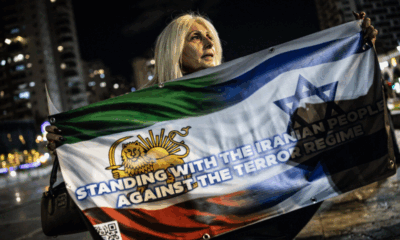
In this regard, the Iranian demonstrators and Israel find common ground. They are united in a fundamental struggle regarding the future trajectory of Iran and the region: a choice between authoritarian extremist and violent dominance and the aspirations for dignity, freedom, opportunity, and peace.
- Glen Segell is a professor at the University of Cambridge