





News
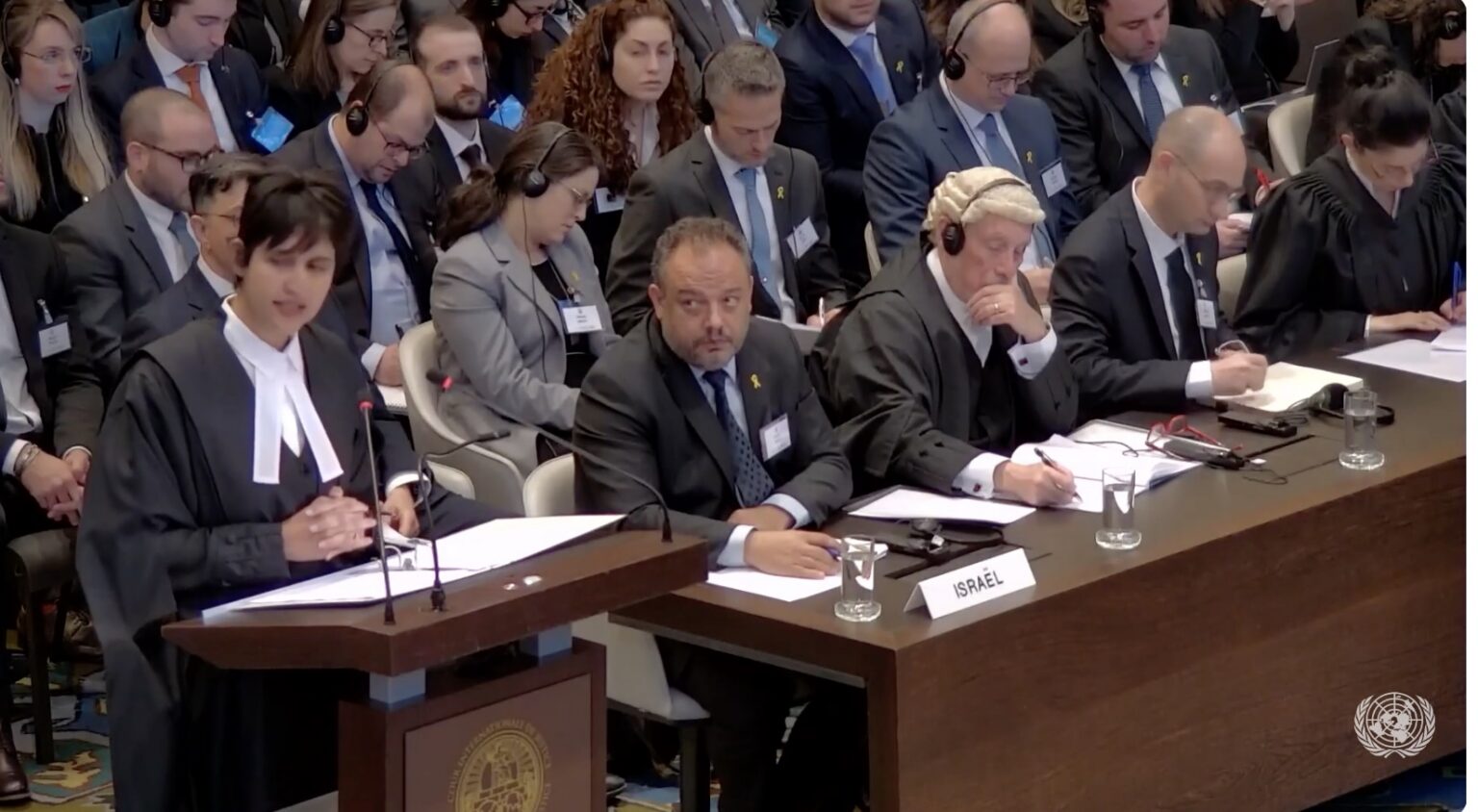
SA drags out ICJ case against Israel

South Africa’s “genocide” case against Israel at the International Court of Justice (ICJ) is set to drag on for at least another three years after Pretoria requested an 18-month extension to file its response to Israel’s defence.
The move has sparked widespread criticism from those who believe it undermines South Africa’s longstanding claims that the case was so urgent that the world’s highest court needed to intervene immediately.
The ICJ, based in The Hague, has now given South Africa until November 2027 to submit its reply to Israel’s defence. Israel will then have until May 2029 to file its response, meaning the case remains years away from a final ruling.
The extension has fuelled questions about why South Africa is seeking more time after repeatedly stressing the urgency of the matter since launching the case in December 2023.
President Cyril Ramaphosa defended the development in an official statement on Tuesday, 2 June, saying, “A second round of written pleadings is common in ICJ cases; in fact, in all previous cases brought under the Genocide Convention, parties have submitted a reply and a rejoinder.”
Ramaphosa also reiterated South Africa’s position on the merits of the case, saying, “Self-defence is not a defence to genocide, there is none.”
However, the National Chairperson of the South African Zionist Federation, Craig Pantanowitz, labelled the developments as the “final unmasking of a political stunt that was never about the law, never about facts, and never about saving a single life”.
He said, “A government that claimed the world’s most urgent humanitarian emergency has just asked for years to argue about it. And it is asking South Africans to keep paying for the privilege. More than R130 million of taxpayers’ money has already been poured into this case, with tens, if not hundreds, of millions more to come now that the proceedings have been stretch out to 2029.”
In a post on X, Israel’s Ministry of Foreign Affairs said that South Africa’s “baseless ‘genocide’ case” was “collapsing” and all the claims of ‘urgency’ have now turned into South Africa’s quiet requests to buy more time.
“This case was never about the facts. It has always been a propaganda campaign by South Africa in the service of Hamas, masquerading as a legal process,” it said.
Anne Herzberg, legal adviser at the Jerusalem-based NGO Monitor, said the lengthy delay would allow for the “genocide” allegation to continue hanging over the Jewish State for years to come, regardless of the eventual outcome.
“South Africa also sought a particularly lengthy delay because, by dragging out the proceedings, it is able to keep the spectre of the genocide claim hanging over Israel’s head,” Herzberg said.
“If the court ruled in Israel’s favour, South Africa, Iran, and other hostile actors would not have this weapon anymore.”
Herzberg argued that prolonging the proceedings would continue to fuel anti-Israel sentiment and contribute to rising Jew-hatred around the world.
“It is absolutely true that by keeping this false narrative alive, it will continue to contribute to the explosion of global antisemitism,” she said.
She was sharply critical of the court’s decision to grant such a lengthy extension.
“It is disappointing that the ICJ continues to show itself as a politicised institution, because there is no doubt that by allowing this case to drag on, the ICJ has played into South Africa’s lawfare motive.”
Herzberg said the extension reflected the strength of Israel’s legal response. “Israel presented a very lengthy and detailed rebuttal to South Africa’s claims and told the ICJ that it was ready for the court to rule immediately on the merits.”
She claimed this was another reason South Africa had sought additional time. “South Africa knew that what Israel provided to the ICJ would completely eviscerate its claims of ‘genocide’ and so sought a delay so that it would have time to go back to its well of nongovernmental organisations and other hostile actors to fabricate a response,” Herzberg said.
South Africa might also be hoping to benefit from developments in another genocide case before the ICJ.
“The delay also works to South Africa’s advantage because the court is about to rule on a genocide case involving Myanmar, and the country is hoping that perhaps the court will relax the intent standard for genocide, which is currently a very high burden to meet, and this high burden is simply not met in the Gaza case,” she said.
Israeli diplomat Michal Maayan also criticised the extension, saying, “South Africa’s frantic claims of ‘urgency’ have now turned into a quiet request to drag the process for as long as possible.”
Maayan described the proceedings as “a complete waste of time and resources” and accused South Africa of misusing both the Genocide Convention and the court itself.
“The only tenable outcome remains the dismissal of South Africa’s claims in their entirety,” she said.
Pantanowitz said, “This case was never about Gaza. It was about politics, about service to the ANC’s international friends and allies, and about distracting from a record of failure at home.”
“The extension might reflect South Africa’s desire to ease tensions with Washington, which has repeatedly criticised Pretoria’s stance on Israel,” said political commentator Daniel Silke.
He suggested the move could be linked to the appointment of special envoy Roelf Meyer, giving him “breathing space” to repair relations with the United States.
At the same time, Pretoria might also be hoping that a future US administration will be more receptive to its position on Israel.
According to the ICJ, South Africa argued that it needed more time because of the complexity of the case, the size of Israel’s submission, and Israel’s objections to the court’s jurisdiction and the admissibility of South Africa’s application.
Israel opposed the need for another round of written arguments, but said that if South Africa was granted additional time, it should receive the same period to respond. The court agreed.
South Africa launched its case against Israel in December 2023, alleging violations of the 1948 Genocide Convention arising from Israel’s military campaign in Gaza following Hamas’s 7 October attack on Israel.
Israel has consistently rejected the allegations, arguing that it is exercising its right to self-defence after Hamas terrorists killed about 1 200 people and abducted more than 250 others during the deadliest attack in the country’s history.





Ian Levinson
June 4, 2026 at 2:32 pm
The ANC went from shouting ‘utmost urgency’ to suddenly pleading for ‘more time.’ That’s not urgency, that’s stalling. They know their case is shaky, and dragging it out is the only way to cover the cracks. You don’t get to posture as defenders of justice while playing for delay—those contradictions expose the lies. South Africa (under the ANC government) formally requested an 18‑month extension in the ICJ genocide case against Israel, pushing its deadline to file a reply out to 22 November 2027. This has drawn sharp criticism because the ANC initially framed the case as one of “utmost urgency. PATHETIC.