





Lifestyle/Community

Thousands turning to Jewish welfare in tough times

A man living in a township is carried into a welfare office because he is blind and unable to walk. A family of five squeezes into a one-bedroom flat after losing everything. Elderly people who never saved for retirement face homelessness. Children are removed from abusive homes and placed in care.
These are some of the realities confronting South Africa’s Jewish welfare organisations as they support thousands of vulnerable community members across the country.
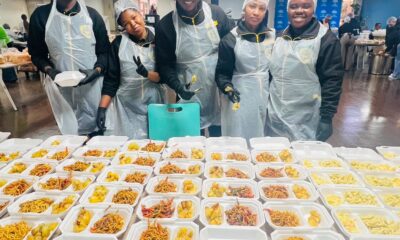
While many people associate welfare with food parcels and financial aid, organisations such as the Chevrah Kadisha (Chev) in Johannesburg and Jewish Community Services (JCS) in Cape Town provide a far broader range of services. These include housing, child protection, counselling, rehabilitation, elderly care, disability services, healthcare support, and education assistance.
The Chev, founded in 1888, is the oldest and largest Jewish welfare organisation in Africa. It operates on a budget of nearly R400 million a year and reaches close to 10 000 people annually through its various programmes.
Chev Group Chief Executive Saul Tomson told the SA Jewish Report that the organisation’s role has expanded significantly over the past two decades. “My general observation, after more than 20 years at the Chev, is that both the reach and the scope of the organisation have expanded dramatically, from supporting roughly 2% of our community to closer to 20% today,” he says.
Tomson attributes this growth to an ageing population, increasing economic inequality, and the decline of public services. “As our community ages and becomes more economically polarised, the role of the Chev has grown significantly,” he says.
“In many respects, the Chev has become the de facto provider of welfare and social support for the Jewish community. We are, quite literally, all that stands between many vulnerable members of our community and destitution.”
The organisation’s residential facilities house almost 1 000 people, including elderly residents, children in need of protection, and adults with physical, intellectual, and psychiatric disabilities. More than 400 elderly residents live at Sandringham Gardens, where accommodation, healthcare, meals, and social programmes are provided. Many have no family in South Africa and rely entirely on the organisation for support.
Also in Johannesburg, the Arcadia Youth and Child Care Centre cares for children removed from abusive or neglectful situations by court order. The centre also provides support programmes for at-risk children and young adults.
The Chev currently supports 1 122 people through financial assistance programmes and 2 621 through social services.
According to Tomson, inflation and unemployment remain major drivers of need. “Welfare expenditure has more than doubled, rising from R36.5 million in 2020 to R80 million in 2026, a 119% increase that reflects the growing scale of need within our community”.
Although rehabilitation and self-sufficiency are important goals, Tomson says some beneficiaries require lifelong support. People with severe disabilities, mental illness, or advanced age may remain in the organisation’s care for decades.
In Cape Town, JCS serves a smaller Jewish population of about 13 000 people, but faces many of the same challenges.
Chief Executive Hazel Levin told the SA Jewish Report that JCS currently administers grants and disbursements for about 590 people and provides social services to about 780 individuals. The organisation distributes about 6 500 Meals on Wheels meals each month and provides more than 600 food parcels containing perishable and non-perishable items.
JCS operates several residential facilities. These include an assisted living home for 46 elderly residents requiring constant care, accommodation for adults recovering from substance abuse and psychiatric challenges, homes for people with disabilities, and housing for unemployed adults who are being supported while they seek work.
Levin says the reasons people seek assistance vary widely. “Retrenched, unemployed, substance abuse, domestic violence, psychosocial issues. It’s across the board,” she says. She believes South Africa’s economic conditions have worsened existing vulnerabilities. “Personally, I believe that the socioeconomic environment has hit everybody badly.”
The organisation has seen growing demand in several areas. Already this year, JCS has placed seven people in rehabilitation programmes, compared with three during the previous year. Its children’s home currently houses seven children, up from three last year. As the statutory welfare body for the Cape Town Jewish community, JCS intervenes in cases involving child abuse, neglect, domestic violence, and vulnerable adults.
Levin says one of the most significant concerns is the number of elderly people reaching retirement without sufficient savings or family support. “We have a lot of people here that if we didn’t have the accommodation or the assistance, would be homeless,” she says.
Housing costs have become another growing challenge. JCS owns 38 apartments, but demand continues to exceed supply. The organisation also assists dozens of people with rental support. Medical needs create further pressure. Many beneficiaries depend on public healthcare facilities and don’t have medical aid. Delays in treatment and medication shortages often require welfare organisations to step in.
Both JCS and the Chev emphasise that assistance is carefully assessed. Applicants undergo financial evaluations, and support is reviewed regularly to ensure resources are directed to those who genuinely qualify.
Despite the challenges, both organisations point to success stories that demonstrate the impact of long-term support. Levin recalls a family that had been homeless and living in extremely difficult conditions. With assistance from donors and JCS, the children remained in school and later pursued tertiary studies. “It’s just wonderful to see these kids blossom and grow,” she says.
Tomson says the work of Jewish welfare organisations has become increasingly important as economic pressures mount and public services struggle. The consequence is stark, he says. “Those without means are extraordinarily vulnerable. In Johannesburg, the Chev helps ensure that our community members don’t end up on the streets. Without this safety net, many would have nowhere to turn.”
For thousands of South African Jews facing hardship, that safety net provides far more than financial assistance. It offers food, shelter, care, dignity, and, in many cases, a path back to independence.






Shawn Israels
June 5, 2026 at 2:20 pm
It is commendable on the charitable work you are doing in South Africa. Thank you.
Bernard Jacobs
June 6, 2026 at 12:02 am
We,here at Huis van Sonstraal Old Age,9 Meteren,Crescent, Avondale,Atlantis.We are 22 tenants.Is in need of transport; Groceries,Clothing,Bedding,Electricity Vouchers; Medical Equipment; Stoves; Fridges,Micro Ovens; Personal Electricity Meyers to qualify for free electricicty.
Kindly visit us today or soon.
Regards BERNARD JACOBS 0631048911
Joyce
June 6, 2026 at 7:54 am
Does it only caters for Jewish people or all races are accomodated
Marc Brower
June 6, 2026 at 8:15 am
There is a particular generosity in those who understand that a community is only as strong as what its members are willing to give it. For that, and for everything it represents, I am eternally grateful. Thank you.