SA
Mozambique kidnapping shows ISIS gaining ground

A local terrorism expert says it’s “really alarming” that the extremist group Islamic State Mozambique (ISM) took a South African hostage on 3 September.
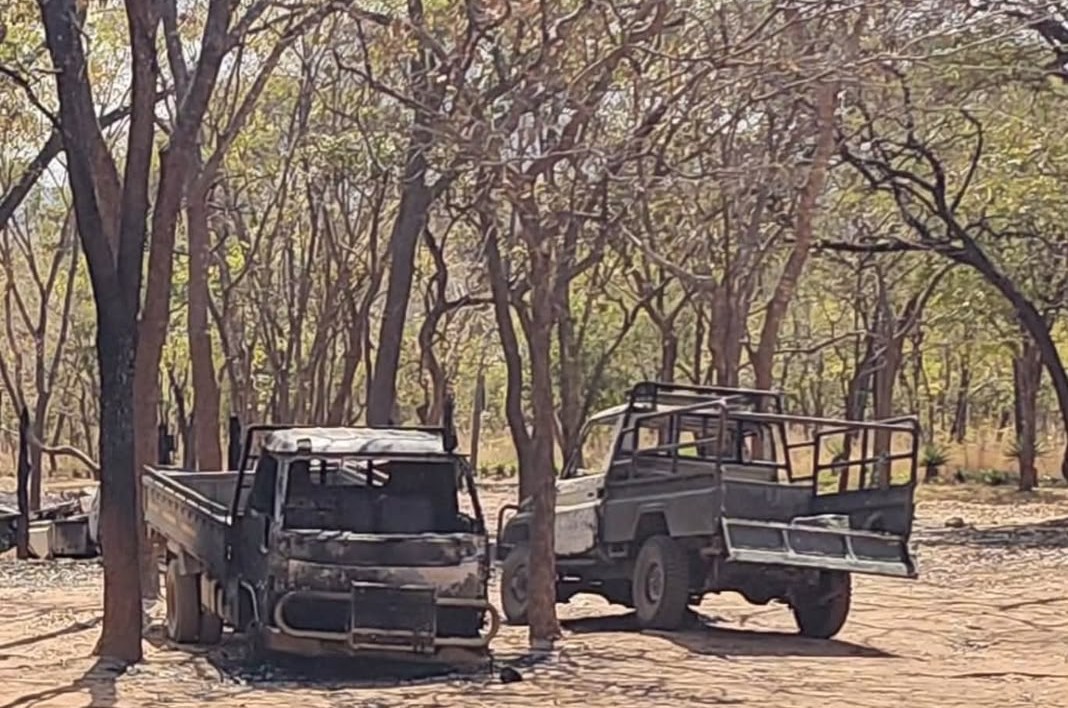
The South African mechanic was among a group of about 20 workers abducted in northern Mozambique during an attack by insurgents on a hunting camp, which they burned down. The camp was a tourist destination. Following the raid, the US embassy warned Americans against travelling to the area “for any reason”.
Terrorism expert, Willem Els, says what is particularly alarming is that the terrorists demonstrated that they can move beyond Cabo Delgado, the northern province of Mozambique that’s been their stronghold since 2017. The attack happened in the neighbouring Niassa Province. Both are in the northernmost part of Mozambique. The country shares its southern border with South Africa.
The insurgency in Cabo Delgado has killed more than 6 600 people and displaced around 1.2 million.
ISM “declared a caliphate some time ago”, says Els. A caliphate is a form of Islamic government led by a supreme religious and political leader.
Fellow political analyst Professor Hussein Solomon says he thinks “all South Africans should be worried about what is happening in northern Mozambique”.
However, CSO chief executive Liron Sanders says the South African Jewish community shouldn’t be more concerned about safety than usual.
South African Stephen McGown was held hostage by al-Qaeda in Mali for almost six years, from 2011 to 2017. He told the SA Jewish Report that “al-Qaeda would classify Islamic State (ISIS) as extremists. In fact, when I was kidnapped in Mali, al-Qaeda and ISIS were at war against each other. Then, towards the end of my kidnapping, they were actually working together.”
Therefore, he thinks that “even though ISIS is probably driving this, you’d probably find that al-Qaeda and ISIS are working together”.
He thinks al-Qaeda and ISIS may appreciate that South Africa backs the Palestinians, but might also see South Africa as an enemy because it has sent troops to fight Islamic extremists in Somalia and Mozambique.
He thinks the South African hostage “could be there for a while”.
In his experience, “al-Qaeda in Mali were very calculated. They had a long-term plan, and they believed in being patient.” However, “from what I’ve seen, ISIS doesn’t really hold much patience. They would probably want things to be resolved pretty quickly, and hopefully the South African can get out of there and come home soon.”
In its latest report on the humanitarian situation in Mozambique, the United Nations Office for the Coordination of Humanitarian Affairs said that conflict-related incidents in Cabo Delgado had increased by 10% in the first half of 2026 compared with the same period in 2025. Civilians were targeted in around 70% of reported incidents, including killings, abductions, looting, and the destruction of homes.
According to the Department of International Relations and Cooperation, the 30-year-old abducted was one of five South Africans working at the hunting camp. But two had returned to South Africa, and two remained safe in Mozambique. Three American citizens had been out hunting and were unaffected. They were evacuated from the area.
The armed incursion resulted in at least one death, the displacement of 2 700 people, the destruction of tourism infrastructure, and the abduction of 11 people, according to Mozambican authorities.
Peter Bofin, senior analyst for Southeast Africa at the Armed Conflict Location and Event Data project, says such an attack has multiple objectives. “First, it is a way to resupply [food and weapons]. Second, it is a significant economic target, and targeting it undermines the state’s control of that part of the country. For the tourism hunting sector, in particular, it comes at a bad time, right in the middle of the hunting season in Niassa.”
In addition, such an attack gains international attention. “This is particularly valuable to ISIS globally, which can use any images that attackers took in future propaganda products.” The camp that was attacked is allegedly linked to the Portuguese-Mozambican football coach Carlos Queiroz.
“However, this is likely to be an isolated raid rather than evidence that ISM is establishing a sustained presence in Niassa,” says Bofin. “While the insurgents have intelligence networks in the area that can facilitate such an attack, they don’t have the support networks necessary to maintain a presence.”
The significant resources of conservation and tourism organisations also make this difficult. Such organisations have access to small aircraft, helicopters, and teams of rangers, which can readily track the insurgents.
But “the ability of one group of ISM fighters to enter Niassa and undertake this attack highlights that ISM still has an advantage in manoeuvrability in rural areas,” Bofin concludes.
At the same time, Els says he doesn’t see this as an escalation, because the terrorist group conducts regular attacks. He says the group will often abduct local people, holding them hostage for ransom. However, if it has access to foreigners, it will “surely target them”.
Abductions have been the extremists’ modus operandi for some time, but the fact that they moved now into Niassa is quite telling, says Els. “It’s now the second time that they’ve moved in there. The previous time they also went in to ransack and stock up on provisions. So, this time, it was a ‘bonus’ for them to abduct foreigners.
“Just think what would have happened if the three Americans were in the camp, and they were abducted” he adds rhetorically.
Els says that ISM goes to camps and villages in the area, “and they gather the people, they preach, and they try to sway them to their ideology”. He says the group is becoming stronger because of the Mozambican government’s lack of strategy to counter it.
Solomon says he isn’t sure if South Africa would negotiate for the release of the hostage, but his instinct says it probably would.
He warns that “with each passing day, the ISM insurgency is gaining ground. What this shows is there’s an intensification of this insurgency.”
In 2022, South Africa sent troops and armoured vehicles to Cabo Delgado as part of the Southern African Development Community’s (SADC) military intervention to quell the insurgency. Rwanda sent troops separately. It is understood that Rwanda is being backed by the French government, as French energy company TotalEnergies has a huge gas concession in Cabo Delgado.
However, Solomon says SADC’s intervention has “failed spectacularly” and, in addition, “the Mozambican armed forces are not up to speed” in quelling terrorism activity.
Sanders says the community doesn’t need to be more concerned than usual, because the northern part of Mozambique is known for terrorist activity, so this is not an escalation. Even though the attack happened in a neighbouring country, Sanders says it is not cause for alarm. As for travelling to Mozambique, Sanders says, “Travelling internationally anywhere can pose risks, so you need to be well informed and understand the environment to which you’re travelling.
“In Mozambique there are good areas and bad areas, just like in South Africa, so knowing where you’re going, and where you shouldn’t go, is imperative. If anyone needs advice, they’re welcome to reach out to us, as we have relationships with the Jewish community there, who can give advice and support.”