Lifestyle/Community
Kyalami Country Club’s roots are Jewish

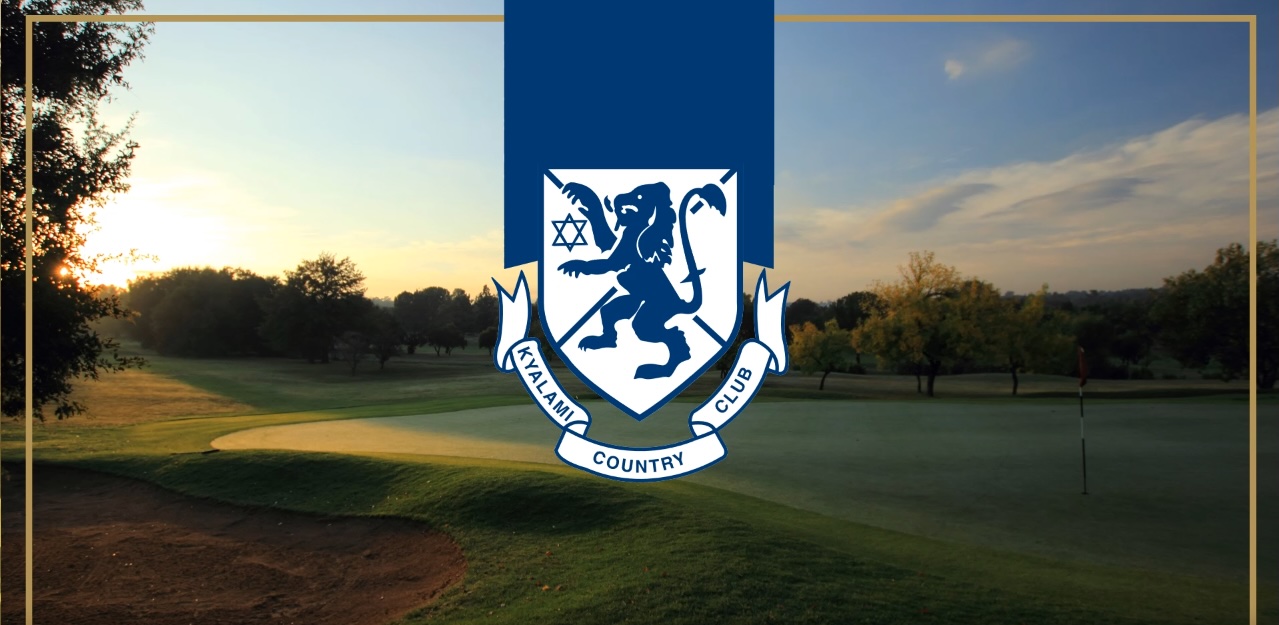
At first glance, the Kyalami Country Club looks like any other leafy Johannesburg golf club. But hidden in its history is the story of a community that created its own space when others were out of reach. Founded in 1954, the club became a cornerstone of Jewish social life in northern Johannesburg, a legacy still symbolised by the Star of David in its logo.
In 1952, a time when Jews were not allowed into many country clubs, 11 Jewish men decided that they wanted a place where they could play golf and bowls.
“There were a lot of clubs that didn’t allow Jews to join, and the guys got together at Balfour Park, and said, ‘Well, let’s start our own country club’,” said David Rappoport and George Adelaine, honorary life members at Kyalami Country Club.
When the founders set up the club and its Constitution, they put the Jewish motif of a Magen David into its coat of arms. Now, many years later, this subtle logo remains, even though the ethos of the club is inclusive of all, with a minimal number of Jewish members.
“It must have come about because all the members were Jewish. And I think they needed the logo, and that formed part of the logo. Probably to make the statement that ‘we’re a Jewish club because we weren’t allowed in some other spaces’,” said Rappoport.
Since land was so expensive, the only place they could afford was all the way out in Kyalami, on the far northern boundary of Johannesburg. A golf course, tennis courts, a bowling green, and a swimming pool were built. The first round of golf was played in 1957.
The club became a popular place for Jewish families to spend their leisure time. It was able to attract many big names within the Jewish community, such as Raymond Ackerman, the late chairperson of Pick n Pay, who was the club captain in 1963, and other powerful businessmen.
Adelaine, the first non-Jewish member of the club, explained that he had wanted to join 63 years ago because all of his friends were Jewish and they were members of the club.
“I was interviewed by an attorney, Mike Schneider, who said, ‘Why do you want to join Kyalami?’ I knew the question was coming because I wasn’t Jewish. I replied, ‘I’ve got news for you, I’m a Springbok elect for football.’ I was gladly accepted into the club, and I’ve never regretted joining,” he said.
Rappoport said he had been introduced to Kyalami Country Club some 45 years ago through Adelaine and Ackerman, who was his former employer.
“At that time, they were struggling for members, and one could join with no entrance fee, which was a big plus. You just paid your subs for the year. They had a one- or two-year special to try and attract members. And that’s when I joined in about 1981 or 1982,” he said.
At one point, Kyalami Country Club faced significant financial challenges that threatened its future. According to Adelaine, the club lacked the funds needed to improve its facilities and risked remaining a “third-rate golf course” unless it could secure new investment.
A turning point came when Adelaine helped forge a relationship with Johannesburg’s Japanese golfing community, which at the time didn’t have a permanent home club. Rather than hosting the group for only a monthly game, Adelaine invited them to become full members.
He expected only a handful to join. Instead, the response surprised him.
“‘How many members do you have?’ I asked. ‘One or all of you – it makes no difference.’ Then he told me, ‘Very good, Mr Adelaine. You’ve got all 80.’”
The agreement saw the Japanese members join Kyalami and contribute more than R500 000 to the club, a substantial sum at the time. Adelaine said the injection of funding effectively saved the club and enabled it to continue developing.
“Still to this day, once a year there’s a tournament called the Four Jays: Three Japs and a Jew,” said Adelaine, “That was the original.”
By the 1970s, golf clubs across Johannesburg had become more inclusive, allowing Jewish golfers to join and use their facilities. As a result, many Kyalami members moved to clubs such as Houghton, Glendower, and Killarney, and the club’s predominantly Jewish membership gradually declined.
In the late 1970s, Neville Levin became chairperson. When he handed over to his successor, Brian Wilson, Levin asked that the club remain true to the principles on which it had been founded. This included retaining the Magen David in the club’s crest and continuing the tradition of closing on the Jewish high holy days of Rosh Hashanah and Yom Kippur.
The incoming committee honoured Levin’s request, as did those that followed. However, about seven years later, the club captain approached the chairperson at the time to reconsider the policy. While Kyalami closed over the high holy days, other clubs with Jewish roots remained open and offered reciprocal access to Kyalami members. Keeping the club closed no longer served the same purpose, and the decision was made to open the club on Rosh Hashanah and Yom Kippur.
Both Rappoport and Adelaine and many other Kyalami members make the effort to visit two to three times a week because they see Kyalami as “a home away from home”.
“On Sunday mornings, I can remember that no member was ever left on the patio without a game, even if it meant making up a five-ball at the back of the field,” said Rappoport
“It’s always been home away from home. I have never, ever, in the 60-odd years that I’ve been a member, wanted to leave the club. And I think a lot of people who join Club One are there for life. It has a buzz that other clubs don’t have. The camaraderie of our membership is unbelievable,” said Adelaine.
Today, the club is open to all people, no matter who they are.