





Lifestyle/Community
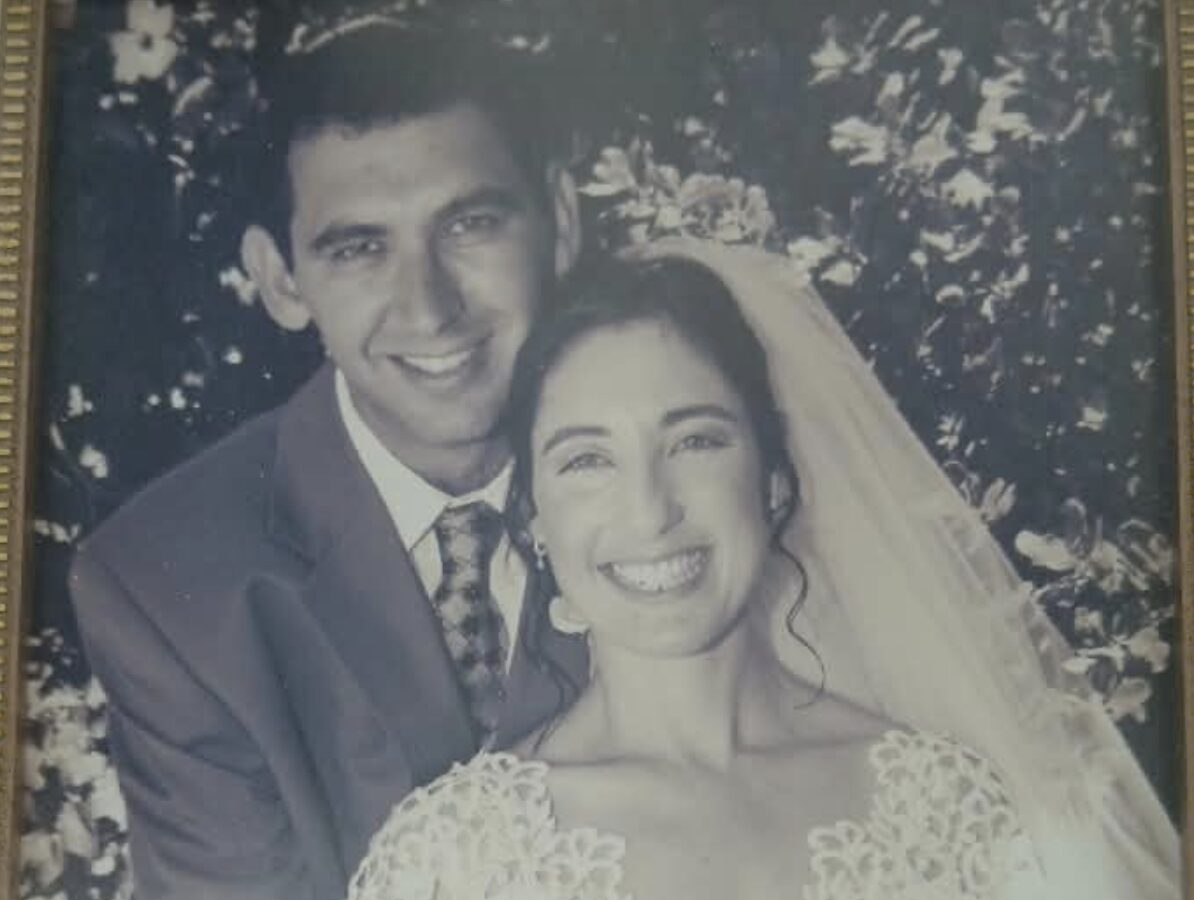
They found their bashert at machaneh

For some South African Jewish couples, the most important person they ever met was assigned to the same activity group, singing around a bonfire, or arriving at a summer camp from another city. Decades later, those first encounters have become marriages, families, and lives shaped by shared memories of Jewish youth movements.
Janet Gelgor met her husband, Sion, at a Jewish summer camp in 1988. Kelli and Benji Lunsky married at the Habonim campsite where they’d first met. And Ros Halliday met André at a camp in her teens, beginning a relationship that lasted 36 years. Their stories reflect the lasting connections that can form when young people come together through a shared Jewish experience.
For Gelgor, it was meetings that seemed to happen by chance, again and again. She was 16 and from Cape Town when she met Sion, who was 19 and from Johannesburg. A mutual friend introduced them, and they enjoyed chatting. One of her favourite memories is talking with him late at night around the campfire.
The relationship didn’t immediately develop into a romance. After camp ended, they stayed in touch, although not frequently. Sion went overseas after completing his accounting degree and articles, while Gelgor finished matric and studied at the University of Cape Town.
But fate apparently had other plans. “We feel our relationship has been bashert,” Gelgor said, using the Yiddish word for “destined”. The two kept encountering each other unexpectedly. They bumped into one another at a supermarket in Cape Town and later at an airport. Gelgor was returning from Israel, while Sion was arriving from Europe.
About eight years after they first met, Sion returned from the United States. The two began chatting again, and Gelgor decided to transfer her job to Johannesburg. They have now been happily married for 27 years and have three sons, Erez, 25, Liad, 23, and Amir, 19. Their children know the story of how their parents met.
Gelgor said meeting at a Jewish youth camp gave them a foundation of shared Jewish values. She and Sion also became shomrei Shabbos, observing the Sabbath, a commitment for which they are grateful.
For Lunsky, the camp connection became central to her relationship with her husband. They met through Habonim when they were teenagers. Both were already involved in its leadership. Lunsky, from Cape Town, was a year older than Benji, who was from Johannesburg. They knew of each other before reconnecting at a national seminar during the June and July school holidays in 2002.
They spent six months chatting by phone and email before getting together at the end of that year. Lunsky remembers the last night of camp, when the oldest campers traditionally gather for a ceremony involving large, illuminated structures spelling out Hebrew words and the camp’s name, with sad music playing, such as Coldplay’s Fix You.
As she prepared to return to Cape Town, she knew Benji would be going back to Johannesburg. Yet she never doubted their relationship would last. “There was no part of me that ever questioned for one second if this would be forever,” she said.
She believes their shared values helped make their relationship feel natural. “We’ve never had to discuss where we stand on Israel, where we stand on traditional Judaism, how we’re going to raise our children.”
The couple married on the Habonim campsite in 2009 because the movement had been such a significant part of their lives. “It’s our sacred turf,” she said.
The couple spent several days preparing and decorating the venue themselves, and guests stayed in the huts and cabins. “It was magical.”
The Lunskys remain involved in Habonim. Their children attend camp, while the couple work as staff. The family continues to return to the place where it all began.
Halliday’s story, meanwhile, began with an unexpected attraction at camp. She was 17 and attending her fifth camp when she met André, who was four years older and from Durban. He had come to the camp to work as a lifeguard. Halliday remembers being immediately attracted to him when he addressed the campers in Hebrew. She had grown up in a traditional Jewish family and assumed he was Jewish.
At the end of camp, André stayed in Cape Town for another two weeks. They saw each other daily before he returned to Durban. He later returned to Cape Town for work, and the relationship developed.
Halliday remembers their early days as a time of innocence and joy. One of her favourite early memories is trying to flirt with André by pretending to be drowning and asking him to save her. She said it was unlike her to flirt, making the memory particularly funny in retrospect.
The relationship faced challenges, including differences in their religious backgrounds. André wasn’t Jewish, and Halliday said her family initially struggled with the prospect of their marrying. But her mind was made up. “Even at the age of 17, I knew what I wanted,” she said. “And I knew that I was in love, that I wasn’t going to give it up.”
The two were together for 36 years before André’s passing. Halliday said their relationship wasn’t without difficulties, but she considered it a good one.
While her late husband would sometimes question certain things, such as the need for lifecycle events, their children were exposed to a Jewish upbringing. Halliday’s three children have all been to Israel, including volunteering on a kibbutz and in the Israel Defense Forces, and two of them attended Jewish summer camps.
For all three women, camp offered more than a summer away. Whether through a chance reunion, a shared commitment to a youth movement, or an unexpected first attraction, their relationships began in a setting where Jewish identity and community were already part of the experience.
And years later, the memories of those early days remain part of the stories they tell about the lives they built together.
