





News
Sooliman’s antizionist group calls for retail boycott

An anti-Israel organisation founded by Dr Imtiaz Sooliman is calling on South African retailers to publicly declare their businesses “apartheid-free zones”. While the organisation avoided using the word “Israel” in announcing its campaign, its content demonises Israel and repeatedly describes the Jewish State as “apartheid Israel”.
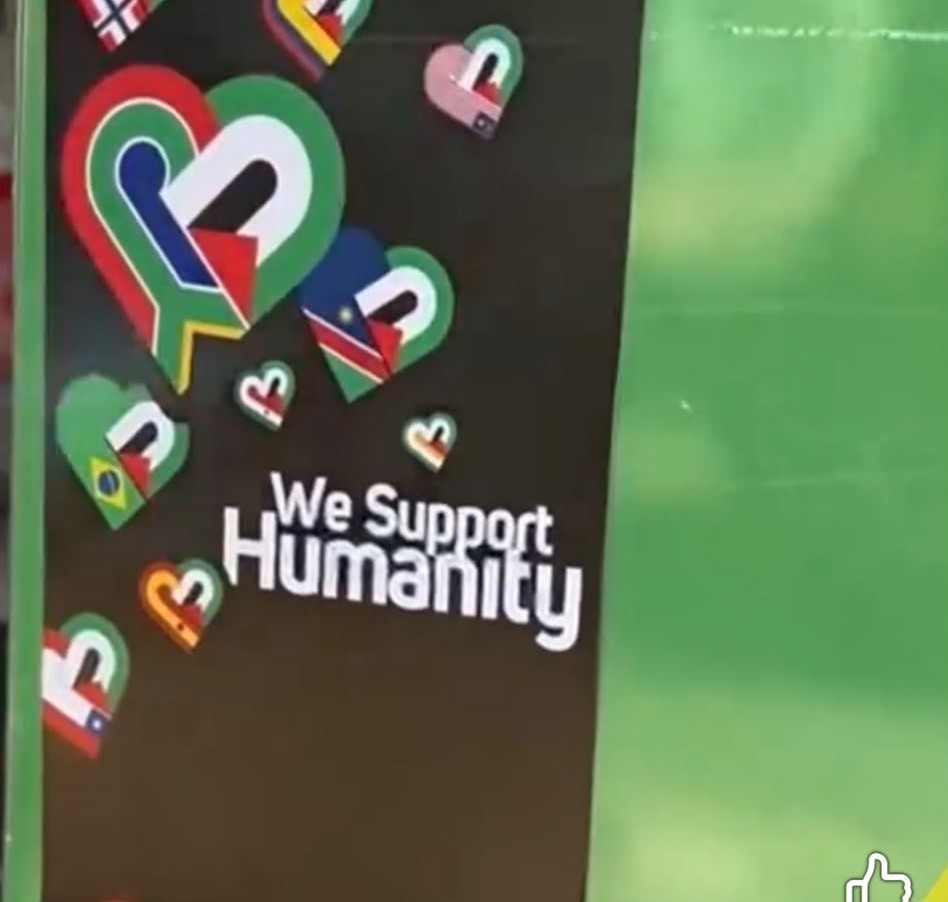
When launching the programme, The Coalition for Good (The Coalition) included an image of a person wearing a keffiyeh around their head and a mask over their face, with an image of a Palestinian flag.
Sooliman, known as the founder and chair of the Gift of the Givers charity, launched The Coalition in 2024. Speaking on SABC News, he described Israel as a “terrorist state” and said his new organisation would reveal “the truth”. He is on The Coalition’s board of directors, along with antizionist extremists Dr Naledi Pandor, Reverend Frank Chikane, Reverend Munther Isaacs, and Ronnie Kasrils.
The Coalition says it is “dedicated to eradicating the injustices against humanity” but makes it clear that Israel and Zionists are in opposition to “humanity”. Similar language is used by Gift of the Givers, which advertises The Coalition and urges supporters to follow it.
One of The Coalition’s main campaigns, “It’s Not Complicated”, encourages South Africans to avoid asking questions, doing research, or engaging in debate about Israel. The campaign portrays Israel as the epitome of evil, and Palestinians as the embodiment of innocence. Now, The Coalition is telling South Africans to create visible anti-Israel shopping spaces. Ironically, Gift of the Givers has sent Israeli medical supplies to Palestinians in Gaza – but it never sent anything to Israeli hostages.
On 20 July, The Coalition announced that it was rolling out its “retail programme”, inviting retailers to join a voluntary pledge to “support humanity”. It encourages them to review their sourcing practices, “reduce reliance on products or supply chains linked to injustice”, support local and alternative suppliers where possible, and provide consumers with “practical ways to align their spending with their values”.
Participating retailers will display point-of-sale material carrying the message “We Support Humanity”, together with QR codes linking to “educational resources” on The Coalition’s website. They will also link customers to the “No Thanks” app, which tells consumers about Israeli-linked products to boycott.
South African Zionist Federation (SAZF) national chairperson Craig Pantanowitz says the choice being given to retailers and consumers “isn’t a choice at all. It’s asking people to affirm that one country is uniquely evil, or to accept the label of ‘apartheid collaborator’. That isn’t conscious consumerism, it’s reputational coercion, and it turns South African shops into ideological checkpoints.”
South African Friends of Israel national spokesperson Bafana Modise says campaigns of this nature “risk shifting the cost of political activism onto ordinary South African consumers, employees, suppliers, and businesses”, at a time when households are already under immense financial pressure.
“South Africans shouldn’t have their access to quality products, competitive pricing, or employment
opportunities restricted to advance a selective political campaign,” he says.
The campaign ties in with libels that The Coalition spreads about Israel on its website, such as “attacks on Christians by Jews are a regular occurrence [in Israel]”. It asks followers to “share the truth to help free Palestine from the tyranny of apartheid Israel”.
The organisation platforms antizionist extremists like TikTok influencer Guy Christensen, who hailed the antizionist murder of two Israeli embassy staffers in Washington, DC, and author Zukiswa Wanner, who stated that the “lord” of “SA Zios” is the late American sex offender Jeffrey Epstein, and has implied that Zionists are “eating children”.
The Coalition peddles antisemitic tropes, such as the notion that Israel and Jews are hiding information from the average person. It says its content “reveals the truth”. On social media, the organisation poses questions that portray Israel as sinister and evil, such as “who can hold absolute power and still claim to be under threat?” and “Who can criminalise resistance while enforcing occupation?” The organisation then answers its own questions, demonising Israel, which it describes as a “state” in inverted commas.
Advocate Mark Oppenheimer says that if The Coalition is asking South African retailers not to stock goods from countries that practise injustice and oppression, there can be few clearer candidates than China, which is persecuting the Uyghurs.
Estimates suggest that anywhere from 100 000 to more than a million members of this Muslim minority have been detained or persecuted. Several countries have described their treatment as “genocide”, while the UN has concluded that the abuses may constitute crimes against humanity.
“A principled organisation cannot concern itself with oppression only when doing so is fashionable or commercially convenient,” says Oppenheimer. “South African retailers who sign onto the retail programme should therefore be prepared to make the considerable sacrifice required to remove China’s products from their shelves.”
Labour law expert Michael Bagraim says The Coalition’s retail programme is “very similar to early Nazi Germany”, and will add a new restriction to doing business in South Africa. He says the Competition Commission “should investigate this, and the business community should refer The Coalition to that commission”.
Pantanowitz says that The Coalition’s founding directors tell you what this campaign is about. Kasrils called Hamas’s 7 October assault a “brilliant, spectacular attack”. Pandor phoned Hamas leader Ismail Haniyeh within days of the massacre. Chikane fronts a global anti-apartheid movement that has found only one country on earth worth its attention. Sooliman has predicted the end of Israel and reached for old insinuations about money, power, influence, and control.
“The Coalition doesn’t hide its purpose either,” says Pantanowitz. “Its own material calls for the ‘eradication of Zionism’,” which is an identity of the overwhelming majority of South African Jews.
Therefore, the campaign isn’t asking retailers to take a view on Gaza, says Pantanowitz. “It’s asking them to declare that they are against the peoplehood of their own Jewish customers, staff, and neighbours.”
Singling out the Jewish collective for elimination “while every other national movement on earth goes unremarked, has a name, and the SAZF will use it plainly: this is antisemitism”.
To appropriate the apartheid struggle “to cast the world’s only Jewish State as a contaminant is an
insult to the people who fought it”, says Pantanowitz. “Our shops should welcome every customer who walks through the door. They shouldn’t be places where a Jewish family reads a sticker in the window and understands it was put there with them in mind. The SAZF calls on South African retailers to reject this campaign outright.”
South African Jewish Board of Deputies national chairperson Professor Karen Milner says The Coalition “hides a hate-filled antizionist agenda behind sweet-sounding language”.
Its professed “consumer activism” is exposed by the simple fact that it deems only goods from Israel to be problematic, says Milner. The Coalition has “appointed itself an arbiter of which businesses South Africans may support. Its divisive agenda has found little traction in South Africa, where ordinary South Africans mostly reject the division fostered by those with an antizionist agenda.”
Modise says “one mustn’t ignore the political agenda and profound hypocrisy underpinning” the retail programme.
Israeli-developed technologies and innovations are “deeply integrated into the global systems on which ordinary South Africans rely every day”, says Modise. “Selectively targeting visible retail products while continuing to benefit from these technologies is neither principled nor coherent.”
The SA Jewish Report asked The Coalition a list of detailed questions, including why it believes Israel is an apartheid state, and if Zionists and Israelis would be allowed in stores that are “apartheid-free zones”.
The Coalition’s media coordinator, Lauren-Aaliyah Kolia, couldn’t answer why Israel is an apartheid state. Instead, she responded that The Coalition “is guided by international law and the findings of internationally recognised human rights organisations and legal bodies. Consistent with those findings, we regard Israel as an apartheid state.”
She said the retail programme “doesn’t exclude or discriminate against customers. Participating retailers remain open to everyone. Our opposition is to apartheid and injustice, not to people.”





yitzchak
July 31, 2026 at 2:13 pm
Yes Israel is the embodiment of apartheid!
Separate buses separate hospitals,not being allowed on the right side of the street.
My pharmacist is Arab.
My GP at the clinic is an Arab woman.
Surprisingly nobody mentions that this is a coalition veiled in Islamist theoideology where Israel has been a substitute scapegoat. We are like a voodoo doll. Muslims enslave black Christian girls in Nigeria? The true genocide is in Sudan where black Africans are the victims, not to mention the atrocities by ISIS against anybody different. Or the genocidal actions of Hamas against Israel.Xenophobic atrocities in RSA… Why the gentry and bourgeoisie of Cape Town are to blame….The Israel voodoo doll is stuck full of pins.
Now we understand that UCT is R250 million down and impecuinious. Those Jews and Zionists (Dell Computers,Levi Strauss jeans , have decided that in Stalin’s words will not give UCT any rope to hang us with. Ag shame. Ja the place is decolonised and “Fees go Up”. Maybe Sooliman the Munificient can empty his own pockets or speak to his chamula in Qatar to come up with the cash.(One more pin into the Jewish/Israeli/Zionist voodoo doll.) Who cares that Solly is an antisemite…. that’s part of Islam (The 6th pillar so to speak). Fareed Isack was asked years ago and documented in a study( What do South Africans think of the Jews).He stated clearly that Islam is antisemitic.Nothing new. Sooly should change his name since Solomon is clearly Jewish.
But I suspect that these groups and groupies( and sometimes gropers a BDS specialty) are small and speak above their weight.
But perhaps the coalition should send a dhelligation to Teheran and remind them that the free passage in Hormuz is by International Treaty.
Susan scott
August 1, 2026 at 7:51 am
This ancient hatred seems to never end. Full on demonisation of the Jews. Will it ever blow over? I doubt it. It is too embedded by now. It is like a virus, contagious and brain rotting. Israel & Jewry will survive.