OpEds
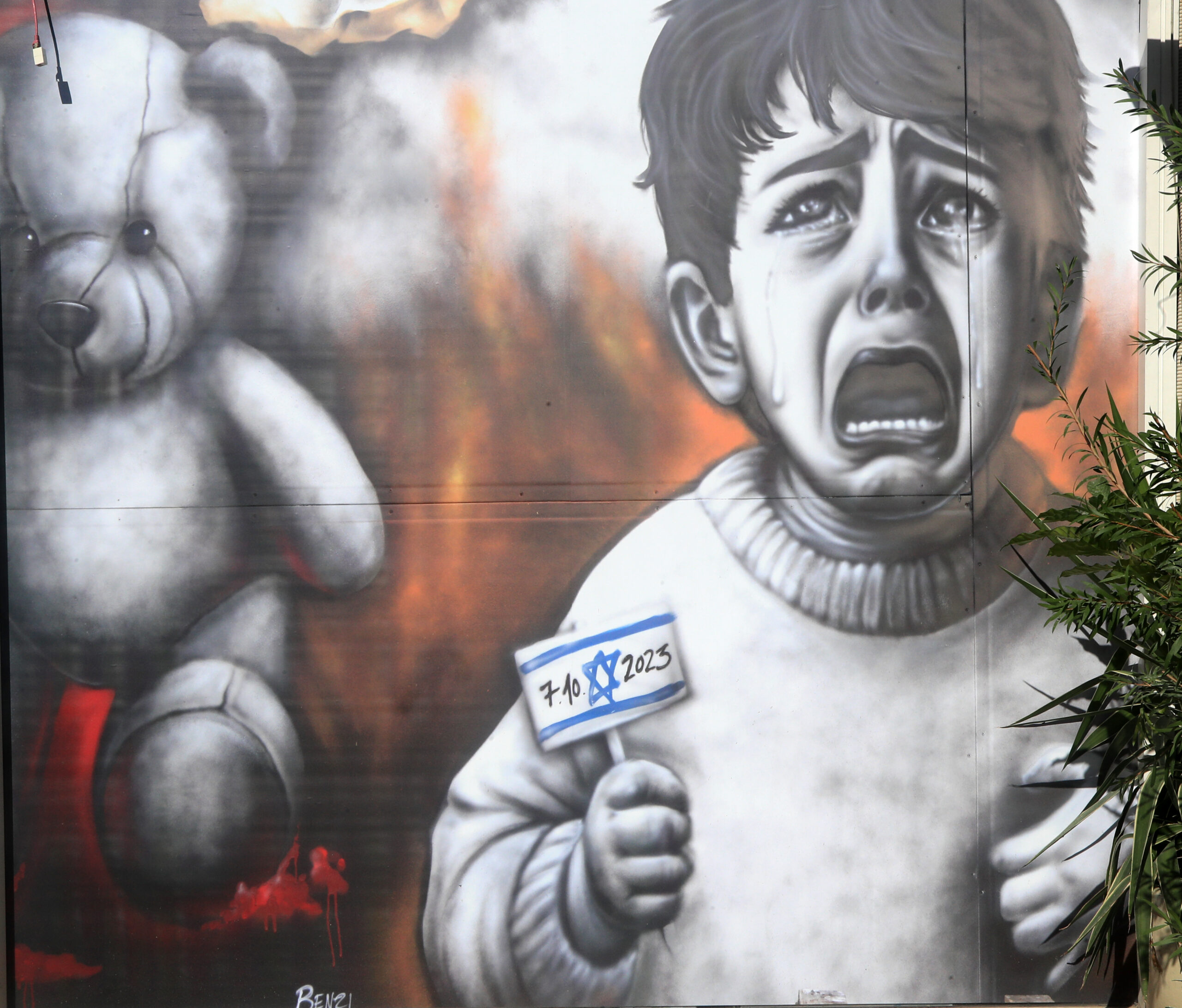
7 October did not end on 7 October

There is something about trauma that we often misunderstand. We think trauma is the terrible thing that happened. Sometimes it is. But often, the deeper psychological wound comes from what the terrible thing teaches us about the world afterwards.
On 7 October 2023, Jews around the world woke up to horror. For Israelis, it was immediate and physical. People were murdered, kidnapped, injured, displaced, and confronted with events most of us had previously encountered only in history books or in the stories of our grandparents.
For South African Jews, thousands of kilometres away, the experience was obviously different. We weren’t physically there.
But distance doesn’t necessarily protect people from trauma.
Because 7 October didn’t simply confront Jews with what had happened in Israel. In the weeks and months that followed, many South African Jews were confronted with something else: a changed understanding of the world around them.
People whom we regarded as friends suddenly seemed unable to understand why we were grieving.
Conversations became more cautious.
Some people began thinking twice before saying they were Jewish, wearing something recognisably Jewish, posting something online, or discussing Israel in a workplace or university.
Relationships changed.
For some, there was anger. For others, fear. For many, an extraordinary sense of loneliness.
And perhaps that is one of the least understood psychological consequences of 7 October. It wasn’t simply fear. It was disorientation.
As a psychologist, I spend much of my professional life thinking about what allows human beings to remain psychologically stable when life becomes unstable.
In developing the Anchor-Based Approach, I have described human well-being in terms of the anchors that give our lives stability: our relationships, our physical well-being, our behaviour, our sense of purpose, our beliefs about ourselves and the world, and the structures that allow us to feel that life remains navigable.
Trauma shakes those anchors. It doesn’t necessarily destroy them. But suddenly things that felt solid don’t feel quite as solid anymore.
For many South African Jews, one of those anchors was belonging.
We knew we were Jewish, and we knew we were South African. Those identities didn’t feel mutually exclusive. South African Jewry has built businesses, schools, charities, hospitals, communal organisations, and families here for generations.
Then suddenly some Jews began asking a question they hadn’t expected to ask: Do I still belong here in quite the same way?
That question matters psychologically.
Safety isn’t only the absence of physical danger. Human beings also need social safety: the feeling that the people around us recognise our humanity; that our grief will be understood as grief; that we don’t have to pass an ideological test before we’re allowed to mourn.
People can disagree deeply and still recognise one another’s humanity.
The psychological harm begins when grief is dismissed or a person’s identity becomes a reason for suspicion. That is the boundary between disagreement and dehumanisation.
And many Jews have experienced moments over these past three years in which that boundary appeared frighteningly thin.
This isn’t merely perception. The South African Jewish Board of Deputies recorded 139 antisemitic incidents between October and December 2023, compared with 19 during the same period the previous year.
But statistics don’t fully describe the experience.
They don’t measure the Jewish child who suddenly becomes more conscious of the school uniform they are wearing. They don’t measure the university student who calculates whether to mention Israel in a conversation. They don’t measure the parent wondering whether their child’s Jewish school is safe.
They don’t measure the WhatsApp conversations between families asking questions they never imagined they would need to ask.
That is how collective trauma often works. It enters ordinary life.
But there is another side to what has happened since 7 October.
Trauma can destabilise anchors, but it can also reveal them.
Over the past three years, I have watched South African Jews turn towards one another.
People who hadn’t entered a synagogue for years came back. People became curious about their Jewish identity. Families gathered. Communities mobilised.
People travelled to Israel, raised money, supported families, attended memorials, prayed, argued, cried, and showed up for one another.
In psychological terms, this matters enormously.
One of the mistakes we make when talking about trauma is to imagine that healing means returning to who we were before. Often we can’t. Some experiences change us permanently.
The more useful question is: Who are we going to become because this happened?
That is where our agency lies.
One of the principles underlying the Anchor-Based Approach is that we cannot always control what happens around us, but we can continue strengthening the parts of life over which we still have responsibility.
We can strengthen our families. We can protect our relationships. We can take care of our bodies. We can continue working, building, and creating. We can deepen our communities.
We can choose courage over paralysis.
And we can refuse to allow hatred – from anybody – to determine the people we become.
Perhaps that is the psychological challenge facing South African Jewry three years after 7 October.
We shouldn’t pretend that nothing happened.
Something happened. Something changed. Many of us lost a certain innocence about how secure Jewish life is in the modern world.
That deserves to be acknowledged rather than minimised. But acknowledging trauma isn’t the same as surrendering to it.
The purpose of an anchor isn’t to make the storm disappear. The storm is outside our control. An anchor gives us something solid enough to hold onto while the storm is happening.
For South African Jews, those anchors have always been there: family, community, faith, tradition, responsibility, purpose, and an extraordinary capacity to build.
Perhaps the task now isn’t simply to remember 7 October.
It is to make sure that what happened on 7 October doesn’t get to decide what happens to us next.
- Dr Hanan Bushkin is a psychologist and founder of the Anchor-Based Approach.