


OpEds
The yellow ribbons have come down. Our unity must not

Three years ago, on 7 October, the Jewish world changed forever.
We woke to news that seemed impossible to comprehend. Communities in southern Israel had been invaded. Families murdered. Children killed. Women assaulted. Two hundred and fifty-one people were taken hostage into Gaza. Among them were South African-born Aviva Siegel and Channah Peri.
For those of us thousands of kilometres away, there was a terrible feeling of helplessness. We couldn’t fight the terrorists. We couldn’t reach the families. We couldn’t bring the hostages home.
But we could stand together. And we did.
The campaign for the hostages became one of the most extraordinary expressions of Jewish solidarity in generations. Across Israel and throughout the Jewish world, people who disagreed about almost everything found something all could get behind: Bring Them Home Now.
For more than two years the yellow ribbon carried that commitment.
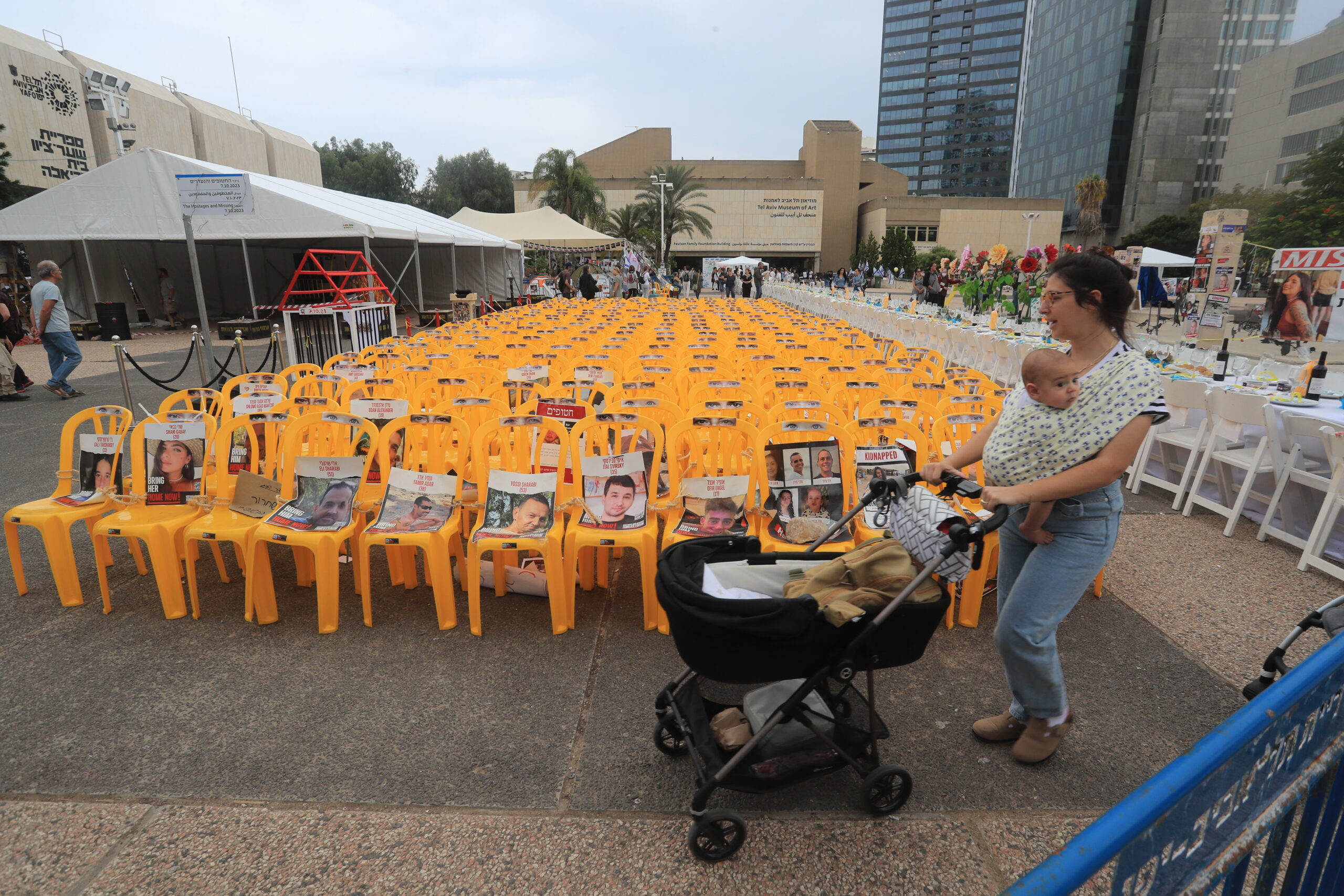
In Johannesburg, we distributed ribbons with calls to tie them on trees, street poles, and outside Jewish institutions. We gave out and wore yellow hostage pins. We laid empty places at Shabbat tables. We packed yellow Shabbas candles with tehilim cards. We displayed names and photographs, refusing to allow the hostages to become numbers.
Behind every photograph was a human being. And behind every hostage was a family waiting for them.
For the Jewish National Fund (JNF) of South Africa and The Base, that shared commitment turned into an unlikely and extraordinary partnership. Among the many initiatives, we created a programme that brought released hostages, survivors, and their families to South Africa – not primarily to speak, but to breathe.
Away from the cameras. Away from the anniversaries. Away, if only briefly, from the burden of having become public symbols of 7 October.
We watched Or Levy, freed after 491 days, meet children at Bramley Children’s Orphanage in Pretoria. His own young son, Almog, had been left without a mother after Or’s wife, Einav, was murdered on 7 October. In South Africa, we chose to honour her by bringing comfort to other children who had experienced loss.
We watched Eliya Cohen arrive barely a month after emerging from 505 days underground. Cane in hand, he was still learning how to walk freely through the world again. He hadn’t intended to speak publicly during his visit. But something about the embrace of this community changed his mind.
Again and again, something remarkable happened. People who arrived here carrying unimaginable trauma discovered that thousands of kilometres from Israel, a Jewish community they barely knew had been carrying a small part of that burden with them.
Perhaps nobody expressed that more powerfully than Sapir Cohen.
Sapir was held hostage in Gaza for 55 days. She told a Johannesburg audience how, during captivity, one of her captors had allowed her to see television footage of thousands of Israelis gathered at Hostage Square. He had looked at the crowds and told her, “When the Jews are together, they are very strong.”
Think about that.
A Hamas terrorist understood something we sometimes forget.
When Jews stand together, we are strong.
Sapir experienced that unity again when she came to South Africa. Driving from OR Tambo International Airport towards Glenhazel, she saw hundreds of yellow ribbons tied around trees. She began to cry.
For someone who had spent 55 days in captivity, unsure of what was happening outside Gaza, those ribbons carried a simple message: You were not forgotten.
That is what our community did.
And the people who came here noticed. One described feeling the warmth of this community as a “giant hug from Africa”.
The ribbons eventually came down.
On 26 January this year, the last hostage, Ran Gvili, was returned to Israel after 843 days. Some hostages came home alive. Others came home to be buried.
But at last, every one of them came home.
That should be a source of enormous relief. But it also leaves us with a question.
What happens to the unity now?
It would be tragic if one of the most powerful expressions of Jewish solidarity in our lifetime disappeared together with all the yellow that we held so dear.
Because the lesson of the campaigns was never that Jews suddenly agreed with one another.
We didn’t.
We argued about the government, the war, the hostage deal, religion, politics, and almost everything else.
Unity does not mean uniformity.
The Torah itself gives us a powerful image for this. When Yaakov blesses his sons, he does not ask them to become identical. Each tribe retains its own character, role, and destiny. Yet together they become Bnei Yisrael. Jewish unity has never required sameness. It requires the recognition that, despite our differences, we remain “k’ish echad b’lev echad, as one people, with one heart”.
A healthy Jewish community can contain vigorous disagreement. We can argue passionately. But disagreement cannot become contempt. We need to be able to disagree profoundly and still recognise that we belong to one another.
Perhaps that is the real lesson of these past three years.
We discovered each other.
JNF South Africa and The Base came from different Jewish traditions, yet found themselves working side by side because the moment demanded it. Religious and secular Jews opened their homes to one another. Organisations that rarely worked together suddenly stood side by side. South African families welcomed Israelis they had never met and watched them leave as friends.
That is what Jewish unity actually looks like. Not agreeing but choosing one another.
Three years after 7 October, perhaps the words spoken in a Gaza tunnel are the ones we most need to remember: When the Jews are together, we are very strong.
Let us make sure we as proud South African Jews never forget it.
- Michael Kransdorff is chairperson of JNF South Africa, Rabbi Aharon Zulberg is the rabbi of The Base in Johannesburg, and Saul Jassinowsky is a JNF SA executive committee member and a member of The Base community.