





News
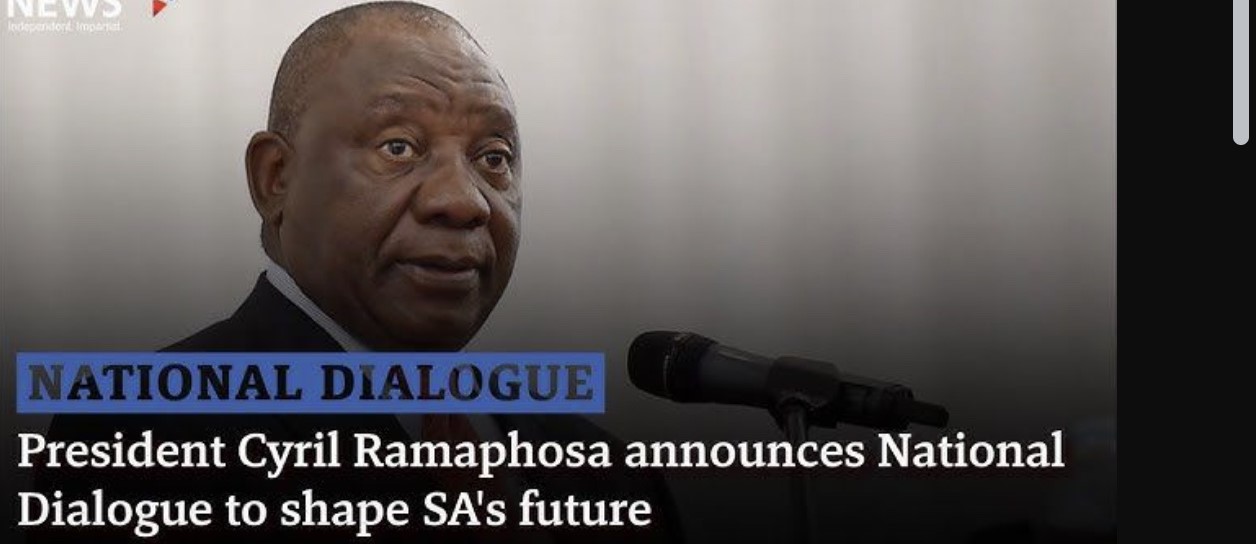
Ramaphosa not neutral enough to oversee national unity project

The South African Jewish Board of Deputies (SAJBD) has called for the Constitutional Court to replace President Cyril Ramaphosa as the official patron of the National Dialogue.
The dialogue is intended to unify the country under a new social compact. The SAJBD is responding to the appointment of Gift of the Givers founder Dr Imtiaz Sooliman as part of the National Dialogue Eminent Persons Group. Sooliman has unapologetically vilified Zionists and, by extension, the overwhelming majority of South African Jewry, according to the Board.
Ramaphosa launched the National Dialogue in June, presenting it as an inclusive, society-wide process aimed at forging a shared vision for South Africa’s future. However, the SAJBD believes the appointment of Sooliman fundamentally undermines the credibility and inclusivity of the project.
Until going to press on Wednesday 16 July, Sooliman was touted in the media as the president’s choice for co-chair of the group. However, Ramaphosa has since announced that he has designated Roelf Meyer and Professor Tinyiko Maluleke as co-chairs. However, the likes of Sooliman are still part of the group.
The SAJBD, however, said the dialogue set out to “emphasise democratic participation, transparency, and accountability” and “empower all citizens, regardless of race, class, or gender, ensuring their equal participation in shaping the nation’s future”.
But, the Board pointed out the infighting, division, and polarisation that had occurred over the past decade. “The values of national unity have been abandoned and disregarded by our leadership in favour of promoting narrow political agendas,” said Wendy Kahn, SAJBD national director. “This is particularly true for South African Jewry, who, under President Ramaphosa, have been marginalised and made unwelcome.
“We have been excluded from interfaith engagement; we have been silenced in public spaces; antisemitic incidents have been downplayed or ignored; and, during the Israel-Iran war, South Africans in Israel were left to fend for themselves without any consular assistance,” Kahn said.
“Indeed, the tragic conflict in the Middle East, one of the most divisive issues in the world, has been manipulated by our government as a political tool.
“Rather than playing a meaningful and constructive role in peace-building in the region, it has chosen a route of polarisation. Leading figures in both government and civil society, including President Cyril Ramaphosa and Imtiaz Sooliman, have hijacked this heartbreaking war to bring divisiveness into our society and onto our streets.”
Sooliman’s public statements have added fuel to the controversy. The Board highlighted a recent comment in which he said, “Every time we protested, the Zionists were too clever. They were arrogant, acting with impunity, they put fear into you. They put fear into corporate corporations, into universities, into communities, into governments, into political parties, into associations. They run the world with fear. They control the world with money. And every time you say something, they terrify you, and they say it’s antisemitic.”
Milton Shain, emeritus professor of historical studies at the University of Cape Town (UCT), said, “It’s indeed a pity that President Ramaphosa has assumed the position of patron of the upcoming South African National Dialogue. The title may suggest a sense of neutrality, but the dialogue ought to have as its patron someone less connected to formal politics.
“Dr Imtiaz Sooliman’s appointment is similarly problematic. His is a divisive voice, and unsuited to a talk-shop billed as inclusive,” Shain said. “Why choose a figure who has uttered statements on Israel that have often descended into classic Jew-hatred? Surely Sooliman is unwelcome in a multicultural society that celebrates diversity?”
For the Jewish community, the implications are clear. With 96% of South African Jews expressing attachment to Israel, according to the Kaplan Centre at UCT, Zionism is intrinsic to Jewish identity, according to Shain.
The Board maintains that by selecting Sooliman, who has “unapologetically made it his mission to marginalise South African Zionists”, the president made a deeply inappropriate choice to lead the dialogue. “By choosing Sooliman, our president has made it clear that ‘inclusive participation’ was obviously not a consideration in choosing the chair of the National Dialogue.”
It went further, stating, “Therefore, the biggest obstacle to creating a successful National Dialogue that will harness our country into a process leading towards national unity is our president.”
Sooliman has made clear his disdain for the law, complicating his role further. “I don’t follow international law or human law. I don’t need any permission from anybody in the world to tell me what to do. I break the laws all the time,” Sooliman has stated publicly.
Sara Gon, a fellow of the South African Institute of Race Relations, said the concept of a National Dialogue was flawed. “The people of South Africa are the ones who create a dialogue. The government’s role is to help the people realise the society they would like to see through creating and implementing sound policies which provide for economic growth, safety, and education. The government knows what’s required of it, and it’s failing. It’s a costly distraction. The choice of Dr Sooliman is problematic because while he has been well known for his charitable work, the exposure of his views on Jews throws up the very schisms that a government-created ‘dialogue’ is intended to overcome.”
Advocate Mark Oppenheimer agreed that the dialogue was unlikely to yield meaningful solutions to South Africa’s predicament. “The SAJBD is right to question the roles of Sooliman and President Ramaphosa, particularly in light of their antagonism towards the Jewish community and the state of Israel,” he said.
However, he said it would be a serious misstep for the Constitutional Court to involve itself in this process as doing so risks tarnishing its hard-won legitimacy. “It would be far preferable for civil society to convene an alternative dialogue, one that truthfully addresses the damaging policy choices of the current administration, rather than lend credibility to what appears to be a political charade,” he said.
The SAJBD argued that Ramaphosa, as patron of the National Dialogue, lacked the legitimacy to succeed in promoting national unity and fostering collaboration across sectors, as the project sets out to do. It maintained that the Constitutional Court, an apolitical institution with credibility, which is trusted by the vast majority of South Africans, would be better suited to the role of patron.
The Democratic Alliance has since withdrawn from the National Dialogue, saying it will be nothing more than a waste of time and money to distract from the African National Congress’s (ANC) failures, and calling it an electioneering ploy at taxpayer expense to gloss over the serious crises that the ANC has plunged South Africa into.
The Presidency hasn’t yet responded to the SAJBD’s demand. It remains to be seen whether the Constitutional Court will engage with the request, or whether civil society at large will rally around the call for an impartial guardian of the dialogue.





Lance
July 17, 2025 at 12:43 pm
So wonderful that they have appointed an individual that funds world terrorism co-chairperson of the National Dialogue. If this does not make it abundantly clear as to where the govt stands then you need to take a serious look at where you are.
Devora Even-Tov
July 18, 2025 at 10:29 am
suspicion continues to mount that local NGO Gift of the Givers (GOTG) in funding terrorism. this is the person chosen by our “honourable President”
Gary Selikow
July 18, 2025 at 11:03 am
Sooliman actually referred to the mother of the Bibas children as being ”arrested’ for having served in the IDF. He is very sinister. I also dont like Roelf Meyer by the way. Too days after the October 7 massacre, Meyer’s response was to refer tp the conditions in Gaza rather than a word of condemnation of the massacre. This smacks of trying to justify it,