





Lifestyle/Community
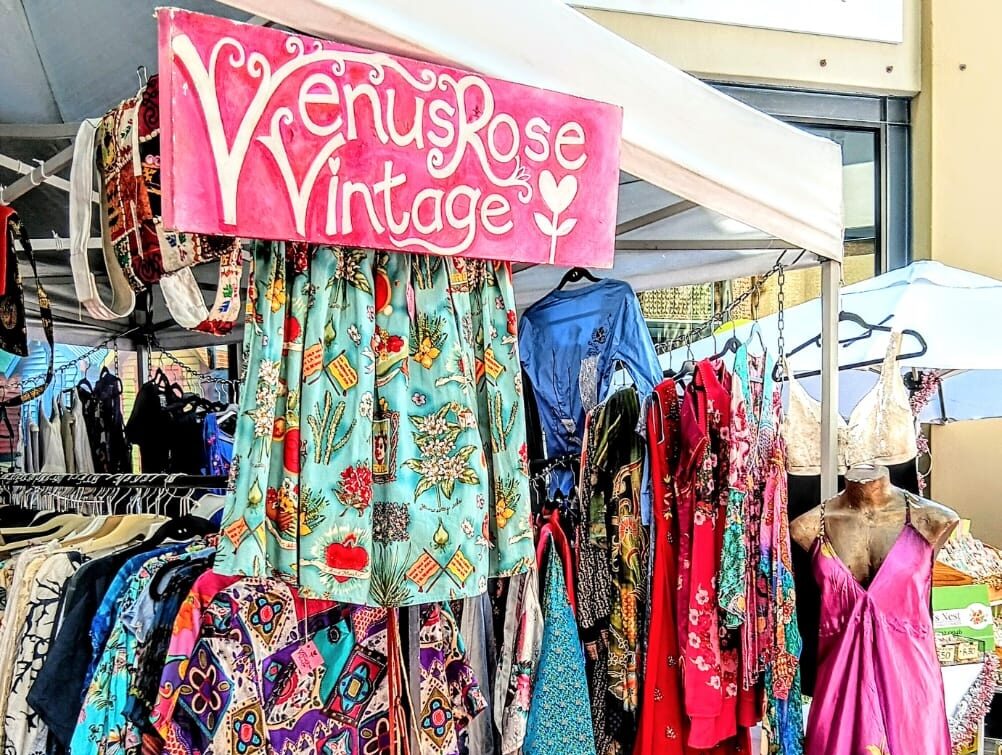
The thrill of thrifting

There’s an art to thrifting. It means digging through rails of clothes, looking past the pieces that aren’t quite right, and holding out for the moment when you uncover the jacket, dress, or pair of jeans that feels as though it was waiting for you all along. For a growing number of shoppers, that hunt is precisely the appeal.
Thrifting isn’t simply about finding a cheaper way of dressing. As attitudes towards second-hand clothing change, shoppers are also embracing pre-loved pieces for their sustainability, quality, and individuality, transforming what was once considered unfashionable into something increasingly desirable.
Carissa von Mayer, who runs Venus Rose Vintage, explained that she calls what she does “clothes rescue”, rather than thrifting, because she’s giving items a new life.
There is a lot of effort that goes into it.
Von Mayer explained that to source the high-quality clothing she sells at markets around Johannesburg, she treks into the CBD, where it is often dangerous and where people bring in bales of clothing, and she has to weigh up item after item to see if it’s something she can sell.
“It’s got to be a good design, but there are several factors I consider. I mainly try to thrift natural fabrics like linen, cotton, leather, and silk. As a textile designer, I’m particularly drawn to special pieces made from good-quality fabric, especially those with beautiful fabric designs, embroidery, or something else that makes them unique.”
She said Johannesburg serves as an important hub for the second-hand clothing trade, with resellers travelling to the city to source stock before distributing it across South Africa. However, she said recent law enforcement against informal vendors disrupted this network. She is also concerned about the possibility of tighter restrictions on imported second-hand clothing.
“Last year, the City of Johannesburg conducted a clean-up in the area where we buy our stock. Goods were confiscated, vendors were removed from the streets, and some were forced into shops where the costs were much higher. Some of these vendors had been trading there for 25 years, and many simply disappeared afterwards.
“There was a huge protest against what was happening, and I helped make some of the signs. My concern is that these are people running businesses and supplying the thrifting industry. I also worry that South Africa may be moving towards restricting the import of bales of second-hand clothing, as some other African countries have done.”
Gabrielle Onay, the owner of Crybaby Thrift and one of the cofounders of Picnic n Thrift, finds clothes to sell mainly by going to the East Rand town of Brakpan, Benoni, and Boksburg and walking through the second-hand shops there.
“I call it the Bermuda Triangle – Brakpan, Benoni, and Boksburg. I’m not even joking; that’s where they have the best clothes. I find all these incredible old pieces that tannies have donated to thrift shops, and the prices are significantly lower because I’m travelling further out,” she said.
When Onay formally became a thrift seller eight years ago, she priced the clothing based on how much she wanted for an item. Now, she sets a standard price for everything.
In recent years, there has been a massive influx of fast fashion, including clothes bought online.
“It’s fast fashion in general, but particularly brands [from retailers] like Shein and Temu. It’s definitely become an issue because these clothes have made their way into the second-hand space quite extensively. I’ll go out looking for something to resell and find what looks like a nice T-shirt, but then I’ll feel the material and realise it’s from Shein,” said Onay.
The co-founder of Picnic n Thrift, Ruby Lee Prager, said thrifting can be an antidote to consumerism. “Thrifting can make a real difference to fast fashion’s impact, but only if it actually replaces new purchases and slows down overall consumption, not if it just becomes another channel for buying more clothes.”
There is also an element of environmentalism when it comes to thrifting, Prager said.
“Buying second-hand is significantly better for the environment because it avoids most of the resource-intensive stages of producing new goods, especially for clothing. Choosing second-hand apparel can cut carbon emissions, while saving thousands of litres of water per garment and keeping textiles out of landfill for longer. The biggest gains come when second-hand purchases replace new ones and when items are worn many times, which is exactly what well-curated local thrift markets encourage.”
Over the years that she has been thrifting, Onay has seen a meteoric rise in the demand for thrifted, or second-hand, clothes.
“When I started in 2018, second-hand shopping was a thing, but mainly among people who already knew about it. It wasn’t nearly as popular as it is now. Today, everyone seems to have a Yaga shop or is a reseller. It’s no longer just a small business or niche market; it’s become a huge thing,” she said.
One of the reasons for this rise in popularity, according to both Onay and Von Mayer, is that nowadays people want a more individualistic style rather than whatever everyone else is wearing.
“People love the uniqueness of it. I think part of it is like that innate hunter-gatherer thing. I’m out there scavenging for a good deal or a good piece, but I think it all kind of relates to uniqueness and people wanting to feel that they can find something that no one else has, or find something that’s different and suits them that they wouldn’t see in a normal shop. You’re unlikely to find the same two pieces twice.”
“It’s far more acceptable today to have individual style and to express yourself through clothing,” said Von Mayer. “Young people today are much more open about who they are and expressing their individuality, although I think that applies to older people too. There’s also much more freedom around gender and fashion. People are more comfortable wearing what they want to wear, regardless of whether something has traditionally been seen as masculine or feminine, and that’s become much more accepted.”
