Holocaust
Soon there won’t be any Holocaust survivors to tell the story

Ninety percent of the remaining Holocaust survivors globally will be gone within 15 years.
While there are still almost 200 000 Holocaust survivors, nearly half of them will pass away within the next six years, and 70% within 10 years, according to a population projection report recently published by the Claims Conference, an international organisation that represents Jewish victims of Nazi persecution and negotiates compensation and restitution on their behalf.
The report, Vanishing Witnesses: An Urgent Analysis of the Declining Population of Holocaust Survivors, made it clear that in 15 years, only 21 300 Holocaust survivors will be left globally, which means we will soon be living in a world where there is no one to give a first-hand account of the Holocaust.
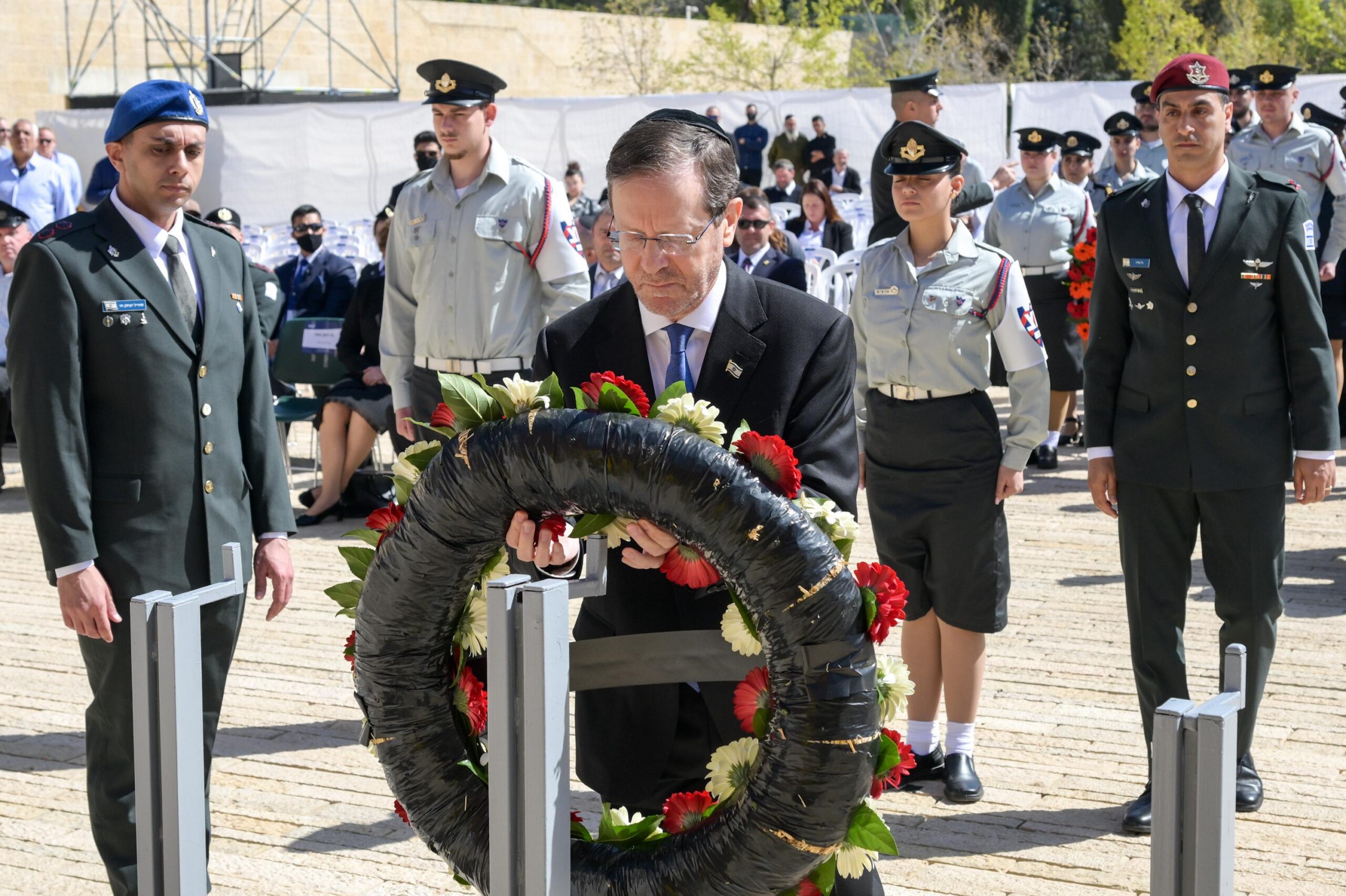
As we commemorated Yom HaShoah (Holocaust Remembrance Day) on Tuesday, 14 April, Tali Nates, founder and executive director of the Johannesburg Holocaust & Genocide Centre (JHGC), reiterated that there are fewer than 20 survivors still alive in South Africa.
She said many are in their late 80s and 90s, the oldest being Ella Blumenthal, who survived the Warsaw ghetto, and the Majdanek, Auschwitz, and Bergen-Belsen concentration camps. The younger survivors were babies at the end of the war, and are now in their early 80s.
The remaining population of survivors is between 78 and more than 100 years of age, born between 1912 and 1946, with a median age of 87. This includes a small number who were in utero in 1945 and born in early 1946. The majority (96%) of those alive today are child survivors born between 1928 and 1946.
“Depending on age and health, which varies significantly among survivors, some in South Africa are still active in survivors’ groups such as the one offered by the JHGC, speak to schools and other groups, are involved with family and community affairs, and keep themselves busy with hobbies and volunteering activities,” said Nates. “Some still work or consult in their professional capacities.
“Others who aren’t in good health any longer, sadly, are cared for by family, friends, community organisations, and individuals in the most dignified way. There are places around the world where survivors live below the poverty line and are struggling in their older age.”
Nates stressed that it is now more important than ever to listen to their stories and interact with them, to ensure that their stories don’t die with them.
The Claims Conference report gives the example of survivor Israel “Izzy” Arbeiter, who spent decades talking about the murders of his parents and seven-year-old brother in the Treblinka concentration camp, and his own time at a series of camps, including Auschwitz. He arrived in the United States in 1949 and later founded what became the American Association of Jewish Holocaust Survivors of Greater Boston.
Seventy years later, Arbeiter told a packed audience on Boston University’s International Holocaust Remembrance Day, “The sad thing is the number of Holocaust survivors who used to go to schools and speak there is getting smaller and smaller. And the question is, who is going to tell the story after us?” Arbeiter died three years later, in 2021, at the age of 96.
The report also indicated that mortality rates for survivors vary depending on geographical location. For example, in Israel, which is home to about half the population of Holocaust survivors, there were 110 100 survivors in 2024 and 106 000 in 2026. This number, according to the report, is estimated to drop to 62 900 by 2030, a 43% decrease in only six years.
The United States had 34 600 survivors in 2024, but is projected to lose 39% by 2030, dropping to 21 100 survivors. There were 25 500 survivors in former Soviet Union countries in 2024, expected to drop to 11 800 in five years, and down 54% by the start of 2030.
Gideon Taylor, President of the Claims Conference, said, “This report provides clear urgency to our Holocaust education efforts; now is the time to hear first-hand testimonies from survivors, invite them to speak in our classrooms, places of worship, and institutions. It is critical, not only for our youth but for people of all generations, to hear and learn directly from Holocaust survivors. This report is a stark reminder that our time is almost up, our survivors are leaving us, and this is the moment to hear their voices.”
Greg Schneider, executive vice-president of the Claims Conference, said, “We have known that this population of survivors would be the last, our final opportunity to hear their first-hand testimonies, to spend time with them, our last chance to meet a survivor. These are our final years to honour them, ensure they live with dignity, care for them, and provide for their needs. The work we do negotiating with European governments on behalf of survivors is critical to their survival. Nothing could be more important, more urgent, as we see what little time we have left to ensure their well-being.”
Nates explained that due to the reality of the ageing population of Holocaust survivors, museums, education centres, and memorials around the world are preparing for “the end of the era of the survivor”, through recorded testimonies, books, lesson plans, and exhibitions. The University of Southern California Shoah Foundation’s innovative “New Dimensions in Testimony” uses digital technology to allow survivors to answer as many as 100 pre-recorded questions.
“Second- and third-generation groups also contribute to sharing testimonies around the world. Like every history, this one is moving from a phase of being a ‘living memory’ to the phase of ‘historical memory’,” said Nates. “I believe that this history is one of the key defining moments in global history, like the Roman Empire or the French Revolution, and it will continue to be taught and reflected on in the future.”