Israel
SA boosts energy ties with Israel

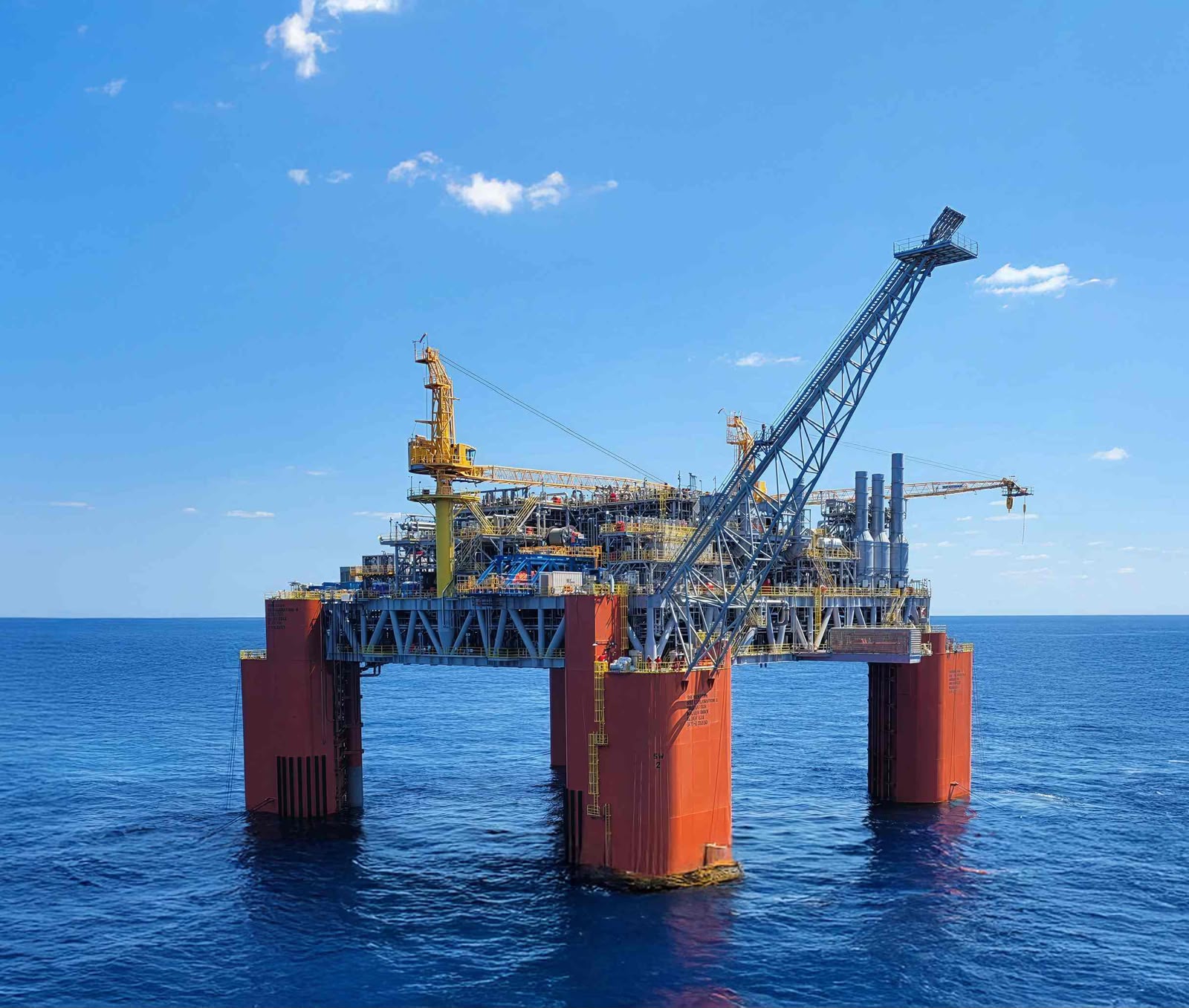
South Africa is the world’s biggest exporter of coal to Israel, and it may now allow a large Israeli company, Navitas Petroleum, to become an operator of oil and gas exploration in the Orange Basin, off the country’s West Coast.
This means that while South Africa has taken Israel to the International Court of Justice (ICJ), it continues to engage with the Jewish State in the energy sphere. “Even government ministers who are connected to the African National Congress have said that they don’t wish to interfere with the trade relations between the two countries,” says executive director at the Middle East Africa Research Institute, Benji Shulman.
On 17 July, President Cyril Ramaphosa described the West Coast’s Orange Basin as “one of the world’s most promising new energy frontiers”. He was speaking at the Fourth Session of the South Africa–Namibia Bi-National Commission in Pretoria.
The Orange Basin is a major offshore geological basin located along the coast of Namibia and western South Africa. It gained global prominence in early 2022. Navitas could acquire a 37.5% interest in the offshore block.
Ramaphosa said the basin’s development “presents us with an opportunity not simply to extract oil and gas, but to establish an integrated regional energy economy encompassing exploration, engineering, refining, petrochemicals, logistics, maritime services, and advanced manufacturing”.
He said this has “rightly attracted global attention”.
In May, the website Offshore Energy reported that Navitas Petroleum had signed on the dotted line to get a stake in a block off the coast of South Africa by exercising an option to farm into the block with Eco (Atlantic) Oil & Gas.
The agreement is conditional on receipt of customary regulatory approvals from the Petroleum Agency of South Africa, the TSX Venture Exchange, and receipt of a $4 million (R65.83 million) cash payment from Navitas to Eco. It also requires the approval of Minister of Mineral and Petroleum Resources, Gwede Mantashe.
Gil Holzman, president and chief executive of Eco Atlantic, told Offshore Energy that this could “propel us towards a promising future in South Africa’s offshore oil and gas landscape and puts us in an active and enhanced exploration mode”.
But local voices are already protesting the move, saying South Africa cannot engage with Israel after taking the Jewish State to the ICJ.
The Green Connection is a local environmental justice organisation, but it focused on South Africa’s anti-Israel stance as the reason to stop the deal with Navitas. Writing to Ramaphosa on 26 June, the organisation said it believes “the ‘farm-in’ by Navitas stands in tension with the South African government’s commitment to international human rights”.
It said the government had taken a “courageous stance” with the ICJ case, but “despite this strong political and diplomatic posture, South Africa has taken no steps to ban or suspend business dealings with Israel and Israeli-owned companies”.
The Green Connection called upon “His Excellency [Ramaphosa] to provide political and policy leadership on this matter”. He should “direct the government, through Cabinet, to develop and articulate a clear and lawful policy position on commercial dealings with Israeli-owned entities that is consistent with South Africa’s obligations under international law, including the Genocide Convention and the provisional measures and findings of the ICJ”.
It asked the president to “commend to the Minister of Mineral and Petroleum Resources, for his independent consideration, that transparent weight be given to South Africa’s international-law obligations and the ICJ proceedings, as relevant considerations”.
Advocacy head at the Green Connection Lisa Makaula says the organisation “is urging government to provide clear political and policy leadership on commercial engagement involving Israeli-owned companies while South Africa continues to pursue accountability through international legal processes”. The organisation has not received a response from the Presidency.
Economic Freedom Fighters (EFF) member of Parliament Carl Niehaus called to “Stop Navitas Petroleum now” in an opinion piece he wrote in The Star headlined “Zionist apartheid Israel has no place in our waters or our economy”.
“While we pursue justice at the ICJ, Israeli companies like Navitas Petroleum are allowed to conduct business relations with South Africa. This cannot continue,” Niehaus wrote.
He called for all financial and business relations with “Zionist Israel” to be severed immediately and without exception: “There can be no partial measures or selective engagement. Israeli firms must not be permitted to profit from South African resources or opportunities.”
Niehaus said the ongoing export of South African coal to Israel “remains a shameful reality”. Minister of Trade and Industry Parks Tau recently responded to Niehaus’s written question on the matter in the National Assembly, saying that there are no plans to review or halt these exports.
The EFF “insists that full-scale financial and economic sanctions be implemented against Zionist apartheid Israel without further delay”, said Niehaus.
But Shulman says South Africa and Israel maintain a wide-ranging trade relationship, including South African exports to Israel and Israeli imports to South Africa.
Shulman says Navitas is “an outgrowth of the Israeli oil and gas industry, which has now been looking at other gas fields around the world where it can use its expertise. As such, it has been able to look at newfound deposits around the South African coast.”
This has led to the option of it “being able to use its resources, knowledge, and expertise to help explore this particular part of the South African coastline”.
He says that although South Africa and Israel have problematic political relations, “investors see the country as an important place to do business, and as such are generally impervious to the kinds of rhetoric that’s coming out of government”.
Research manager and senior research analyst at the Foundation for Defense of Democracies David May specialises in economic warfare and has written extensively about South Africa-Israel relations. He says South Africa’s ties to Israel in the energy sector “demonstrate the boundaries of virtue signalling”. Boycotting Israel may be a popular position in South Africa’s political scene, “but when there are tangible consequences for this posture, it is much less clear”.
May says that “extremists in South Africa would like to cut off their nose to spite their face”, such as when they successfully got Israeli water experts barred from helping to address the local water crisis.
South African Zionist Federation chairperson Craig Pantanowitz believes the Navitas deal should proceed, and “the attempts to politicise it say more about South Africa’s domestic dysfunction than about any principled foreign policy”.
Commercial decisions of this kind are governed by law, technical merit, and national economic interest, says Pantanowitz. “Navitas Petroleum brings investment, operatorship expertise, and employment to a sector South Africa urgently needs to develop.”
He says Block 1 CBK, the area that Navitas would explore, represents a significant national asset. “The question of who is best placed to unlock its value is a regulatory and commercial one”, not a “referendum on the ICJ case”.
The voices calling for rejection, including Niehaus and the EFF, “aren’t advancing South Africa’s interests. They’re advancing an ideological agenda that has consistently prioritised political theatre over economic development,” says Pantanowitz. “South Africa’s coastal communities, energy sector workers, and long-term energy security deserve better than decisions shaped by that agenda.”
He emphasises that commerce is not foreign policy. “Conflating the two does not produce principled governance. Instead, it produces paralysis.”