


Lifestyle/Community
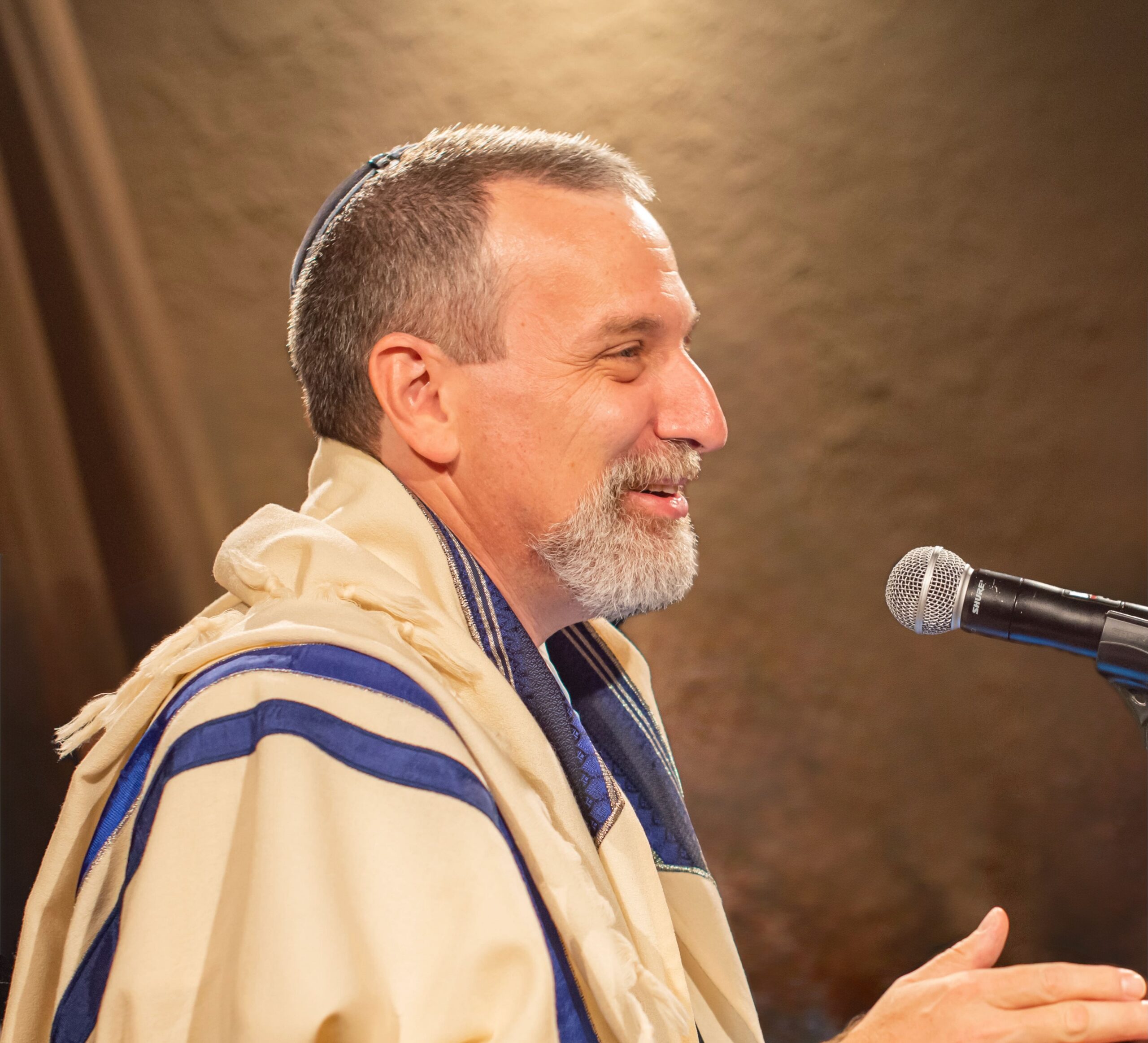
New Bet David rabbi to help chart Progressive future

For years, Rabbi Rogério Cukierman built a career helping organisations plan for the future. Today, he is applying the same strategic thinking in a very different setting, Bet David Progressive Synagogue in Morningside, Johannesburg.
Although he officially took up his role as rabbi only last month, Cukierman is no stranger to the congregation. He has worked with Bet David since early 2025, initially remotely from Brazil, while making two visits last year to South Africa.
“Until now, there was always the sense that I was a visitor in an interim position,” he told the SA Jewish Report. “I was trying not to change anything, as if I were in someone else’s house. Now I can start thinking more strategically about the direction we want to take Bet David and how to get there.”
That strategic mindset comes naturally. After earning a degree in business administration, Cukierman worked as a management consultant specialising in strategy before pursuing a master’s degree in economics in Israel, with the intention of building a career in that field.
Instead, a deeply personal experience changed the course of his life. While he was studying in Israel, his father was diagnosed with cancer and died after an 18-month illness. During that difficult period, Cukierman began attending services at Beit Daniel, a Progressive congregation in Tel Aviv. He discovered a Jewish life he’d never experienced in São Paulo.
“I was raised completely secular,” he says. “We didn’t even go to synagogue on Rosh Hashanah and Yom Kippur.”
Back in Brazil, he struggled to find a congregation that reflected his understanding of Progressive Judaism. “There were synagogues that were technically affiliated with the Progressive movement, but they were neither egalitarian nor inclusive of LGBTQ+ people,” he says. “In many respects, they weren’t truly Progressive.”
At the same time, his consulting career was becoming increasingly unsustainable. “There were weeks when I worked 120 hours. At some point, I became exhausted and realised I needed a sabbatical.”
He decided to spend that break studying Judaism in the United States. What began as a master’s degree in Jewish Studies soon became something much larger. Immersed in Jewish texts and learning, Cukierman realised he wanted to become a rabbi.
He chose Hebrew College in Boston because of its pluralistic approach to rabbinic education. The institution welcomes students from different Jewish denominations while maintaining an egalitarian environment. Cukierman was ordained there in 2013.
His experiences in Brazil shaped the philosophy he now hopes to bring to South Africa. One of his strongest convictions is that Progressive Judaism is often misunderstood as requiring less commitment than other streams of Judaism. For Cukierman, Progressive Judaism demands study, reflection, and personal responsibility.
Rather than simply following prescribed rules, he believes Jews should actively engage with Jewish tradition and determine how it can bring meaning to their own lives. “Being a committed Progressive Jew requires not only fulfilling what other people tell you, but also studying and deciding what proper Jewish conduct is,” he says.
That process of exploration is itself spiritually rewarding, he believes. “The effort of studying the sources and deciding how Judaism will shape your life becomes the reward.”
Instead of seeing Jewish practice as fixed, Cukierman encourages people to think about how rituals can remain authentic while speaking to modern life. “The idea that Judaism has been frozen in time is simply not true.”
He believes Brazil and South Africa share many social realities, including the stark inequalities that exist alongside areas of prosperity. “I think Judaism needs to be a force for the betterment of society as well,” he says. “We need to ask ourselves how we can use the privileges we have to help the rest of the country.”
His first priority at Bet David is getting to know the congregation. “I want to know each one of our members by name and learn something about their lives,” he says. “I really admire rabbis who ask people about their children, their families, and what is going on in their world.”
His second priority is leading a process of reflection on where Bet David wants to go in the coming years. He compares it to cheshbon nefesh (an accounting of the soul), the period of self-reflection associated with the weeks leading up to Rosh Hashanah. “We need to ask what we did right over the past 10, 15, or 20 years. What did we do wrong? Where do we want things to be different? Then we can strengthen what is working and change direction where we are missing the mark.”
Education will also be central to his rabbinate. Cukierman believes many Jews are unaware of the breadth of Jewish scholarship. “The Jewish library is huge. People often take just a little peek and assume what they saw is the whole thing.”
He says many people, often the partners of conversion candidates who attend his Introduction to Judaism classes, are surprised to discover centuries of debate and differing interpretations within Jewish tradition. “No one ever told me that,” is a response he hears regularly from people who attended Jewish schools.
His goal is to encourage congregants to explore Jewish texts more deeply while remaining open to different perspectives. He also hopes to strengthen respectful relationships across denominational lines. Although disagreements are inevitable, he believes different Jewish communities can work together. “We can disagree respectfully while keeping civil discourse.”
Lisa Hack, national chairperson of the South African Union for Progressive Judaism, welcomed Cukierman’s arrival. “We look forward with anticipation to the value he will bring to the congregation, our wider Jewish community, and the Progressive Rabbinic Board as a whole.
“Rabbi Cukierman joins us at an exciting time for Progressive Judaism in South Africa, and we have no doubt his presence will be a blessing. We wish him every success and a warm, meaningful journey ahead,” she says.
For Cukierman, the appointment represents an opportunity to help shape both a congregation and a wider movement.
“If we can slow down, reflect together, and decide where we want to go,” he says, “then we can take the right steps to get there.”