OpEds
Orphans survived the Holocaust at immense emotional cost

Over the past couple of months, an eclectic group of us, who would most probably never otherwise have met, have come together and bonded through our shared passion for Israel and for deepening our understanding of what it means to be Jewish. The group reflects the diversity of Johannesburg’s Jewish community, spanning generations from students to retirees and encompassing a wide range of backgrounds and experiences.
I was drawn to this work because it offered something profoundly different from my role as a social worker. My professional environment had become increasingly uncomfortable as policies reshaped the field in ways that have left many social workers effectively excluded. Against this backdrop, the sense of comfort and belonging I have found in working within a Jewish environment has been meaningful.
The ugliness and taunting of the world around us Jews encouraged our group to turn to one another, to honour our identity in community, thereby enhancing a shared pride in our Jewishness and a need to understand how historically we as a people have reacted to similar provocation.
The project we’ve been working on, a partnership between the South African Jewish Board of Deputies and Yad Vashem Israel, aims to document the role played by the South African Jewish community during World War II, both locally and internationally. It has been a fascinating journey of uncovering stories, heroic individuals, and remarkable acts within my own community.
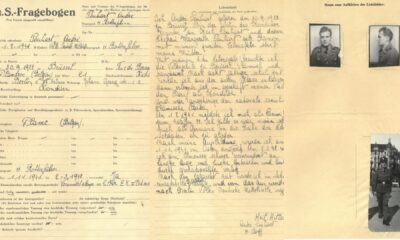
While cataloguing documents, I came across records relating to the Orphan Plan. As a social worker specialising in adoption for many years, this theme resonated deeply and prompted many questions. What exactly was this plan? How did it operate, and who was affected by it?
The Orphan Plan was for the many children who had survived the tragedy of the Holocaust, and whose parent or, in most cases, parents had not. Most children came from Eastern Europe and had survived by being hidden by non-Jewish families or in the camps themselves. They ranged from infants to children up to 12 years old, later changed to include teens up to 17 years old in certain circumstances. The Orphan Plan aimed to bring the children to the Jewish Orphanage in Johannesburg (now known as Arcadia) and to Oranjia Jewish Child and Youth Centre in Cape Town.
These children were in displacement camps or had been reunited with distant family members who were unable to care for them. In addition, there were children who had been sent away from their families in London during the Blitz, for their safety. Often, it was non-Jewish families who took them in and provided care. In some situations, the children were badly treated and put to work as servants or in businesses. It was often the very young children who were loved and fully integrated into the family. These families may have found themselves struggling or, in some cases, unable to return the children to their biological families when the war was over.
Stepping back for a moment to examine what I have just written, there are truly no words to convey the piercing trauma, loss, and grief that this encompasses. The mothers knew in the depths of their beings that the only way to protect their beloved offspring was to make the agonising decision to hand them over to a stranger. The possibility of a reunion was unknown, unforeseen, and unlikely, and there was no reliable way to stay in communication.
There are many accounts of heroic mothers during the Holocaust pushing their children out of the line to the gas chambers or handing their children to strangers as they were forced onto the death trains. They knew they might never see their children again.
To add to an already complicated situation, in many instances, the non-Jewish families who cared for these children formed a strong bond with them over several years, and were unwilling or unable to sever this bond when the time came. The damaging tentacles of intergenerational trauma have been widely documented and researched, specifically relating to circumstances such as these.
When it comes to adoption, the biological family, the adoptive family, and the child each suffer their own losses and traumas. Strong emphasis is placed on screening and counselling as a result. But this does not happen in urgent placements, such as post-war ones.
In the South African context, transracial adoption introduces additional layers of cultural and social complexity. Was this the case during the war, when children may have been placed with Catholic families? What would happen if they were then removed from those families and placed in Jewish homes? There are legendary accounts of people going to orphanages after the war and singing the Shema, causing children who did not know that they were Jewish to start crying, indicating the depths to which they felt their Jewish identity.
Adopted children may struggle with identity, seeking information about their biological relatives or desperately looking for family resemblances, a sense of belonging. During the war, everything was lost or destroyed, leaving many unanswered questions for orphaned children.
Children placed in foster care at a very young age, for whatever reason, may form a stronger bond with their foster parents, as they have little to no memories of their biological parents. Their identities are formed by the family that currently raises and nurtures them. If they are later reconciled with their biological parents or their family, they may be highly resistant and deeply mourn their foster family.
The biological parents, who may have spent years idealising their greatly longed-for children, only to be rejected, may be deeply disappointed, hurt, and traumatised.
Rejection and abandonment, the seesaw of emotions, are complex and not necessarily based on facts but rather on the lived experience of the child. Although children were sent away as a life-saving measure during the Holocaust, many may have thought that they had done something bad, which had caused them to be “given away”. The effects of this experience may result in a deep-seated anger at their parents, difficulty in later life forming healthy relationships and attachments, and damaged self-esteem.
Adopted children sometimes describe the feeling of abandonment as a black hole that can never be filled. Their identity may forever feel like it skipped a few momentous stages. I cannot help but wonder how the beautiful children ripped from their safety by war, to a new reality with new languages, food, and customs, were able to carve their identities.
My mind also goes to the wonderful adoptive parents who opened their hearts and homes to war orphans. There was no time or space to prepare and support these parents for the psychological wounds they might have been faced.
I feel privileged to be part of this project, which will leave a meaningful legacy for future generations. We are a people shaped by resilience and grit, sustained by the strength of community both in the diaspora and in Israel.
Throughout biblical and historical narratives alike, women have remained the often-unacknowledged life force at the heart of Jewish survival and continuity. I am left with overwhelming awe for the mothers who were compelled to do the unimaginable. I honour and revere these unnamed historical heroes. The depth of their pain can never be fully comprehended. Many did not survive the war, and those who did were not always successful in reestablishing a relationship with their beloved offspring. Many childhood survivors have expressed the heartbreaking sentiment that their relationship with their parents was never repaired. How does one survive the greatest act of love with the most devastating consequences either way?
- Janys Orelowitz is a social worker with many years of experience in adoption and family counselling. In addition, she is trained in family law.