Israel
South Africans lead as Israel’s first English pre-meds graduate

When South African student Avi crossed the stage to collect his qualification at Ariel University last week, he wasn’t just celebrating three years of hard work. He was part of a milestone that had been years in the making. The ceremony marked the graduation of the first English-language pre-med class in Israel, opening a new pathway for diaspora Jews hoping to study medicine while building their lives in Israel.
The programme was launched in 2022 after six years of negotiations between Telfed and Israeli universities. It’s designed to give English-speaking students access to a three-year Bachelor of Science in Medical Sciences at Ariel University before continuing to medical school. At the time, it was the first programme of its kind in Israel and was created partly in response to the challenges South African students face securing places to study medicine at home.
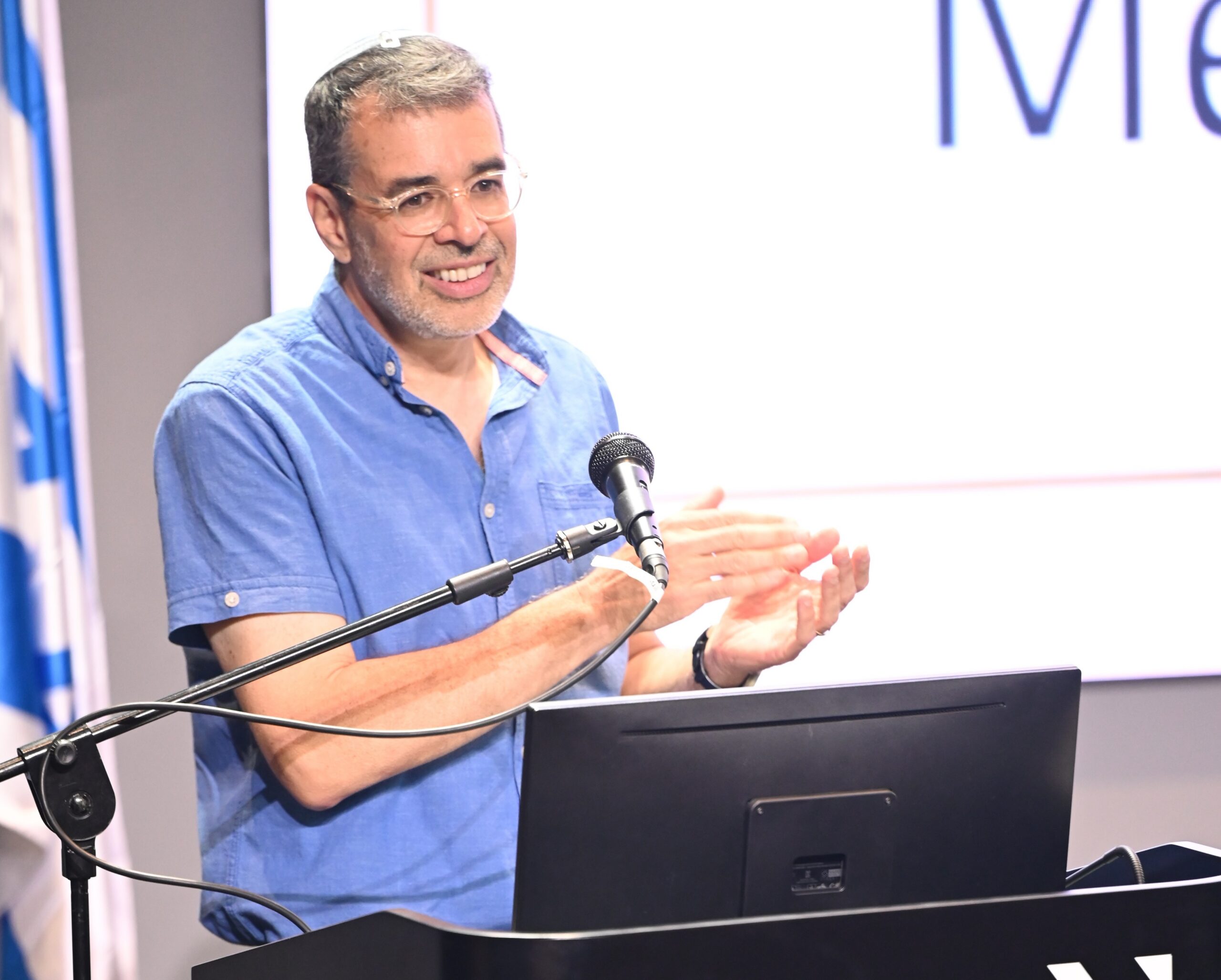
For Telfed chief executive Dorron Kline, the graduation represented the fulfilment of a long-held ambition. “More than 10 years ago, we had a dream at Telfed to set up a pre-med degree in English that would enable South Africans to start their medical career in Israel,” he says. “It was so fulfilling to stand on the stage and speak on behalf of Telfed and our South African students and to see the realisation of this dream.
“Once you have your first graduating class, it can only grow from there,” Kline says. “I really hope more South Africans will take this opportunity.”
The first graduating class had six students, but programme coordinator Ora Geller says the small size allowed the university to provide individual support while establishing the new degree.
“We already had the Hebrew medical sciences programme, so we knew we could create an English version at the same academic level,” she says.
Although the programme was initially designed to feed into English-language medical degrees in Israel, government policy changed shortly before it launched. International students now need to make aliya to continue into English-language medical degrees in Israel. Rather than discouraging applicants, Geller believes the English pre-med programme has become an important stepping stone for students settling into Israeli life.
“If you’re going to get better grades in English, stick to the English programme,” she says. “You want your grades to reflect your knowledge, not how quickly you can translate questions.” Students study in English while attending ulpan to improve their Hebrew before applying to medical school or other healthcare programmes.
Professor Iris Barshak, dean of the Faculty of Medicine at Ariel University, told the SA Jewish Report the programme supports the university’s broader vision. “It is very important for us because we want to encourage aliya,” she says. “We want to put together the vision of aliya and teaching pre-med and medicine.”
She says the curriculum combines strong scientific foundations with newer disciplines such as artificial intelligence, computer science, and bioinformatics.
Graduates earn an internationally recognised bachelor’s degree that allows them to apply to medical schools in Israel and abroad.
Avi achieved the highest marks in the class, graduating summa cum laude.
“It felt a bit surreal,” he says. “Three very intense years, quite an abrupt ending. It felt good.”
His journey to Ariel began long before the programme existed. “I really wanted to study medicine, and I also really wanted to come to Israel,” he says. “Before this programme, it felt like I had to choose one at the risk of the other.”
After making aliya in 2019 and serving in the Israel Defense Forces, he learned about the programme almost by chance. “Someone sent me the advert. It was everything I’d ever wanted. Studying medical sciences in English in Israel was basically what I had been dreaming of.”
He describes the course as demanding but rewarding. “It’s very intense, but very interesting. They do it specifically to prepare you for the intensity of medical school.” He will begin a four-year Doctor of Medicine degree in Hebrew later this year, either at Ariel or Tel Aviv University.
For Rachel, another South African in the programme, studying in Israel offered much more than academic training. The 26-year-old from Johannesburg had already completed a biomedical science degree and an honours degree in physiology before moving to Israel. She says Ariel gave her the opportunity to continue towards medicine in English while making aliya.
Rachel says one of the programme’s greatest strengths is its close-knit community. “The courses were really cool, but even more than that, it was the people,” she says. “The university is amazing.”
Because of the small class size, students from different countries quickly became friends. “There are people from the most random countries,” she says. “Everyone becomes one friend group.”
Geller says that sense of community has become one of the programme’s defining features. “It’s collecting people from different cultures and different societies,” she says. “They become one community and help each other out.”
Friendships have developed into long-term relationships. “We already have a few couples,” she says. “That shows how close they become.”
Barshak says Ariel places as much emphasis on supporting students outside the classroom as inside it. “They have a coordinator who spends a lot of time with them,” she says. “One student wasn’t feeling well, so we took her to Sheba Medical Center, and I visited her.
“They enjoy the high level of teaching and also the supportive way we treat them,” she says.
Half of the graduates who immediately applied to medical school have already secured places, according to Geller. Others are pursuing research or other careers in healthcare while preparing to apply again.
Avi believes the programme prepared him for what comes next. “I’ve had the time to get used to the Hebrew,” he says. “I’m happy for the next step.”
Although his family couldn’t attend the graduation because of a recent bereavement, they celebrated from afar. “They definitely took part in my joy,” he says.
Rachel is now preparing for the entrance exam that will determine whether she progresses to medical school next year. “I’m working on the knowledge for the exam, but also the Hebrew,” she says.
Kline says the graduation is already encouraging more prospective students to consider the programme. “The fact that the student who received the highest grade out of 40 [English and Hebrew pre-med] students is South African is tremendous,” he says.
He also points to the financial support available to qualifying students. “If one makes aliya, the entire degree is paid for. On top of that, students can also apply for Telfed scholarships.”
He believes concerns about studying in Hebrew after the English pre-med programme shouldn’t discourage applicants. “After spending three years in the English-speaking pre-med, going to ulpan, and learning Hebrew, people shouldn’t be scared about the language barrier.”
For Barshak, the programme offers young people more than a qualification. “If they come to Israel and don’t have something to study, or something to work for, and their family isn’t in Israel, it’s much more complicated,” she says. “What we are doing is giving them high-level studies, a social life, and support in their private lives.”
As the first graduates prepare for medical school and careers in healthcare, the ceremony marked more than the end of three demanding years. It also signalled the beginning of a pathway that Telfed and Ariel University hope many more South African students will follow.