OpEds
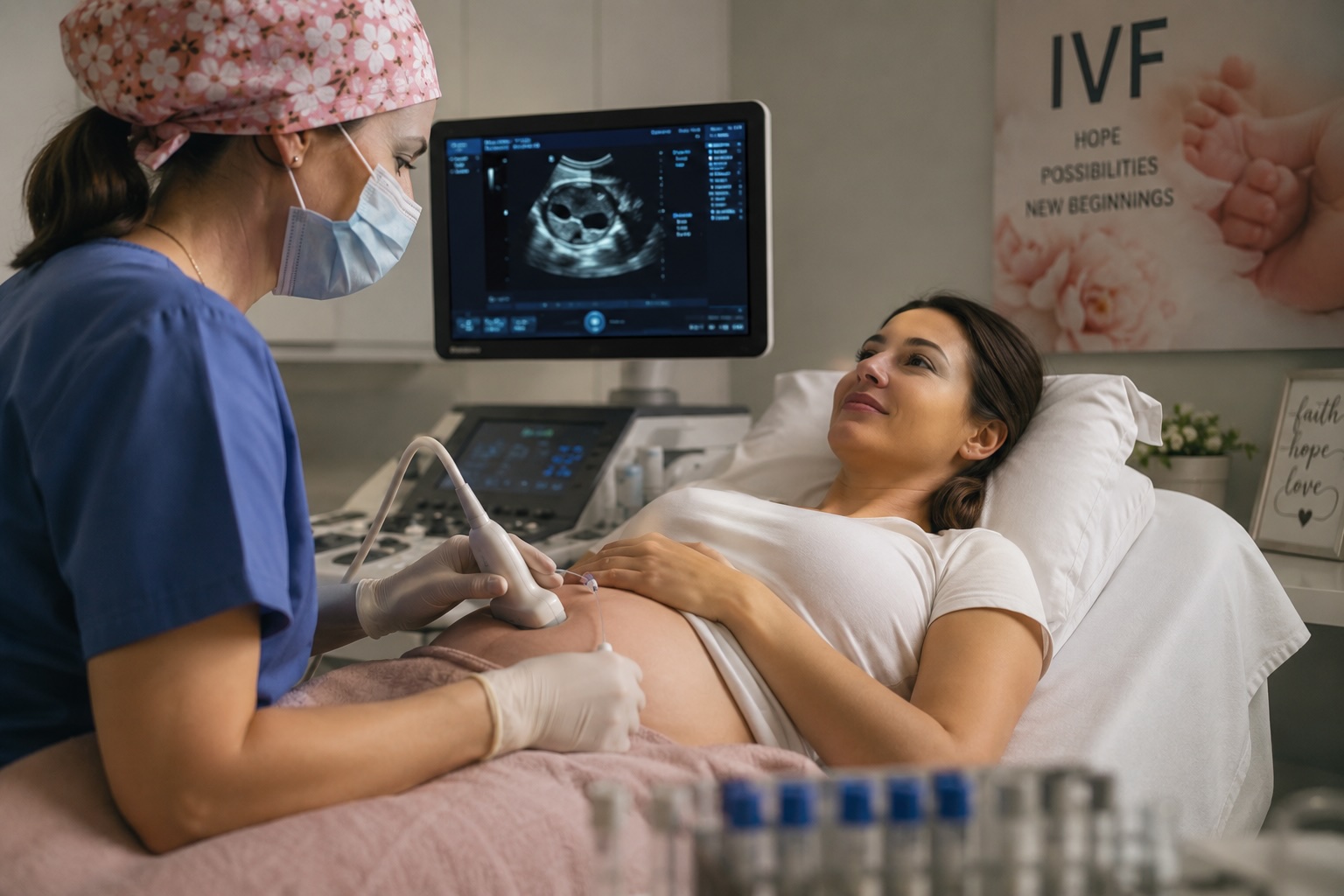
Faith, fertility, and the reproductive lab

Today, we are less likely to rely on divine intervention for fertility problems. Reproductive medicine has developed an array of strategies for both men and women who are unable to create children “the old-fashioned way”. These include assisted reproductive technology (ART), the use of a gestational carrier, and egg freezing.
What does Judaism, the religion that brought us “Be fruitful and multiply”, have to say about these methods? The range of opinions on what is acceptable is significant. Generally, the more strictly one adheres to Jewish law, the more restrictive the options.
Judaism in its most conservative forms is fairly flexible when it comes to ART. In vitro fertilisation (IVF) is acceptable, particularly when the sperm and egg come from the individuals who will carry to term and raise the infant. Intra Uterine Insemination (IUI) is acceptable if the sperm comes from the husband of the woman who will carry the pregnancy.
There are rabbis who will reject the use of donor eggs, while others allow it with the husband’s consent. A major concern if the donor is Jewish would be the “provenance” of the egg for future marriage of the child. Regardless of faith, it’s a bad idea to marry a half-sibling. The genetic consequences could be problematic. In the most religious circles, a gentile donor is preferred, the assumption being that the child will marry only a Jew, thus removing concerns about gene lines and consanguinity, being related by blood. Many authorities would favour a full conversion to ensure the Jewish heritage of the child.
The use of sperm from a Jewish donor isn’t allowed because it constitutes an adulterous relationship, at least metaphorically, because the donor creates a child with a woman who is not his wife. The child would then be considered a mamzer, or bastard.
For men with male factor infertility this option is removed. A non-Jewish donor, on the other hand, changes the equation. The child can’t unknowingly marry a half-sibling because in “proper” marriage arrangements there is only a Jewish option. If a donor is Jewish, accurate records must be kept to ensure that the donor’s subsequent children aren’t potential marriage mates.
The issues of IUI, IVF, and Intracytoplasmic Sperm Injection are complicated by how the sperm and egg “get together”. Since these procedures all take place without intercourse, “spilling of seed”, or masturbation, is required. The original text from Genesis (38:9) and then again in Leviticus presents questions about emission of semen and raises similar questions about ritual purity. Jews who follow a strict interpretation of text will then have a problem with how sperm are obtained for the procedures above. In order to avoid the prohibition, special collection condoms have been created so the couple can have intercourse and the “seed is not spilt”. In the most observant situations, there is a small hole at the top of the condom, so it is “possible” for seed to escape into the vagina and it won’t be “wasted”.
From a medical or scientific point of view, these machinations are less than desirable but acceptable.
When it comes to surrogacy, some Jewish denominations allow the use of a gestational carrier. This is a distinctly different form of surrogacy than the one Abraham employed. Today that would be referred to as “traditional surrogacy”, in which the carrier is inseminated with the father’s sperm, carries the child to birth, and then turns the infant over to the parents who will raise it. Advances in IVF now allow creation of a foetus outside the womb and subsequent transfer to a carrier. In the best case, the carrier would be an unmarried woman. However, some halachic authorities raise the question of maternal identity. Is the carrier, whose only contribution to the birth is her womb, a mother? It is possible to find halachic authorities who make the case both for and against gestational surrogacy.
Liberal Judaism, which has accepted patrilineal descent, finds gestational surrogacy acceptable.
Most gestational surrogacy arrangements today involve a woman who is done creating her own family. As with any pregnancy, one risk is future infertility due to complications of gestation or birth. Another reason for this guideline is that a woman who has her own children is more likely to turn over a child she has carried for someone else. Many carriers comment that they loved being pregnant and look forward to the process especially because they will be able to sleep through the night after the delivery!
While egg and sperm donors were initially required to be anonymous for reasons that don’t make sense today, there is a strong movement to create donor sibling registries. This allows donor conceived children to find their half-siblings, “diblings” in some circles, and obtain ongoing medical information about their donor that might impact them in the future. When donor sperm and later donor egg procedures became possible, no one could have predicted the impact of technology on reproduction. Today, with genetic testing from organisations such as 23andMe and Ancestry.com, it is almost impossible for a donor to remain anonymous. In the not too distant future, children who aren’t told about their donor conception could easily discover the “truth” when they take biology in middle school and bring home the DNA swab kit to learn about their own genetic makeup.
Egg freezing is gaining acceptance in the Orthodox community. The procedure allows eggs to be retrieved by needle aspiration while the woman is sedated. They are subsequently frozen and stored in cryopreservation tanks for later use. For an unmarried woman in her late 30s, this is a significant development as it allows her to preserve some measure of fertility until she finds a mate. It is also significant for a woman who has a medical condition that requires treatment that can render her infertile, such as some treatments for cancer and other diseases.
Preimplantation genetic testing was developed to diagnose genetically transmittable disorders. The process involves removing a single cell from a day-three embryo and studying the genetic makeup of that cell. While the process is taking place, the embryo is frozen for later use. At day three, the eight cells that make up the embryo are undifferentiated. Removing one will not affect the subsequent development of the embryo. The information obtained can prevent the transfer of embryos with Tay-Sachs, Down syndrome, and other disorders. It could also be used for sex determination, something that halachic and non-halachic authorities consider frivolous.
- Dr William Petok is a clinical associate professor of Obstetrics and Gynaecology at Thomas Jefferson University in Philadelphia, United States. He also works in a programme that offers support and resources to Jews experiencing infertility.
- This will be one of the topics he speaks about at Limmud 2026 in Cape Town on 14 to 16 August; Durban on 17 August; and in Johannesburg on 21 to 23 August.